Fourth International CW Conference July 7th!

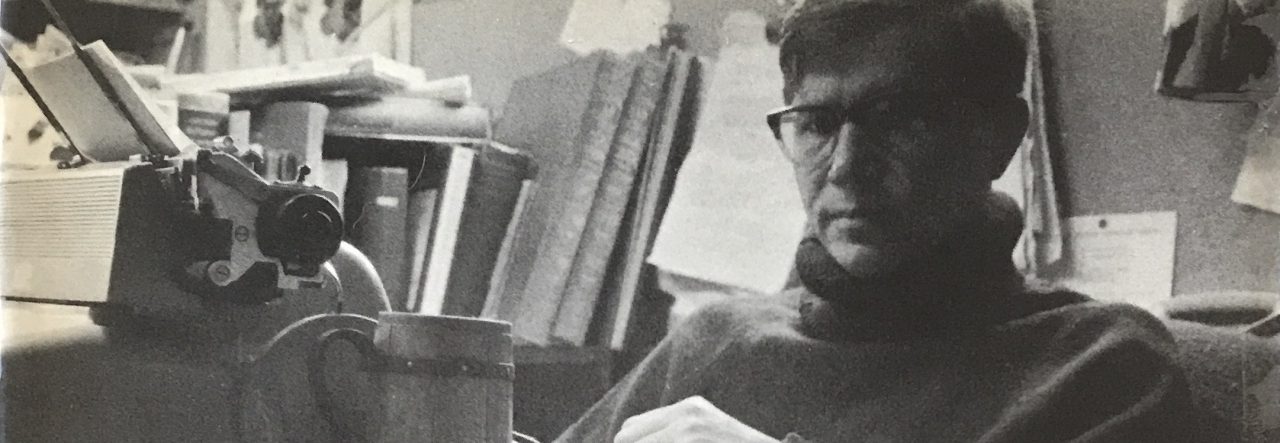
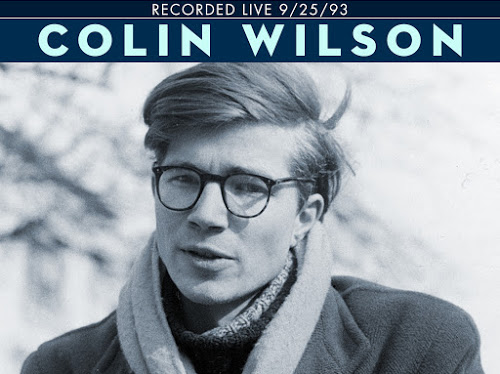
The Fourth Colin Wilson Conference will be held this year at Wilson’s old London haunt, Soho, on July 7th, between 9:30am and 17:00pm. For the few remaining places please contact Colin Stanley at stan2727uk@aol.com. Papers include Gary Lachman on Colin Wilson’s ‘Double Brain’, Matthew Conlam on Wilson, his nemesis A. J. Ayer and “the Soul of British Philosophy”, David Moore on The Mind Parasites and other ‘mind viruses’, Lindsay Siviter on the notorious Dr. Crippen, David Power on how Existential Literary Criticism saved CW from Pierre Boulez (!), Anthony Peake on Wilson, J. B. Priestley and the enigmas of time-consciousness, Cathi Unsworth on Bella in the Wych Elm, and Darren Coffield on the legendary Soho drinking den The Colony Room. Finally Chris Nelson asks – as Wilson himself did – are we all multiple personalities?

To whet your appetite, here are some hand-picked Wilson quotes about the chosen subjects…

”The implications are clearly staggering. The person you call ‘you’ lives in the left side of your brain. And a few centimetres away there is another person, a completely independent identity” (from Frankenstein’s Castle, 1980, subtitled The Double Brain: Door to Wisdom).

”To my own slightly prejudiced eye, it often seems that he is at his best as a critic of other people’s ideas rather than as an originator” (Wilson on A. J. Ayer, 1968, reprinted in Collected Essays on Philosophers, 2016).

”I have occasionally been asked by the uninitiated whether I actually ‘saw’ them, or felt that they had a definite shape. The answer is no. My sensations can best be envisaged if you imagine how it feels when you are hot and tired, and everything seems to be going wrong” (from “that important document known as The Mind Parasites by Professor Gilbert Austin”).

”Crippen was certainly one of the most dangerous criminals of his century” (criminologist William Le Queux, quoted in Wilson and Pitman’s pioneering Encyclopaedia of Murder, 1961).

”The ‘modernists’ argue that all important artworks are ahead of their time, and that Schoenberg, Webern, and Boulez will be one day as acceptable in the concert hall as Bach is today” (from Brandy of the Damned, 1964).

”To me, these considerations suggest that these two paradoxical concepts – time and the mind – are closely connected. Our bodies exist in the realm of one-way time, but our minds do not” (from ‘Time in Disarray’ in The Book of Time, 1980).

”In small, lonely communities, superstition itself can create a kind of ‘magical ether’ that may increase the effectiveness of the spells” (on the Lower Quinton ‘witchcraft murders’ from The Occult, 1971).

”Huysmans is right: alcohol has its own important role in the life of the mind, like poetry and music” (from A Book of Booze, 1974).

”It seems like this body of mine is not really ‘mine’ at all; it can be taken over by squatters. This is a flat contradiction of the materialist view – expounded in our time by Wittgenstein and Ryle – that ‘I’ am the sum of my bodily and mental states” (on multiple personalities, from Mysteries, 1978).

Third CW Conference 1st – 3rd Sept.

The third International Colin Wilson Conference will be held in Nottingham, UK, from the 1st to the 3rd of this September. 70 places available at £70 for all three days, £30 for one day and £20 for the Sunday. Email stan2727uk@aol.com for more details. There’s more detailed information on the previous two events here.

Beyond the confusions of the intellect

NOTE: The Third Colin Wilson Conference will be happening this September (1st – 3rd) in Nottingham, UK. More details here.

“It is the fallacy of all intellectuals to believe that the intellect can grasp life” wrote Colin Wilson in 1966. A century before, the young Nietzsche had realised that happiness and freedom lie beyond “the confusions of the intellect” when he took shelter in a shepherd’s hut. “The storm broke with a tremendous crash, discharging thunder and hail, and I had an indescribable feeling of well-being and zest”. Similarly, Proust’s epiphany in Swann’s Way happens on a dreary winters day. “The past” he broods as he comes indoors from the cold, is “beyond the reach of the intellect”. A few sips of warm tea and some morsels of cake later he recalls a childhood episode with piercing clarity; he has suddenly ceased to feel mediocre, accidental (“contingent” depending on the translation) or mortal. This feeling of “all-powerful joy”, he ruminates, brought with it “no logical proof, but the indisputable evidence, of it’s felicity, it’s reality”. Proust called these moments of well-being moments bienheureux – “quite simply, a surge of strength and power” comments Wilson. He goes on to say that Proust would have demurred at this interpretation as he thought of himself as an invalid and hypochondriac. Conversely, Nietzsche sought this powerful feeling despite his own worse ill-health (Wilson’s 1972 essay Dual Value Response examines the latter dichotomy in some detail). In 1986 Wilson defined existentialism – as it is commonly understood – as “the notion that reality extends beyond our power to grasp it”. Against this he offered a ‘new’ existentialism, based on the phenomenological methods of the philosopher Husserl. The key text, Introduction to The New Existentialism (1966) explains how Husserl’s ideas deny the contingency that existentialism stressed, despite predating and influencing that philosophical school. Both Heidegger and Sartre began as keen ‘phenomenologists’, the former studying it first hand from Husserl. Wilson correctly points out that both soon moved away from Husserl’s most practical insight, that of intentionality, or the study of active perception, in order to compromise with professional philosophy (and with dogmatic political ideology, Heidegger veering far right and Sartre far left). 

The intellect finds it hard to grasp the moments which Nietzsche and Proust experienced as it relies on the shorthand of symbols and language, puzzles which Wilson examines in the last few volumes of the Outsider series. But these – indeed, most of his books – also analyse a much more serious and immediate problem: the seemingly random fluctuations of consciousness. “If the flame of consciousness is low” he writes in The New Existentialism, “a symbol has no power to evoke reality, and intellect is helpless”. That the intellect is a “false guide” is no cause for pessimism, he comments, as pessimism itself arises from from the delusions of passive, limited consciousness. “Human beings need a centre of security from which to make forays into the outer-chaos”, he continues. But these protective walls can quickly feel like a padded cell or prison; too much security becomes boredom which leads to a loss of vitality, a feeling of being trapped in the present. This atmosphere is described in the first part of Goethe’s Faust, in Goncharov’s Oblomov and in Sartre’s fiction. “Man uses his intellect to prevent his experience from escaping him” comments Wilson. “But the essence of the experience escapes, all the same”. Existence philosophy (‘old’ existentialism, as Wilson labels it) failed because it stuck to examining everything through this narrow lens of limited consciousness. Adding insult to injury, it declaimed these limitations in the formal jargon of the academy (“the difficulties encountered in a text by Jaspers, Heidegger or Sartre are the difficulties that the author feels to be necessary to an academically respectable philosophy”). But the point of Existenzphilosophie was that it dealt with direct living problems over generalised abstractions, a realistic attitude which Wilson attempted to revive with his vigorous ‘new’ or phenomenological existentialism, aimed at the general rather than specialist reader. “It deals with the most immediate problem we can experience, with our actual living response to everyday existence”. It could be argued that Wilson’s background as a self-taught working man gives his writings a directness and liveliness which is generally missing in the theorists he is examining. It also offers accessibility to a non-academic audience, a point he addresses early in his book. I can vouch for that, as The New Existentialism is the most useful text I’ve read for dealing with the seemingly random fluctuations of meaning which come and go on a daily basis. Simply put, the phenomenological idea of intentionality suggests that we subliminally select our meanings according to our temperament. Nietzsche intuitively grasped this process when he said that there are no facts, only interpretations, but Husserl went further, demonstrating that our interpretations cloud these ‘facts’ or truths. Understand these distortions and we will begin to think with more clarity. 

If this principle of intentionality is understood, life gradually becomes subtly different. “Once we see this clearly, it becomes astonishing that anybody bothers to argue about it” reads one of the most penetrating lines in Wilson’s book. About what? About the observable principle that intentionally limited consciousness – what we glibly call ‘ordinary consciousness’ – is a scaled down version of the real thing, a truncated view of life. This is not wooly mysticism – Wilson had already offloaded mystical literature to the status of a “primitive phenomenology” in the previous Outsider volume. As he says, it has more to do with our direct response to everyday existence. If consciousness selects it’s facts and objects of perception, why would anyone choose a selection which ‘proves’ that they are merely at the mercy of outward things, without any inner freedom? The obvious answer is: laziness. But as Husserl stated in 1900, an energetic perception grasps more ‘reality’ than a merely token recognition, an observation previously made by the poet Blake with his devilish aphorism ‘energy is eternal delight’. This optimistic sense of lived possibility runs through all Wilson’s writing. “Can one live a philosophy without negating either the life or the philosophy?” he asked in the opening pages of The Outsider. Yes: as he later explained in Beyond the Outsider, the workings of intentionality “can be observed by anyone who goes to enough trouble”. Effort is the starting point; this could merely be the effort to understand what Husserl meant. The New Existentialism even has a section of practical disciplines. “The first practical disciple for the existential philosopher is to learn to become constantly aware of the intentionality of all his conscious acts”. Recognition is another key factor. 

Husserl himself insisted that phenomenology is not merely “vocational” or academic but involves creating a new attitude [Einstellung] towards lived experience. Wilson put it succinctly in a later essay on his ‘new’ existentialism in 1986: “Husserl’s recognition of the intentionality of consciousness is a recognition that our attitudes govern our perceptions”. Wilson’s writings are packed with illustrations of this in action. Examples are drawn from from literature or philosophy – Proust and Nietzsche, above – or from religion and mysticism, psychology, personal anecdote, even criminal cases. He would often quote the philosopher Whitehead, who had insisted we examine ‘experience drunk and experience sober’ – Wilson wrote a book on alcohol – ‘experience normal and experience abnormal’ and so on. This is the existentialist position (Wilson also wrote an essay about Whitehead as an existentialist). It is what Husserl meant when he said that the study of intentionality is not vocational but is completely involved in life as a whole. “We can even go on calmly speaking in the way we must as natural human beings” writes Husserl in the sixty-fourth section of Ideas, “for as phenomenologists we are not supposed to stop being natural human beings”. 

Wilson thought Husserl’s method “brilliant and original” but felt that he never really got beyond it (“he spent his life on the threshold of philosophy, laying the ‘foundations’”). What was required of his own use of this method was to align it with the everyday experience of the average reader, and to tackle the serious problem of fluctuating meaning. Wilson was adamant that intentionality was much more exciting and dynamic than ‘reference to an object’ or an ‘intelligent effort of interpretation’ as phenomenologists soberly put it. 

Husserl speaks of intention as a “ray” or “grip” while pondering how to regenerate the confusions of “intellectual content” into something distinctive and understandable [Ideas § 123]. Wilson points out in Dual Value Response that if Nietzsche had lived to his sixty-eighth year and read Husserl’s text he would have found a direct method for grasping his pure experience, without intellectual confusions. Not only that, says Wilson; had Nietzsche known about separating his intention from the object – which Husserl explains in great detail between sections 87 and 127 of Ideas – we would have been spared his unnecessary obsessions with the likes of “that egotistic roughneck” Cesare Borgia. With this concept in mind Wilson spoke of a faculty which can firmly hold a “grip on reality” in The Strength to Dream and of intentionality as an “inner meaning” or “grip on life” in Origins of the Sexual Impulse. “Husserl’s phenomenology, then, is an investigation into meaning” he says in Beyond the Outsider. These last few volumes of the Outsider series are where Wilson delves deepest into phenomenology, all of it summarised in the 181 pages of The New Existentialism. Here, the ideas of the Outsider series are presented in “a simple and non-technical language for the ordinary intelligent reader” and Wilson presupposes no previous knowledge of the series, nor the existentialism or phenomenology it deals with. One delightful aspect of the book is it’s tone: it manages to explain ‘continental’ philosophy with the breeziness of an Anglo empiricist. “A phenomenologist might be an existentialist or a logical positivist or a neo-Hegelian” he writes, ending the first part of the book (“little more than a clearing of the ground”). But it is already much more than that. The first part remains one of the most cogent explanations of the phenomenological method ever written, and one of the main reasons for such dynamic clarity is that Wilson was a self-motivated thinker, a product of factory floors and belching chimneys rather than dreaming spires and ivory towers. Nietzsche himself said that good writers attempt to make their ideas clearly understood rather than cypher them to “knowing and over-acute readers” of the over analytical, dryly intellectual kind. “The legitimate is simple, as all greatness is simple, open to anyone’s understanding” wrote the novelist Robert Musil in his masterpiece, The Man Without Qualities. “Homer was simple, Christ was simple. The truly great minds always come down to simple basics”. If Nietzsche had written a novel, it would doubtless read like Musil’s (despite one character describing him as a “mental case”!)

The intellect can only take us so far in these matters as it is still only a part of lived experience, entwined with our values and our response to life. The phenomenological methods on which the new existentialism is based do not promise instantaneous results or a quick fix solution. “You can’t become a new human being overnight” as Musil observed. Rather, it is closer to the religious idea that a) what we observe is not the totality of reality and b) more subtle aspects of this reality can be slowly comprehended over the span of adult life via careful observation. However, the method is free of the kind of sectarian prejudices (“the weaknesses of every individual” as Blake had it in All Religions Are One) that inevitably sink religions and their cultish offshoots.

In a social sense it is important to remember that Wilson equates early lack of struggle with the attitudes toward meaning that Husserl describes. For instance, Sartre and Beckett were brought up comfortably middle class whereas Shaw and Wells – and Wilson himself – were working class. The tone or atmosphere of the new existentialism is therefore closer to the latter writers than the former, based as it is on the ordinary lived experience of difficulty, the hard won knowledge that effort brings reward.

But perhaps the reason I personally find Wilson to be a trustworthy guide in many intellectual matters is due to a shared attitude – what the psychologist Maslow called ‘the need to know’, the opposite of intellectual timidity or logical dogmatism – rather than the specific fact that we both emerged from the same rung of society (correctly, Wilson never liked being bricked in as just a ‘working class writer’ with his fellow Angry Young Men). Most likely, it was this open attitude rather the bare facts of Wilson’s background which created his uneasy relationship with the intelligentsia of the time. 

Maslow remarks that “examination of psychologically healthy people shows pretty clearly that they are positively attracted to the mysterious, the unknown, to the puzzling and the unexplained”, the kind of amusing or disturbing oddities collected by Madame Blavatsky or Charles Fort or indeed in Wilson’s own, rather more literate and philosophical occult studies. Maslow observed that psychologically unhealthy subjects tend to feel threatened by the ambiguous and unfamiliar, preferring the “unenriched familiarity” of normal or naive perception as Husserl described it (Wilson had it as “forced familiarity” in his Wilhelm Reich biography). Sartre’s writings contain many examples of this easily upset perception, notably the descriptions in Nausea of trees which frightened him and lamp-posts which embarrass him (“I would have liked them to exist less strongly, in a drier, more abstract way”). As Nietzsche said, we begin to distrust clever people when they embarrass too easily. Sartre’s request is admirably ‘phenomenological’, but one which misunderstands Husserl’s assertion of an active perception. True to form, he felt more comfortable with dialectical materialism. 

One of the practical phenomenological disciples given in The New Existentialism involves patiently listening to political opinion from the party you vote against without reacting – a challenge indeed to the hardened dogmatists of both left and right today. Wilson’s A Criminal History of Mankind (1985) overflows with illustrations of this “spiritual arthritis” at work in societies and individuals throughout history. Such rigid dogma can easily become a catastrophic, anti-creative force, reactive rather than intentional. Wilson’s favourite mystic Gurdjieff was obsessed with overcoming this ‘mechanical’ fault, stressing that genuine knowledge is only allotted to those who actively seek it via struggle or effort. This information, he says, can be best collected during the fall of cultures, “when the masses lose their reason and begin to destroy everything” – periods of philistinism often accompanied by “geological cataclysms, climatic changes”. An enormous surplus of this ‘knowledge’ lies unclaimed as the majority never even collect their rationed share (Gurdjieff insisted that knowledge was ‘material’, like food). It’s certainly a good parable for Wilson’s analysis of meaning, which can be grabbed or grasped in larger quantities by those who have attempted to develop their ‘organ’ of intentionality (“a kind of hand” as Wilson describes it). This can only be done on an individual level; no one else can do it for you. Gurdjieff also insisted that the only possible mystical initiation is self-initiation. As Wilson suggested, the mystical doctrines of ancient sects are but a precursor to Husserl’s revolution in thought. 

Wilson sometimes said that this question of intentionality was a matter of life and death, a seemingly large and dramatic claim for an abstract philosophy born of logic (Husserl began as a mathematician). But in a certain sense it is true: those capable of developing a hold or grip on reality will be far less susceptible to debilitating conditions such as depression. Drawn from a passage near the end of The New Existentialism, the plot of Wilson’s 1967 satire The Mind Parasites outlines a global plague of anhedonia circa – ahem – now. The narrator describes the book (essentially an assemblage of fictional documents) as “a work of history, not of philosophy” but is still of the opinion that the word phenomenology is “perhaps the most important single word in the vocabulary of the human race”. Satire or no, it is likely that Wilson wrote that line with his tongue only partly in his cheek. 

In the long run Wilson’s one man war against life-failure and the ‘age of defeat’ will become more and more relevant to hardened individualists bored by living in a rather suffocating world modeled on he philosophical fallacies of behaviourism, a system which maintains the lifeless state of the “man-machine” that Gurdjieff regarded with horror. “Husserl suggested” writes Wilson in The New Existentialism “that as man loses all the false ideas about himself and the world through scientific [i.e. phenomenological] analysis, and as he comes to recognise that he himself is responsible for so much that he assumed to be ‘objective’, he will come to recognise his true self, presiding over perception and all other acts of living. This idea seems common-sensible enough, and our intuitions about ourselves seem to support it”. A few examples of this shift happening are given later in the book via the experiences of William James, Arthur Koestler and René Daumal. “The ‘self’ that has been experiencing various fears and humiliations has been evoked by a narrow range of experience”, but the self that has overcome this “is contemptuous of this triviality”. This the change of attitude (suspension of prejudices) which Husserl stressed. By true self or ‘transcendental ego’ he meant a state shorn of fallacies from which genuine thought could begin. But Sartre, and later Derrida (“Sartre redivivus” – Wilson) misunderstood it as a survival of religious idealism, thanks to too much dogmatic intellectualism and not enough common-sense intuition. 

The key, as Husserl said, is to become aware of the workings of intentionality as a living method, rather than just another theory in the annals of philosophical history. “In recent times the longing for a fully alive philosophy has led to many a renaissance” he states in the lecture Cartesian Meditations [§ 2]. This living philosophy is based on the “radicalness of self-responsibility”, and on a necessity to “make that radicalness true for the first time by enhancing it to the last degree”. This “new beginning”, he says, is “each for himself and in himself” [§ 3]. In Beyond The Outsider Wilson remarks that Kierkegaard’s ‘truth is subjectivity’ can really only be illuminated by Husserl’s method. Rather than interpret this as ‘beauty being in the eye of the beholder’ it should be understood as a paradoxical instruction meaning that truth is within (“in himself”) but is not relative. Wilson later comments that Kierkegaard’s statement “seems to justify the view that there are as many ‘truths’ as there are individuals, and all are equally valid”, which is the default position of the present era. [1] Musil sardonically wrote of “the general obsession with turning every viewpoint into a standpoint and regarding every standpoint as a viewpoint”, a barb as relevant as it was a century ago. Wilson goes on to say that it would be more accurate to say that ‘truth is evolutionary intentionality’ (a concept explained at length in Beyond The Outsider). In effect this means that the further we move away from local or subjective prejudices – Blake’s ‘weaknesses’ – the closer we get to a truly unique individuality (the transcendental ego, a self shorn of such relativist baggage). As previously noted, our deeper intuitions about ourselves certainly support this view. 

The evolutionary paradox which Wilson analyses in titles such as Beyond The OutsiderThe Occult and A Criminal History is of a lopsided human creature dominant in intellect and it’s ever refined details but surprisingly weak in grasping larger, overall meanings. As his philosophy aimed to correct this disability, it is unsurprising that he came into conflict with professional intellectuals as much as he was welcomed by ordinary readers. After all, as The New Existentialism explains, that was his intention all along. 

[1] “If we instinctively acknowledge human greatness as a value – that is, if we agree that Jesus is in some way preferable to Judas Iscariot, that Beethoven is a more valuable human being than Al Capone – then we are subscribing to he basic human vision of freedom”. Wilson, Colin, Introduction to The New Existentialism, Hutchinson, 1966, pp. 162/3. This is analogous to Wilson’s comment on Nietzsche’s unnecessary celebration of the Borgias (“a great deal of misleading stuff”). Wilson, Colin, ‘Dual Value Response’, 1972. Collected in The Bicameral Critic, Salem House, 1985, p. 108.

Evolutionary Metaphors by David J. Moore: 21st Century New Existentialism

F857D655-07ED-4C76-AA02-A477AC3557B7
Buy this book


“The new existentialism and the UFO are not as far apart from each other as one might think”, writes David J. Moore in his debut book Evolutionary Metaphors. Moore, who has previously published pieces in several scholarly collections investigating the deep end of Wilson’s work and legacy [1] is a researcher who encountered Wilson’s existential thought at a young age and who describes a UFO experience first hand in these pages. He is then the ideal person to investigate such a connection, and if Wilson were alive in 2019 he would have doubtless written an introduction to this book – the ultimate stamp of approval.

Wilson’s influence is keenly felt here: plain autobiographical detail merges with the outlandish and fantastic subject matter, and the writing is clear and compulsive. In February 2008 the then 22 year old author, who was “mainly interested in existentialist literature of the pessimistic variety—writers such as Michel Houllebecq and the Romanian arch-pessimist, Emil Cioran”, shared an odd collective experience with three other people. They witnessed “a silent, apparently amorphous and changing series of lights” 30 feet above their heads. At least that’s what they think they saw – apart from personal memory and subjective interpretation, there “was the added problem of its inherent difficulty to simply describe; it was frankly too unusual and unlikely to convey”. However, all were convinced that what they saw was something ‘other’. Working out his new existentialist ideas in the early sixties through the ‘Outsider Cycle’ books, Colin Wilson noted in one volume that our minds have a tendency to filter out most ‘otherness’, leaving the world looking quite poker faced and seemingly indifferent to us. Wilson’s new existentialist method attempted to look into the mechanisms of this passive state and involved investigating unusual types of perception and phenomena.

Familiar with Wilson’s work, particularly The Outsider, Moore sought out Alien Dawn, Wilson’s concise 1998 study of the bewildering UFO phenomenon and it’s vast attendant literature. “Wilson’s approach to ufology” writes Moore, “retained this evolutionary spirit, for he asked the essential question: ‘What can it tell us about ourselves, our consciousness?’- a question informed by the philosophical discipline of phenomenology, which aims to reveal the mechanisms of man’s psyche, and its dynamic and interpretative role through man and towards reality”. Wilson’s influence Alfred North Whitehead famously urged philosophers that no experience should be omitted from enquiry including ‘experience abnormal’ (his full list, often quoted by Wilson, is also mentioned in the present book). Many of the cases drawn from UFO and abductee literature throughout Evolutionary Metaphors certainly sound abnormal – like the large kangaroo spotted in a car park which turned out to be a UFO, for instance – at least from our everyday rational consciousness, what Husserl called the natural standpoint. But pioneering researchers working at the dawn of UFO writing, such as Jung or Jacques Vallee, saw deeper patterns in the phenomena, recurring symbols from folklore and ancient mythology.

As Moore notes, the act of interpretation itself is significant in the analysis of the UFO enigma. And the clear interpretation of states and phenomena, unclouded by subjective emotional prejudices, is the primary goal of phenomenology, at least in it’s early stages. Wilson’s new existentialism is of course indebted to Husserl’s phenomenology and as Moore remarks, “Wilson, for me and many others, came to represent a fearless explorer of the dark and occulted recesses of the human psyche, but significantly, without a pessimistic bias”. Much classic UFO literature can be dark and forbidding in tone, with many witnesses and abductees recounting experiences of terror and dread amongst the hyper-surrealistic events unfolding around them. Speaking of Sartre’s frightening existential state of ‘nausea’, Wilson remarks that “in nausea man feels isolated in an alien world of objects”, a chaos of unconnected fragments. But, as Moore points out, phenomenology deals with wholes, not parts – Husserl devotes the third section of his Logical Investigations II examining mereology (parts and wholes) – and a phenomenologist like Wilson was always cautious to step back from emotional interpretations (terror, bewilderment, pessimistic doom) when examining paranormal phenomena (or in fact, any phenomena). Husserl and Wilson spoke of ‘relational’ consciousness and both were more concerned, like Whitehead, with delineating the whole picture, a Gestalt, and trying to read the situation as neutrally as possible, free of subjective distortions. This is also Moore’s method – “I suspect that the UFO experience is […] a metaphor towards a new understanding of reality”, he writes. And he notes that it could be interpreted as an “evolutionary metaphor”.

The Whole of the Law

Most perceptively, Moore notes how the “new existentialism enriches the reading and understanding of much occult and paranormal literature”. This is a very important point which is still not widely acknowledged by occultists. “The new existentialism”, he says, “was an attempt by Wilson to provide the foundations for an evolutionary phenomenology in which man could access these meaningful levels of reality”. Running through the large history of esoterica that is Wilson’s The Occult are the same philosophical concerns from his new existentialist period of 1956 – ‘66, a point lost on some of his early readers who presumed he had abandoned existentialism for something less rigorous.

Kenneth Grant, who was originally dismissed by mainstream occultists (but not by Wilson) for his confrontational synthesis of Lovecraft, magick, UFOlogy and decadent literature, is often thought of as one of the originators of Chaos Magic, the postmodern ‘nothing is true, everything is permitted’ strain of contemporary sorcery which is briefly discussed in Evolutionary Metaphors. Like Wilson, Grant put a lot of emphasis on imaginative fiction writing, on poetry and novels: one of his early self published works states that fantastic fiction is a substitute for a long atrophied natural faculty which could originally understand truth directly (think Wilson’s ‘Faculty X’). Grant uses the term ‘adumbration’, often used by Husserl when speaking of parts and wholes, in his analysis of occult experiences (and in fact he once referred to his own work as ‘phenomenology’). Like Wilson said when quoting Yeats, our minds are ‘partial’, but completed in moments of illumination. These moments when this faculty is operative are plentiful in literature; Wilson collected scores of examples from Proust, Hesse and many others and made a careful study of them as accurate descriptions of metal states (i.e. phenomenology) rather than as merely entertaining flights of fancy. Grant once stated that we can accept these truths at a deeper holistic level whereas the conceptualising mind struggles as it can only interpret things piecemeal, via parts, sides or adumbrations. “Chaos magic”, Moore writes, “is basically a scaffolding of a system that recognises the value of phenomenology”; one well known practitioner he quotes recommends the use of pareidolia, the ability to construct forms out of the formless, like Leonardo Da Vinci looking at an old wall and seeing figures and scenes, or the familiar ability to see faces in a fire. Wilson suggested many times that this intentional perceiving is a very important evolutionary creative ability, not just a by-product of daydreaming.

Like Jung, Kenneth Grant often suggested that the UFO was a deep mythological symbol like the grail or saucer of magical lore. “Now, what we might be seeing in the modern world”, writes Moore, “is the re-emergence of a type of magical thinking that had previously gone underground, so to speak, or had remained dormant in the unconscious regions of our collective psyche”. Both Wilson and Grant spoke about a long ‘dormant’ faculty which is slowly reappearing in the post Romantic age and in it’s literature (even Proust spoke of faculties long dormant) and in our modern commercial culture. Science fiction, which once was an underground scene at the dawn of the post war UFO craze, is now big business – Hollywood has made many Philip K Dick stories yet the author of what became Blade Runner and Total Recall spent most of his writing life struggling for money. Dick’s fortunes were turned around by his extraordinary ‘1974’ experience (see chapter 7 of Wilson’s Unsolved Mysteries, Past and Present, 1993) where he was plunged into a world of high strangeness as weird as anything from his own SF books. As documented in his rambling, philosophical Exegesis and in his later novels – referenced here by Moore – Dick’s previously neurotic state was radically changed by the ‘Valis’ events. With typical synchronicity, Dick had a “strange and eerie feeling” that his early novels were coming true. Moore expertly connects Dick’s notion of Valis or ‘Zebra’ – a kind of universal architect hidden in plain sight who Dick sometimes claimed to have intuited, happily building away – with the transcendental ego of Husserl as described by Wilson in his very rare (privately published, 1995) emendation to Introduction to the New Existentialism. “Now”, Moore writes, “by forwarding a basic ‘doctrine of the will’ that aims to uncover the ‘unconscious layers of will and intention, of which you were previously not aware’, it is significant that Wilson points out that the deeper layers of our intentionality awaken in mystical experiences. For in these experiences we lose our general sense of alienation— moreover, an alienation that is ‘due to lack of contact with one’s intentional layers’”. ‘Alien’ experiences, properly understand, may not be alien after all. By developing our ability to know that parts are just that and not misunderstanding them as the totality of a whole – to know the reality of other times and other places as Wilson (and Grant, briefly) said – is to have a completed rather than partial mind, what is commonly termed mystical consciousness. In the Exegesis, Dick speaks of not seeing the Other, but seeing as the Other – Wilson pointed out that our rational minds filter out most otherness due to their relentless need for order, and that Husserl’s aim was to catch them out doing just that, perhaps as Dick did in 1974. “How did we lose certain faculties entirely?” asks Dick in the Exegesis. “Have the remaining ones occluded?” Like Wilson, he found answers in Julian Jaynes’ theory of the bicameral mind, with the shift from all over mythological consciousness (whole, but innocent) to the sharper rational consciousness (understanding, but only partially knowing). In evolutionary terms, we must use this sharpened consciousness to understand whole, and not merely partial meanings. “The new existentialism”, Moore continues, “lays important emphasis on the essential hierarchical nature of consciousness; lower levels of consciousness become increasingly diffuse, disintegrated, whereas higher forms of consciousness—such as the mystical experience or the ‘peak experience’—become synthesised and integrated into the greater whole of our being”.

Gurdjieff once told Ouspensky that “man cannot reconstruct the idea of the whole starting from separate facts” and he insisted that the unprepared mind, connecting with higher centres, will experience either a total blank or disjointed images and sensations – the distortions that the phenomenologist wishes to exclude. This sounds like some of the confusing abductee experiences of UFO literature. Gurdjieff insisted on training the intentional faculties to ‘grasp’ phenomena before any attempts at accessing the higher centres, and Wilson suggested a similar procedure. “Evolutionary metaphors – along with esoteric ‘correspondences’ and the logic of much anomalous phenomenon – baffle ordinary causal logic precisely by transcending its limits and by inferring beyond itself” says Moore. “Essentially they are symbols of a reality yet to become”. This bizarre sense of past/future is discussed in Philip K Dick’s fiction (Counter Clock World, etc) and in his Exegesis (he ruminated on time flowing backwards, from decay to perfection; Kenneth Grant had similar concerns and Husserl analysed internal time consciousness). Moore quotes abductee author Whitely Streiber: “What we have to learn to do […] is to learn to move out of the time stream so that we can examine it more carefully and come to understand its real meaning”. Proust of course devoted a huge novel to this very problem. And Moore goes on to say that in order to understand these possibilities (evolutionary metaphors) “we must develop imaginative as well as supra-logical faculties which can process this level of reality from which these metaphors emerge, and in doing so, it would be immediately grasped that they can become more than mere symbols but actualities”. In occultism, symbols, fantasies, dreams and desires are reified via synchronicities in the mundane world; in Wilson’s new existentialism, hidden (occluded) phenomenological structures are brought to conscious awareness in order to perceive reality more coherently. Symbols becoming actualities happened throughout the Romantic period: as Wilson has recounted, the fictional fever dreams of Richardson, Rousseau and Goethe had such an enormous impact on the Western world that we still feel it today. Philip K Dick’s novels are full of what he called ‘pre-cog’ about himself (his “strange and eerie feeling” regarding personal events happening after he wrote them) and his startling foresight about the unfolding 21st Century.

“There is the sense that there are meanings that animate the deepest substratum of existence”, writes Moore, “and that, in some odd way, these meanings are the structural blueprints not only of matter and the physical and natural world, but also the structuring forces that underlies experience as well as existence in its interior and mental form”. As Wilson once said, if we could uncover these meanings (he called them “our intentional evolutionary structure”) via phenomenological discipline, we would become a completely different type of creature – his collected ‘outsiders’ are foreshadowings of such a creature (as Moore notes, Alien Dawn concludes with a chapter entitled ‘The Way Outside’ with an analysis of science fiction stories such as Brian Aldiss’ Outside). As we read through case histories in UFO literature, Moore says, “one is reminded of the essential message of Wilson’s philosophy, and this provides a much needed reevaluation of our reductionist culture”. Reductionism is merely a symptom of our closed perceptions, and Blake and his fellow romantics satirised it and railed against it with aplomb. Wilson, who labelled his own analysis ‘Romanticism Mark Three’ (Mark Two was Existentialism) found a bulwark against reductionism in Husserl’s phenomenological method which ironically reduces everything back to the source of the transcendental ego. This, it must be noted, is the start of the phenomenological method, not, as commonly misunderstood, its end or goal. As Wilson, says, only when we rid our mental lives of this emotional colouring can we see things afresh. And as Husserl would say, philosophy can then finally begin. The strange states of consciousness documented by the writers collected and analysed by Wilson and followers such as Moore are portends of what we could become – they are evolutionary metaphors – and as disturbing and uncanny they may appear to be to our fragmented mundane consciousness, I, like the author, have no doubt that they are trying to show us something, if only we could step back and see the whole picture. 

Evolutionary Metaphors is published on the 31st of May by 6th Books

[1] Moore was a speaker at both the First and Second International Colin Wilson Conferences at Nottingham University: all lectures are presented in book form and published by Cambridge Scholars (see both links). 

‘The Ultimate Colin Wilson’: still the best ‘best of’

FD2C7FE8-40D5-43A9-B046-EE2A98F9698B
Buy here


First published in 1985 under the title The Essential Colin Wilson, this sampler of Wilson’s forbiddingly large bibliography was one of the first of his books I read and it quickly made me aware of the philosophical continuity throughout his work, which was otherwise obscured by the sheer number of his books and their bafflingly diverse subjects. Originally selected and edited by Wilson himself, with a specially written introduction and postscript, this new edition adds six extra post-1985 excerpts chosen by Wilson scholars.

This collection was one of the primary sources I used to navigate Wilson’s daunting work load and back catalogue back in my teens in the 1980’s. Without it, I’d have struggled to comprehend the larger picture he was offering, what he called his ‘existential jigsaw puzzle’, where clues from philosophy, literature, criminology, occultism and many other fields were examined and pieced together with highly illuminating results. In 1985, Wilson was 54 but astonishingly, this was his 74th book. And as the editor notes, “in the 28 years prior to his death in 2013, he produced another 100 titles”. I have now read them all but I can still recall the overwhelming sense of vertigo looking at a list of his published titles (even then). On top of that, there was also the endless amount of thinkers he referenced – from Proust to Gurdjieff to Husserl and Lindsay and hundreds more – all of which he discussed in such an engaging fashion that I was desperate to find out more – and did. It was exhilarating, but intimidating. In the long run, however, it was totally worth it.

By expertly placing key chapters from such lesser known books such as Beyond the Outsider and Introduction to the New Existentialism next to those from The Outsider, The Occult and Mysteries – I knew those last three – and by including a few sections from his monumental A Criminal History of Mankind and excerpts from novels like The Mind Parasites, I began to see a pattern emerging. I then started to borrow, buy and collect ever Wilson title I could find.

Most casual readers associate Colin Wilson with one book and one book only – his debut, The Outsider. A ‘smash hit’ in rock n’ roll terms (it was 1956, remember), this precociously erudite study of existential alienation still reads well today. But it reads even better with the other six volumes of the ‘Outsider Cycle’ next to it. From these, the Autobiographical Introduction from his unfairly maligned follow up Religion and the Rebel is included as are The Strange Story of Modern Philosophy and Everyday Consciousness is a Liar from Beyond the Outsider and Introduction to the New Existentialism respectively. Nothing was chosen from the other volumes (The Age of Defeat, The Strength to Dream and Origins of the Sexual Impulse) but The Outsider is represented by it’s opening chapter and helpfully preceded by The Outsider, Twenty Years On, a reminiscence of the events leading up to it’s publication date. These introductory pieces from his first two books give the novice reader the necessary background to who Wilson was and where he cane from, as well as explaining his ideas (the 1985 introduction from the first edition goes a bit further). Reading about Wilson’s struggles to pull himself out out of the apathetic torpor of regional working class consciousness and into something more dynamic is highly illuminating, especially if you’re from that background yourself. This certainly made me identify with him and wonder why his second book, from which the autobiographical section is extrapolated, was panned so badly. With these sections, a fully rounded figure emerges.

The two chapters from the sixth ‘Outsider Cycle’ volume (Beyond the Outsider) and the seventh, a summation of all the previous volumes (Introduction to the New Existentialism) are very important choices. The first, which offers a potted history of modern philosophy [1] is essential for understanding the philosophical background Wilson was investigating throughout all his interests. To simplify: modern philosophy was invented by Descartes, who suggested we doubt everything. This is the beginning of the scientific method. But as Wilson points out, “Descartes had launched modern western philosophy with a dubious proposition” and subsequent philosophers – Locke, Berkeley, Hume – left philosophy “looking like a landscape after the dropping of an H-bomb”. The neo-Kantian philosopher Fichte came up with an ingenious solution against Descartes passive ‘I think therefore I am’ by essentially asking ‘yes, but who are you?’ – but his efforts were mostly ignored. “By the end of the nineteenth century”, writes Wilson, “philosophy had fallen into a sad state”. Philosophers saw themselves as essentially passive, data collecting machines with no will, yet Fichte had stumbled on something important by noting that Descartes had failed to analyse his own identity, presuming himself to be a perfectly reflecting mirror, pointed squarely at reality. Questioning (or rather, interrogating) this ‘passive’ identity would be the basis of the work of Edmund Husserl, a mathematician turned philosopher who founded the influential school of phenomenology. Starting with his first major work in 1900, Husserl dragged philosophy out of it’s confused nineteenth century state and developed a highly original method to find out who we are. The next selection, Everyday Consciousness is a Liar, originally from Introduction to the New Existentialism, is one of the clearest (and more importantly, most compulsive) introductions to Husserl and his method ever written. In the original 1966 text that it it is drawn from, Wilson wrote that there were no general introductions to this topic available for the average person: a mere 53 years later, this still remains the best one that I can think of. (I have written more fully of Wilson’s Investigations into phenomenology here).

As an existentialist, Wilson was preoccupied with the phenomenological question of ‘who are we?’ and concerned with our tenacious habit of negative consciousness and the pessimistic culture which arises from it. “Consciousness without crisis”, he noted in New Pathways in Psychology, “tends to become negative”. But this is absurd. Why are we bored by perfectly pleasant circumstances until they’re threatened or disappear? We all seem to have a quirk which never lets us appreciate anything unless a crisis takes it away from us – we find it hard to see what is right in front of us, and focus our full attention on it.

Personal Notes on Maslow, drawn from New Pathways in Psychology (1971) is an account of Wilson’s correspondence with the humanist psychologist, instigated by Maslow himself after he read Wilson’s early book, The Age of Defeat. Frustrated by the gloomy atmosphere of Freudianism and baffled by the pessimistic turn in post war culture, Maslow began to seek out the healthiest people he could find, and collected some very surprising results. All of these people, he found, , had experienced what he called ‘peak experiences’ (PE’s), moments of serenity and joy, but in ordinary circumstances where there was otherwise nothing particular to be ecstatic about: a mother looking at her family eating breakfast, a hostess viewing the mess after a party. These people had suddenly became aware of things they previously took for granted, or barely noticed. A marine stationed into the Pacific who had not seen a woman for a few years ‘peaked’ when arriving offshore and noticed that women are different to men. It seems too obvious to even need stating, but he realised it with clarity, like Proust in Swann’s Way remembering that he was a child in Combray after he tasted the tea and cake in the famous scene. Maslow thought that such peaks just happened randomly and couldn’t be engineered, but Wilson had different ideas.

“I was able to point out to Maslow a possibility that he had overlooked” writes Wilson. “This was a concept I called ‘the indifference threshold’”. This recognises the fact that difficulties or crises can produce a deeper sense of meaning than comfortable circumstances (‘consciousness without crisis tends to become negative’). Sartre felt more alive, more free, during his dangerous time in the French Resistance, much more than he did during peacetime when he was stating than man is a useless passion and being awarded the Nobel Prize. By realising that what we take for granted is threatened we direct more concentrated energy (intentionality, Husserl would have said) into protecting it. Yet ironically we don’t bother much when it’s already there. If we could hurl enough intentional power at so called ‘ordinary’ situations, life would become a permanent peak (or ‘flow’) experience. Phenomenology is the art of training our focusing muscles to grasp reality at all times and to cease frittering attention on minor problems and exaggerating our sense of ‘meaninglessness’. This faculty or ability to grasp reality, drawn from Wilson’s phenomenological ‘new existentialist’ researches of the fifties and sixties would be thoroughly analysed in books such as The Occult (1971) and it’s sequel Mysteries (1978) here represented by the chapters Magicthe Science of the Future and The Ladder of Selves.

The Occult was Wilson’s best critically received title since his debut. Still very useful as a history of hermetic thought, it is notable in that it introduced his theory of ‘Faculty X’ (previously the less snappy ‘phenomenological faculty’ in his sixties books) to readers. When Proust was reminded of his childhood in his novel Swann’s Way, this ‘peak experience’ was a Faculty X moment. “Five minutes earlier, he could have said, ‘Yes, I was a child in Combray’ and no doubt described it in detail” says Wilson. But with his faculties wide awake he could say it and mean it – he was experiencing reality rather than a cheap carbon copy. Faculty X is the realisation of the reality of other times and places: “we know perfectly well that the past is as real as the present, and that New York and Singapore and Lhasa and Stepney Green are as real as this place I happen to be in at the moment. Yet my senses do not agree”. However, Wilson insists that this is not an occult faculty like second sight or precognition, rather it is a pure potentiality of ordinary consciousness, often recognised by the best poets (it is ‘occult’ in the etymological sense in that it is generally hidden or submerged in consciousness). This chapter is probably Wilson’s most thorough examination of it. The Ladder of Selves from Mysteries delves further into paranormal territory. Exhausted from overwork – remember that the book reviewed here was his 74th – Wilson suffered a series of debilitating panic attacks. True to his nature, he analysed these states as objectively as he possibly could, battering them into submission and bringing himself back to health. We can remember Fichte’s answer to Descartes’ statement ‘I think therefore I am’ – ‘yes, but who are you?’ – and think about Husserl’s methods of stripping all illusions away to get to the ‘true self’ or transcendental ego and this is what wilson meant by the ladder of selves. “I get the feeling that the ‘me’ I know is some kind of temporary half measure” he comments on page 144. “On top of this, I begin to believe that the pessimists are making a fundamental mistake about the rules of the game. ‘Meaning’ is revealed by a kind of inner-searchlight. (This is just another way of stating Husserl’s insight: Perception is Intentional)”.

The notion of false selves isn’t quite as unscientific as it sounds. The split brain research of Sperry and Ornstein is examined in two short pieces (The Other Mode, extrapolated from Frankenstein’s Castle and the amusingly titled Laurel and Hardy Theory of Consciousness, from 1980 and 1979 respectively). Two sections from A Criminal History of Mankind (1984) take Julian Jaynes’ notions of bicameral consciousness – similar to those of Sperry and Ornstein – into more disturbing territory: criminals appear to exist on the lowest rungs of this ladder. But there’s still cause for optimism. One of the new additions here, The Future of Mankind, is taken from the updated 2005 edition of Criminal History; another, The Psychology of Optimism from the following year is something I’ve not come across before. All hover around the same problems, analysing them from different angles. This collection makes these connections accessible to the novice reader, and enquiring minds will doubtless wish to delve further into Wilson’s catalogue, from whichever angle they want. A neat piece of continuity was once noted by Wilson scholar Howard F. Dossor. The Uncle Sam section of Wilson’s 1963 novel The World of Violence, also partly included here, contained the line “I felt as if I had been transported into a city of gigantic and hairy spiders” (p. 224 of the present collection). This is virtually the plot of Wilson’s Spider World fantasy series, written decades later – an excerpt (Inside The White Tower) from the first volume is now included in this updated edition.

Below the Iceberg (1998), the title piece from a very rare book about Sartre and post war thought, takes on the then fashionable philosophies of postmodernism and the deconstruction of Derrida, finding them lacking any real originality (Derrida began his career, like Sartre before him, by writing about Husserl; both generally misunderstood what Husserl meant by phenomenology and abandoned it quickly). Ironically enough, Wilson predated the current interest in Alfred North Whitehead – he’s mentioned often throughout this book – and also the 21st century fashion for writing about philosophy and the weird fiction of HP Lovecraft (Discovery of the Vampires from The Mind Parasites, 1967). “Western man is in the position of a conductor who is unaware that he possesses an orchestra” writes Wilson in Active Imagination, originally from a short monograph on Jung. This quest to find our hidden potential and hold onto it is the central theme which emerges throughout these collected writings. Accessing this ‘seventh degree of concentration’ (a nod to Wilson’s hero Shaw, and the title of one of the new inclusions) “is a fairly new problem for human beings.” Use of the intellect has brought an enormous amount of material comfort to the modern Western world, but “this comfort has brought the curse of ‘lukewarm’ consciousness, and we long for a simple method of being able to summon those moments of ‘Mozart and the stars’” as Hesse put it. “It seems to me”, he continues, “that all this implies that mankind has a joint purpose, and that no writer is justified in declaring that human existence is meaningless”. After all, if ‘normal’ consciousness is partial, as Husserl, Proust and split brain theory suggest, how can we make definitive statements about the totality of life from such a partial understanding? And, when Proust suggests he had ceased to feel mediocre, accidental or mortal during an ecstatic ‘peak’, does this not contradict the lazy cliches of Sartre, Beckett and other literary and philosophical pessimists? Wilson certainly thinks so, and these collected writings remain a concentrated cocktail of possibilities and insights which go far beyond the dull acceptance of how things apparently seem to us from our ‘natural standpoint’ (to use Husserl’s term).

Wilson’s boundless enthusiasm for what we could become flies off every page of this still essential collection.

[1] This edition presents an updated version of the original chapter from Beyond the Outsider (The Strange Story of Modern Philosophy) which later appeared in Superconsciousness, published by Watkins in 2009. Watkins have also republished The Occult and Mysteries. Their website is here

Two new Colin Wilson Studies now available

Paupers’ Press continue their penetrating ‘Colin Wilson Studies’ series with volumes 28 and 29. The latter, Vaughan Rapatahana’s More than the Existentialist Outsider ‘draws together a number of his important essays about, and his interview with, Colin Wilson which was held at the Victoria University of Technology in  Melbourne, Australia on September 16, 1993, adding a new essay in which he asserts that Wilson is “…an important philosopher, who not only introduced his own version of Existentialism, but also strove to unite the so-called Continental and Analytic traditions of philosophy into one seamless endeavour…” finally insisting that “…universities should now be including Wilson as an integral part of their philosophy courses’”. This title also contains several important pieces previously published in the periodical Philosophy Now, including Rapatahana’s Wilson obituary which hit the mark where the newspapers and broadsheets mostly missed.

Volume 29 is my own effort entitled The Lurker at the Indifference Threshold: Feral Phenomenology for the 21st Century, which attempts to draw various obscure threads together and suggest possibilities for Wilson’s long term rehabilitation this century. Included as an appendix is a rare 1983 Wilson interview from the defunct music magazine Sounds conducted by Sandy Robertson, author of both The Aleister Crowley Scrapbook (which has an introduction by CW) and of a study of the music of Meat Loaf and Jim Steinman entitled The Phenomenology of Excess – the only book I’ve read which recommends Chapple & Garofalo’s Rock ‘n Roll Is Here To Pay and The New Existentialism on it’s reading list! My book is perceptively reviewed by Wilson researcher David Moore at his blog here and his own ‘new existentialist’  work Evolutionary Metaphors will be discussed here soon.

Both titles are £7.95 each. Full details are here.

20% off Wilson audio lectures at BetterListen!

FA4CD445-E54E-4CDC-8385-F100A5527C91
BetterListen! have made three Wilson lectures from the 1990’s available as digital downloads. Their website offers a 20% discount on Peak Experiences & The New Human, Science Fiction and the Esoteric and Awakening to an Evolutionary Breakthrough. Enter the code cwilson20 here or here for 20% off.

8E536FDC-7317-419E-8F91-EEC1562E6084There are SoundCloud previews of Peak Experiences & The New Human here and here; of Science Fiction and the Esoteric here and here and a preview of Awakening to an Evolutionary Breakthrough here.
5D47FCCA-AE0D-4D1D-B426-1C16F0210EF0

The lecture on science fiction is particularly interesting, with Wilson discussing “how real life is not so dissimilar from the weird and wild ideas in the fictional realm”; a theme which goes back to his 1963 book The Strength to Dream as well as essays such as Science Fiction as Existentialism (1978) and indeed his own science fiction novels. “Human beings appear to have a Faculty for being where they’re not supposed to be, so to speak, for knowing things they’re not supposed to know” he says in the lecture on evolutionary breakthrough. Wilson was a formidable lecturer (no notes or PowerPoint!), and the conversational style of his works – which delighted his readers, yet alienated the literary establishment – comes through powerfully in these clear recordings which are highly recommended

Initiating Affirmative Sequence – Beyond The Robot (a belated review)

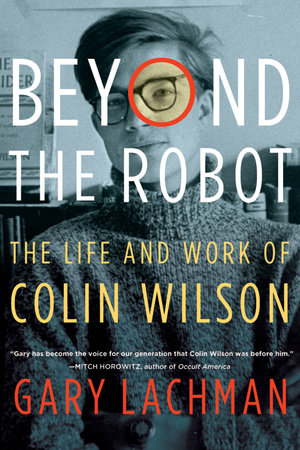
Gary Lachman Beyond The Robot: The Life and Work of Colin Wilson (Tarcher Perigree, 2016)

B8837E1A-49CD-475C-AB75-8DD753E889DAI first read Colin Wilson over thirty years ago and I was stunned. Layers and layers of recondite information (no internet, you see) poured out of the exciting, accessible prose style and the attitude was astonishing – a relentless attack on all the doom ‘n gloom that permeated everything (or so it seemed). As a teenage Lovecraft aficionado I’d read in a magazine that other writers had added to the Mythos and “perhaps the most original of these have been Colin Wilson’s Return of the Lloiger and The Mind Parasites.” I went to the local library to return a few yellow jacketed Gollancz Lovecrafts but they didn’t have either of those titles. They did have his The Outsider, but it seemed a bit imposing – Kierkegaard? I picked up the bulky volume next to it – about four times longer than anything I’d usually have the patience to read – and it was familiar. I’d actually opened the very same book around four years earlier and read “Everyone who has been in a strange town knows the easiest way to get to know it is to walk around it alone” before placing it back on the shelf. Above a drawing of the head of Michelangelo’s David in a maze or something, in big letters: Mysteries. Page 237. I was in my school uniform then. Now I was searching for a way out of the grey dreariness of council estate consciousness and all it’s attendant frustrations. Borrowing that book, I started a chain reaction and received more riches then I’d ever imagine.
Such was the random nature of finding a Wilson book last century. I began to read as many of the works he had referenced and this turned out to be the best education I ever had. I bought any Wilson title I could find – they usually stuck out due to their minimal cover designs, often in gaudy fluorescent colours – but why did he write so many books on such different subjects? A compilation entitled The Essential Colin Wilson and, later a new book about him – the first one I’d ever seen – by a retired Australian minister answered that conundrum. Eventually I’d read everything by him and have the pleasure of visiting his home to tell him just how much his work influenced me. But it is perhaps only now that I’m beginning to really understand the implications of Wilson’s investigations into consciousness and it’s perverse paradox of freedom.
My discovery of Wilson isn’t too far away from Gary Lachman’s own, as recounted in his Beyond the Robot, the first full length study since Howard F. Dossor’s pioneering summation in 1990. Wilson himself often remarked that what he was trying to say was fairly straightforward – and it was. But it can get lost in the jungle of his multi disciplined output, which is perhaps now even more confusing to a 21st Century mind obsessed with intellectual specialism.
Lachman thankfully makes this ‘single obsessional idea” (as Wilson called it) the theme of his book, which although structured as a biography is a kind of non fiction Bildungsroman as much as anything. Far too much discussion of Wilson focuses on the celebrity/rejection ‘debacle’ around his debut, cuts ‘n pastes the print out cliche of “fled to Cornwall…occult…crime…churned out…serial killers…UFO’s…once met Marylin Monroe…I’m a genius…” and avoids investigating his philosophy “at all costs” (as one desperate for revenue newspaper once idiotically put it). This is, not to put too fine a point on it, utterly pathetic and Lachman avoids dwelling on it, preferring to concentrate on the serious philosophical work which Wilson developed more or less away from the spotlight.
Wilson’s single idea sounds simple enough in theory, but it is cryptically difficult in practice (at first, anyway). Wilson is concerned with freedom – which he stresses is a certainly a reality – but, perhaps with a nod towards Nietzsche’s Zarathustra, he notes a paradox. The odd thing about human freedom is that it’s only usually visible when it’s threatened. “When the German tanks rolled into Warsaw, or the Russians into Budapest, it seemed perfectly obvious what we meant by freedom; it was something solid and definite that was being stolen, as a burglar might steal the silver.” But the absurd paradox of freedom is that consciousness without crisis tends to become negative and trivial. Pain and inconvenience can make us feel free, but comfort is generally boring after a while. Wilson would label this perversity ‘the indifference threshold’ and the amusing story of it’s genesis is in the early part of Lachman’s book. Without danger and injustice, Wilson writes, we allow “a kind of inner-laziness to descend.” Does this mean that we need to seek out stressful situations to feel more alive? Not really. The inconvenience is usually arbitrary and all it does is flex our otherwise flabby perceptual muscles (our intentionality), grasping the meaning of freedom. That meaning was already there – we do not need to induce a crisis to see it, we just need to strengthen our intentional grasp. Passive perception is the culprit here: we think things just ‘happen’ to us, but the philosopher Husserl recognized that this is false, and built a science of consciousness – phenomenology – to combat it. Wilson would write a lot about Husserl in the Sixties and his lectures on his ‘new existentialism’ would be well received in American Universities, but these ideas were out of step with the counterculture and were eclipsed by the academic celebrity surrounding Derrida’s ‘deconstruction’ of Husserl around the same time. (Recent scholarship has questioned Derrida’s true knowledge of Husserl’s phenomenology, and his ideas regarding linguistic domination are essentially now a mainstream state ideology – culturally speaking, at least. It is Wilson’s new existentialist theories which are about as truly radical as it’s possible to be in the 21st Century. His firm assertions regarding development of a strong, purposive consciousness and his blunt, driven language are coming from a dangerous and exciting place, far, far away from the comfy puritanical left/right identity politics blip of our present era, and miles away from the naive positivist faith in specialism and science. But I digress).
Why is consciousness so passive? Wilson suggests the problem is ‘the robot’, a kind of SF metaphor (probably derived from the Gurdjieff work, which Lachman cannily notes, Wilson was the first ‘outsider’ to report on) akin to Blake’s poetic notion of the Spectre. The robot is a kind of automatic servant buried amongst our faculties; it is the robot who drives our car once we’ve gone through the painstaking lessons of clutch control and reverse parking. They eventually become automatic so we can concentrate on other things thanks to our dependable helper. (This concept will doubtless become more apparent with the rise of automation in the near future). However this robot is a little over zealous; it often robs us of the quality of novelty or newness in the things we enjoy doing – it interferes with the freshness of things too often. “Making things typical is the robot’s job” writes Lachman. We have “allowed it to overstep it’s duties and have become to dependent on it”. But only because of our passive acceptance that “life is something that happens to us, rather than something we do.” Wilson would search for examples of this active doing consciousness and find it in everything from philosophy, literature, mysticism, science and even negative examples of it in (amongst other things) criminal cases and scandals. Lachman can clearly see the thread through all this and is keen to point out it’s continuity, rather than fall into the trap of regarding Wilson as a dilettante rambling from subject to subject.
True poetic (or aesthetic) illumination is the opposite of robotic consciousness – it’s freshness can be felt in all the early Romantics Wilson documented and dissected. Wilson’s robot (or ‘mind parasite’, in his fiction) is loosely based on Blake’s Spectre (“the reasoning power in man”) and another poetic idea would emerge out of the “new conceptology” of Wilson’s mid sixties phenomenological investigations. Blake regarded the ‘poetic genius’ as the true (non mechanical or robotic) person, and the “true faculty of knowing”, as a fully switched on state of non forgetful perception. “This faculty I treat of” wrote Blake. So would Wilson with his sharp and surprising turn into ‘occultism’ – at least that’s how the critics would see it as they welcomed him back into the fold in 1971. In reality his concept of ‘Faculty X’ – another slightly ironic science fictive label (snappier than the “phenomenological faculty”) – had easily been around since the Fifties. This faculty, Lachman remarks, had “preoccupied Wilson throughout his career” but it was not until 1971 that he gave it a name. Development of this faculty would preoccupy Wilson until the end, and he’d state and restate it over and over again, hedgehog style. Lachman notes interesting overlap here not just with Husserl but also with Whitehead. Faculty X is the antidote to the indifference threshold, or the “law of entropy in prehension” as Wilson described it in 1965, and Lachman understands it from both a theoretical and personal level, as opposed to writing it off as a piece of cranky gullibility.
Throughout the seventies and eighties Wilson would weave this phenomenological thread into work during the revival of interest in parapsychology and fringe Forteanisms, in the booming true crime genre (which he virtually invented), and on everything from alcohol to psychology to sexual deviancy, with many straight and parodic (“Brechtian”) works of fiction; not to mention the mountains of book reviews, introductions, lectures and TV appearances. A particular recommendation of Beyond the Robot is that Lachman pieces together shards of scattered information from minor works which only existed in tiny print runs – now rarities, or unobtainable – as well as core insights from the likes of Wilson’s 1966 masterpiece Introduction to the New Existentialism, (out of print since 1980), which gives a cohesion, a bird’s eye view to the existential jigsaw puzzle which too much writing on Wilson lacks. Like the ‘light detection and ranging’ technology which archeologists now use to find hidden cities under dense jungles, Lachman, like Dossor before him, maps out the alignments otherwise hidden by the debris of six decades of critical apathy and misunderstanding.
Lachman continues scanning into the nineties, where Wilson scholarship really picked up on the grassroots underground. I discovered the Wilson fanzine Abraxas from a notice in the back of his short Ouspensky study in 1993, and I took full advantage of the book signing offer. My copy of the Celebration collection has a verse of Peter Hammill’s song Faculty X in Wilson’s familiar handwriting, and Voyage to a Beginning was signed by “Lord Leicester” – who believed that human beings were grandfather clocks driven by watch springs somewhere in The Mind Parasites. I met Wilson bibliographer Colin Stanley and was so impressed at his collection of Wilson material – now housed in the University of Nottingham – that I started collecting first editions myself. Stanley continues to run the “aptly named” Paupers’ Press, a cottage industry publishing concern specializing in, but not exclusively, Wilson and his work.
All this was happening well under the radar of the critical establishment who continued to treat Wilson much as they had in 1957, and sometimes worse. He would put the record straight with his late work The Angry Years, and beautifully sum up his thoughts on the kind of super-consciousness which had preoccupied him for so long in a book of that title. The latter work was originally written for the Japanese market, where Wilson remained critically respected enough to lecture to huge audiences in 1986; back in the seventies he had been invited to lecture in Iran – his books were cult reading in the Middle East, and the red carpet had been rolled out for his arrival in Beirut in 1973. The huge sequel to The Space Vampires he had recently written was rejected by every British publisher (too long), but released in Russian (although according to Lachman, he received no royalties). His later work on lost civilizations was enthusiastically quoted – twice – by none other than cultural Marxist Slavoj Zizek. I wonder what the ‘dreadful’ Terry Eagleton made of that?
Despite the efforts of Abraxas and Paupers’ Press, despite the thoughtful nods from cultural figures like filmmaker Nic Roeg or musicians such as Julian Cope, it was only really the “brainless” British critical establishment who regarded Wilson as a joke. Typically, Beyond The Robot is written by an American ex-pat and seems to be only published in the USA. In a new introduction to a 1991 edition of his Beyond the Outsider (published in New York), Wilson described England in the nineties as “the cultural wasteland that it has been since the end of the Second World War.” Britain’s premier intellectual superstar in the 21st century? Dawkins, the Billy Graham of atheism. One example (from multitudes) of Nietzsche’s Letzter Mensch

When Wilson was once asked what he wanted to remembered for, he said for his novels and his central philosophical ideas. That’s possibly what will happen.

I received notice of Colin’s passing in an email on my iPhone in the works canteen one evening in late 2013 (shift work, 2 – 10). He’d been ill for quite a while and a few years before he’d told me from his chair at Tetherdown that “you can really feel it catching up with you.” The mainstream UK obituaries were lousy apart from one single example of insight in The Independent. In life as in death, they were totally unaware of his existential insights into the paradox of freedom and giggled behind their hands over a critical pratfall from a previous century. Great minds.
A few years before I had attended an exhibition featuring selections from the Colin Wilson archive, housed in the University of Nottingham (ironically, next to the DH Lawrence collection). There were scores of fascinating items and it was marvelous to meet old friends and make new ones. Colin was unable to attend but a festschrift of appreciative essays was collected and presented to him for his 80th birthday. This exhibition represented, to me, the start of a new era: all the hard slog and sweat of Wilson and his scholars will be easily mined by future academics. I’ll give it, oh, maybe a few decades before the critical recanting begins in earnest – what could be more self satisfying than a huge catalogue of work, popular but controversial, with tendrils reaching into a myriad of other disciplines and connections extending into the last blast of literary modernism, all forensically analyzed from a safe distance? Lachman has said in interviews that this is of course inevitable, as academic study of the humanities always runs out of things to say because it doesn’t generate it’s own content. But he was also wise enough to point out that that’s not really the important thing. The important thing is to cultivate the faculty Wilson wrote about, into a revolutionary state of perceptual and aesthetic awareness. The important thing is to get beyond the robot.

There’s barely anything in this book that hard core readers like myself won’t already know – can we have access to those phenomenological journals, please, though? – but of course the point of Beyond The Robot is to introduce new readers to a holistic picture of Wilson and his lifetime of ideas; in this it succeeds by crushing mountains of disparate information in between two covers. It grapples with possibilities regarding Wilson’s future influence. In a talk promoting this book Lachman ironically remarked that if we can go from wishing to publicly hang Aleister Crowley on a gallows to actually hanging Leon Engers Kennedy’s portrait of him in the National Gallery in a fairly short space of time, why can’t we rehabilitate Wilson? Now that Crowley has gone from being dangerous – I can remember the sense of discomfort just buying his books as recently as the Eighties – to absorption in the mainstream, where he has become just another meme, I can see a sort of parallel. Crowley’s legacy was kept alive by a tiny band of devotees after his death, remained buoyant by the counterculture, and he has ended up becoming somewhat respectable and the subject of academic studies. So is Colin Stanley our own Gerald Yorke? Yes and no. Colin Wilson could seem to be occupying the hinterland where Crowley was between 1947 and Sgt. Pepper, with a devoted following battling the revulsion of the establishment, but there are differences. Wilson avoided the trap of guru – he wrote a book critiquing the entire ‘charlatan messiah’ syndrome – and his open minded, generous accessibility, his offering of suggestions rather than rules or exercises means it’s unlikely that his readers can never end up like Crowley’s ironically non individualistic followers, with their catchphrases and identikit views. Some of us call each other “Wilsonians” but we don’t really mean it. And let’s not forget that despite the critical sniping, Wilson was always a popular author, much, much more widely read that somebody like The Great Beast, whose books are rumpled and fetishized by collectors and devotees rather than read by the public (Crowley’s best book, The Confessions, did sell quite a few in a paperback edition in 1989 though).
Lachman notes that when he first moved to London and began speaking about his interest in Wilson and the sum of his work he was surprised by the skepticism in ‘alternative’ circles, compared to those in the US – “the general impression I got was that he had written too much about too many things and had been repeating himself for years.” This specialism is endemic not just in esoterica but in other research like Ripperology (a term Wilson invented) and pretty much everything else which he wrote about. Wilson is thought of as a none too competent fox but only by those who cannot see the hedgehog for the spikes. Again, it doesn’t matter. Wilson remains a true oppositional, perhaps one of the last of his kind, and his attitude and ideas towards consciousness and its manifestations run counter to everything we see around us at the beginning of the 21st Century. That in itself is reason to celebrate him. I’ve no doubt that Wilson’s ‘new conceptolgy’, his solution to the paradox of freedom, will eventually begin to generate new and surprising revelations in an manner unexpected even by his readers.

Advance notice for The Second International Colin Wilson Conference 2018

After the success of the first conference – see the post below – a second one will be held next year on the 6th of July. The full details are –

IMG_0011The Second International Colin Wilson Conference; University of Nottingham, Kings Meadow Campus, Lenton Lane, Nottingham, NG7 2NR. To be held on Friday the 6th of July, between 9:30 – 17:10. Eight speakers will present papers, there will be discussion, refreshments, and a tour of the huge Colin Wilson archive housed in the University. There are only 55 places in total and tickets for Friday are £36.50 – email Colin Stanley at stan2727uk@aol.com or call/fax 0115-9863334. Please be aware that tickets will sell fast. There will also be a rare chance to see an operetta co-authored by Colin Wilson on Saturday – for those who wish to attend both this and the conference the ticket price is £42.

The Speakers:

Nicholas Tredell – Voyager and Dreamer: Colin Wilson’s Autobiographical Writing

Davd Moore – The Evolutionary Metaphors of Colin Wilson

Gary LachmanThe Outsider and The Work: Colin Wilson, Gurdjieff and Ouspensky

George C. Poulos – The Importance of The Outsider

Jason Reza Jorjani – Understanding The Atlantean Mind

Vaughan Rapahatna – The Hunt for Colin Wilson’s Lulu

Brendan McNamee – Body, Mind, Heart: 3 Aspects of Mysticism in Robert Musil’s The Man Without Qualities

Jonathan Lewsey – Colin Wilson and Music

Special Event, Saturday the 7th of July, 10:00 – 12:30, at the George Suite, Mercure Hotel, Nottingham: Leon Berger introduces a special showing of Donald Swann and Colin Wilson’s operetta The Man With a Thousand Faces.

Proceedings of the First International Colin Wilson Conference 2016 (with video)

IMG_0006Proceedings of the First International Colin Wilson Conference, University of Nottingham July 1, 2016.
Ed. Colin Stanley, Cambridge Scholars Publishing 2017
The Sixtieth anniversary of the publication of The Outsider was commemorated by this conference of eight speakers (with a ninth paper published as an appendix) at Kings Meadow Campus in Nottingham University. Not only is this where the Dept. of Manuscripts and Special Collections have a gargantuan Wilson collection, it was also once the location of ITV’s Central Studios where David Frost spoke to Wilson on a one off show called Beyond Belief. I watched this at the time but for those who missed it, it’s here 

Please note I have linked to a clip of each lecture and as the first lecture by Simon Brighton is about Wilson’s audio archive I recommend watching part two below. These videos also have plenty of discussion not present in the book.

The Speakers
Simon Brighton: The Colin Wilson Audio Project
Colin Wilson kept an audio diary from the “provisional” date of 1982 up until 2011. I once suggested to him in an email that I’d like to digitize all of them – I’m glad I didn’t as it seems to have been something of a Herculean task even for musician Simon Brighton (The Sons of TC Lethbridge, the Mayday! Mayday! EP featuring Stan Gooch). “Over a thousand” tapes were discovered all around Wilson’s home at Tetherdown and digitized to MP3 format. So, says Brighton, “the archive consists of over 2000 hours of audio.” Although some of the tapes were tangled and some were damaged “after a small fire which occurred when the telephone lines were struck by lightning” all the audio on these cassettes was extracted and converted. Bibliographer Colin Stanley was handed a drive of some 160 gigabytes of audio – Wilson kept recordings of his talks and interviews, of ideas for books, even thoughts “while driving to the supermarket” or on a train – and all of this will eventually be available to scholars at the Nottingham University archive. Now, what about all those Betamax videotapes of CW’s TV appearances that also need digitizing before they turn to analogue dust….

Video: intropart onepart two – part three (includes the beginning of Prof. Clark’s presentation which starts around the five minute mark)

Prof. Stephen L. Clark: Lovecraft and the Search for Meaning
A lengthy and erudite talk on one of my favorite authors, now canonized but still somewhat misjudged to be a poor stylist in both The Strength to Dream and Edmund Wilson’s Classics and Commercials – the latter dismissing him as a writer of “silly stories about ‘omniscient conical snails’ and ‘whistling invisible octopuses.'” This is expertly challenged here.

Video: part one (above) part twopart threepart four  – part five

Lindsay Siviter: Colin Wilson: Researching Jack the Ripper
“One of the youngest Jack the Ripper experts” and a guide on those Ripper tours which I went on years ago, although I’m fairly sure she wasn’t the expert who showed us around. Wilson of course coined the term “Ripperology” which shows no sign of running out of steam even today: there is even a “well established” magazine entitled Ripperologist! Siviter was the first researcher to visit Sir William Gull’s descendants, to “go through all his family papers and documents AND to have discovered a cast iron alibi” for him, with a thoroughness which Colin would have doubtless applauded. Going through the bibliography of Wilson’s output, Siviter discusses how many times the Ripper case appears in his work – a lot, as it started his interest in crime when he was a child. The field of Ripperology is, er, a cut throat business and theories and speculations are hotly contested – Wilson’s place in it’s development is well argued in this paper and Siviter continues to do excellent research today.

Video:  intropart one – part two

Nigel Bray: Colin Wilson and ‘Dread of Being’
Having read Bray’s book Bargaining with the Devil: The Work of Colin Wilson in a Cultural Context recently, I think I’m correct in saying this presentation is an excerpt from that book. To get an understanding of his dialectical approach to Wilson and his work, I’d like to quote from the book itself (which is Nigel quoting himself from his own journal after a re-reading of The Man Without a Shadow):
“It’s extraordinary. Terrible, repetitive style; pasteboard, comic book characters, and everywhere a slapdash attitude – to ideas, to emotions, to general structure…and yet the whole is compulsive, captivating… He throws all (genuine) literary objectives out of the window, and hammers at our laziness, our weakness, our defeatism, with a blunt instrument – his intrepid, style-starved prose, which can only be described as a long, rattling alarum. It’s like being roughed up by a docker, who’s been sent with the express purpose of knocking some sense into you.”
The lecture concerns itself with one of Wilson’s key topics, also central to Kierkegaard: boredom. That word “did not exist in the English language before 1750.” It’s equivalent can be found in the medieval concept of ‘accidie’ or ‘sloth, torpor or despair.’ These are still key concerns even as I write this, the sixty-first anniversary of publication of a book which was “an inquiry into the nature of the sickness of mankind in the mid twentieth century.” Bray is very well read and familiar with virtually every Wilson text, and this is a good taster for his lengthy and controversial examination of Wilson (which is a bargain if you own a kindle). He used to work for Brans Head who brought out the pamphlet Science Fiction as Existentialism.

Video: intropart onepart two

Nicholas Tredell: A Ritual for Outsiders: Philosophy and Narrative in The Outsider and Ritual in the Dark
Tredell has been familiar with both The Outsider and Ritual since his early teens; this would account for the extraordinary layers of detail he is aware of in those two texts, and others – a footnote to his essay has a list of how many times various characters make themselves physically sick, for instance. He sees both The Outsider and Ritual as “quest-narratives” – real and fictional persons offer “help and hindrance” towards a search for truth. Less a book of quotations – it’s certainly not, if you’ve actually read it – The Outsider is rather “an index of evolutionary potential” but the “sense of potential is not the initial or constant note” which is probably why some lazy readers actually see it as a pessimistic book. So “that dreadful” (as Prince Charles described him) Terry Eagleton could write a piece entitled Colin Wilson’s Glumness Entranced Me As A Budding Teenage Existentialist for the Guardian. Both books with their emphasis on “control, clarity and deliberateness” contain everything with which Wilson was to concern himself in a myriad of genres which would baffle and anger critics until the end (and after). Tredell is one of Wilson’s sharpest literary critics.

Video: intropart onepart two (includes the intro for David Moore’s presentation, below)

David Moore: The Light Barrier: Existentialism and the Occult in Colin Wilson’s Science Fiction
An autodidact like Wilson, Moore runs an excellent Wilson themed blog here. In his presentation he speaks about an “apparent ‘leap'” from The New Existentialism of the mid sixties to the SF and occultism of 1967 and thereafter. He knows of course that there wasn’t really a leap – The Mind Parasites concept grew out of the Petri dish that was The New Existentialism (on p.161 to be exact) and had it’s origin in the Spectre of Blake’s Illuminated Books, familiar to any reader of The Outsider. No, as Colin Stanley has expertly pointed out, Wilson already had a fairly strong interest in the ‘occult’ – he even admitted owning about “five hundred volumes on magic and the supernatural” before 1971. In The New Existentialism, Goethe’s Faust is as much an archetypical Outsider figure as Oblomov. Wilson was as excited by the philosophical possibilities of science fiction as by the ‘philosophy of the will’ commonly known as magic(k). Moore remarks “viewed in this context, we can see how the optimistic philosopher behind the Outsider Cycle utilised science fiction as a metaphor – and a means – to the increasing of mankind’s strengths and possibilities.” Because he was using Brecht’s alienation affect with the emphasis on alien, his science fiction novels were parodies “in which Wilson can express his evolutionary implications” in an uninhibited fashion. Against Lovecraft’s misanthropy and materialism, “presenting a universe without values”, the new existentialist is concerned with creating new values of the Nietzschian kind. The core value, the most valuable, was a mysterious faculty…

Video: part onepart two – part three

Gary Lachman: Faculty X: Other Times and Places
From a former NYC punk guitarist turned prolific author (including last year’s massive and necessary Wilson study Beyond the Robot) Lachman gets to grips with the ‘phenomenological faculty’ by any other name. It’s interesting to note that Wilson’s ‘Faculty X’ concept didn’t spring up fully formed in 1971. As Lachman observes, the theory was “formulated” (in Wilson’s own words) “on a snowy day in Washington DC in 1966” slap bang in his new existential era, and he had spoke of it to Kenneth Allsop some nine years before that. But it didn’t have a name. Both Beyond The Outsider and The New Existentialism stress the need to map out new avenues of consciousness with precise language, and with his labeling of “Faculty X” in 1971, Wilson did just that. Careful readers of Proust will be familiar with it, as will eagle eyed neophytes tunneling their way through the later writings of occultist Kenneth Grant. Like David Moore, Lachman sees no real ‘break’ between the existential research of the fifties and sixties and the will powered occultism from 1971 and thereafter, and the examples he gives here bear that out. Any “attentive reader of Wilson’s first book […] who went on to read the ones that followed, […] would not have felt anything unusual” about his development of a theory regarding the reality of other times and places. Lachman quotes “the last cultural mandarin” George Steiner – “our dictionaries lag behind our needs.” It’s true; when Chesterton says we say things but don’t mean them, it’s because our ‘reality function’ is turned too far down; but when the ‘phenomenological faculty’ is fully operational “we say these things and we mean them, because we really know they are true.”

Video: intro – part one part two – part three

George C. Poulos: The Transcendental Evolutionary Philosophy of Colin Wilson
This is a fairly complex piece of psychological-scientific writing regarding Maslow’s theories and I’d strongly suggest that you buy the book to get the list of “pre-resquisists for the narrowing” as it’s difficult to summarize without losing some of it’s full impact. Mr Polous is an Australian who also spends time with his family on the Greek island of Kythera. He sums up his presentation with the words that readers of Wilson are prepared for the eventuality of imminent God-head, but it’s “how the other 7 billion people on the planet handle it that I really, really, worry about.”

Video: intropart onepart two

Appendix:
Vaughan Rapahatna: Colin Wilson as Existentialist Outsider [Dr. Rapahatna could not deliver his lecture due to an injury so you’ll have to buy the book to read his timely thoughts on Wilson’s posthumous location in philosophy]
Rapahatna, previously known as Robertson to CW scholars, is a New Zealander and a poet and philosopher. He has written about Wilson for Philosophy Now and as part of the Colin Wilson Studies series (# 11, which is a section of his PhD thesis).
Like Nigel Bray, Rapahatna has what could be called a critical relationship with Wilson. Some of this criticism was previously collected in his Philosophical (a)Musings, and some is on this site. This particular lecture points out something I’d not properly understood despite more than three decades of study – Wilson’s very unlikely merger of two opposed stands of philosophy, linguistic empiricism and phenomenological existentialism. Even though this juxtaposition is actually announced on page 159 of his New Existentialism, and Beyond the Outsider ends with “The way forward lies through the development of language” I’d not immediately realized the full implications until I read this essay. But going back to the two Wilson texts mentioned above has been an extraordinary experience. Rapahatna notes that Colin Wilson is a “unique philosopher – English, existentialist, optimistic and with a strong insistence on the need for a structured and rigorous linguistic approach, which will bring about a completely divergent way to perceive and practice not only philosophy per we, but to live more consciously.” After reading both the sixth and seventh volumes of his Outsider Cycle again over the past week, this is a totally justified assertion. “Live more consciously” indeed.
“As such, he remains particularly relevant today, if not more so.” Why? Because “while post post-modernism is now in it’s death thoes – we are encountering the object based mantra of Speculative Realism, where no transcendental ego is deemed feasible as pre-existing objects themselves induce meaning perception”. I don’t doubt Wilson would have scoffed at Brassier and Meillasoux’s Romantic nihilism, and I think he might have been amused at Graham Harman’s belated assertion that phenomenological Cthulhu Mythos fiction is “a method of reverent parody that deserves to become a staple of philosophy.” Those who do not remember the past are condemned to repeat it.
Metaphorically speaking, Wilson had already broken into Heidegger’s chalet in the Black Forest and swapped the set of Hölderlin for The Necronomicon while this lot were learning to walk. Who knows what other things he’s anticipated?
I can’t wait to see…

Wilson’s bibliographer Colin Stanley has done a huge amount to collect, disseminate, promote and discuss Wilson’s work and legacy and we should be grateful for his remarkable efforts. Remember what Gerald Yorke did for Crowley! Another Colin Wilson Conference is set for July 6th, 2018 – full details soon.