“We who live today have a deep sense that there is nothing left for us to do” wrote Robert Musil in his masterpiece The Man Without Qualities, a novel which Colin Wilson regarded – correctly – as superior to Proust and Joyce. “It has a tough, intellectual, unemotional quality that I find profoundly satisfying” he once commented. “Regrettably, such qualities are not in wide demand”.
These ‘qualities’ (and their lack) are the theme of this very large book. Wilson notes that even in its unfinished state, it is longer than War and Peace. Aside from this little-read ‘standard edition’ of over eleven hundred pages, a deluxe version was issued for English readers in 1995 offering a total of 1774 pages. Wilson’s review of the latter version in the fanzine Abraxas helped me make my choice. It’s possibly the most rewarding £40 I ever spent on a piece of fiction.
Musil trained as a mathematician, engineer and behavioural psychologist, and it is likely that the latter knowledge gives the novel its bitingly satirical, contemporary edge (“reason and progress in the Western world would be displaced by racial theories and street slogans”: a century on, change “would be” to “have been”). Cheerfully referred to as ‘nudging’ by today’s governments, behaviourism is a robotic fallacy, and the lacklustre state of 21st century culture proves it. Musil’s novel is a relevant warning in this sense as the plot largely revolves around the bureaucratic red tape tying up a planned celebration of the Austro-Hungarian Empire – just before the Great War exploded such pretensions. Time and time again, striking parallels to our present problems fly off almost every page. “Regrettably, a great many people nowadays feel antagonistic toward a great many other people”. “We let others talk themselves into the most one-sided exaggerations: that’s idealism”. “There’s no longer a whole man confronting a whole world, only a human something moving about in a general culture-medium”.
“It can’t go on like this” he writes on the next page.
An abundance of such insights make the book remarkably contemporary almost a century on, rather like Dostoyevsky’s equally relevant The Devils. Yet re-read that quote about “a human something” again, and it’s obvious that it was Musil’s analysis of the ‘partial mind’ (“no longer a whole man confronting a whole world”) which made Wilson so appreciative (“his attitude towards politics is ironical”, Wilson comments). Musil’s line that “happiness can do wonders for a man’s latent possibilities” is a wonderful motto for Wilson’s own philosophy, and he recalls examples of these latencies manifesting in perception. He lists the striking perceptions of the bright colours of an outdoor market, the asphalt on the road, “the noise that broke apart for a few seconds to let out one specific sound”, Viennese architecture, restaurant tables that look alike but are all “so incredibly individual”… “It was the sort of feeling of which one is hardly ever fully aware, though it permeates everything”. Later (Chap. 122) Musil offers a more technical description of these latent possibilities: “it is with the invisible connections which our minds and feelings unconsciously arrange for us in such a way that we are left to feel we are fully in change of our affairs”. Bridging the gap between near and far (“a kind of foreshortening of the mind’s perspective”) is the trick, he writes. “Happiness, after all, depends for the most part not on one’s ability to resolve contradictions but on making them disappear, the way the gaps between trees disappear when we look down a long avenue of them”.
According to a Sartre biography [1] Musil was influenced by Franz Brentano, a theologican-turned-philosopher who handed down his insights into the intentionality of consciousness to his pupil Edmund Husserl, the ‘inventor’ of phenomenology (like Musil, he began as a mathematician). Readers of Wilson will be familiar with this useful philosophical method thanks to the later volumes of his Outsider series, most notably Introduction to The New Existentialism from 1966. Despite the occasional comment I’ve read that Wilson didn’t understand or distorted Husserl’s method, a close reading of Husserl’s main texts disproves this notion. [2] If anything, Wilson got the gist of Husserl better than either Sartre or Derrida, who both started as budding phenomenologists. Sartre was too glum to take on the loaded responsibilities that phenomenology demands and Derrida could have saved everybody a headache if he’d simply said that something negating its opposite is just a product of intentionality (selectivity). Wilson stated that phenomenology was essentially a common-sense attitude; after all, Husserl insisted that we put all of our self-indulgent prejudices ‘away’ before we even think of using his method. His pupil Heidegger bluntly defined phenomenology thus: “it is opposed to those pseudo-questions which parade themselves as ‘problems’, often for generations at a time”. Wilson’s exciting argument for an ‘evolutionary phenomenology’, Beyond The Outsider, documents some of these ‘problems’ in a chapter recounting the frustratingly uneven history of modern philosophy; Musil’s novel overflows with witty barbs against these pseudo-questions.
Following Brentano’s observation of an intentional or active consciousnesses, Husserl insisted that the greater the energy (intentionality), the greater the perception, sometimes alluding to the image of an an arrow hitting a target (later appropriated by Wilson – “perception is intentional”). Musil was onto the same thing when a character in his novel insists we try to notice “the part our personality plays in directing our perceptions”. Feeling, desire and intellect, he writes, “strikes and sticks like an arrow”.
At the end of the first section of The New Existentialism, Wilson states that the phenomenological method offers a radical break from the cycle of our actions determining our assumptions and vice-versa, a bind he later called ‘the paradox of freedom’ (after Sartre, perhaps). Brilliantly concise, Wilson’s book remains one of the best introductions to Husserl’s concepts, transforming the forbiddingly complex into the practical and workable. Development and use of the phenomenological faculty (‘Faculty X‘) he insists, can begin to solve the paradox which tormented Outsiders like T. E. Lawrence who craved a world “not filtered through or made typical by thought”. This practical discipline is “simply a matter of ceasing to accept one’s impulses at their surface value”, realising that consciousness is active, a “distorting medium” rather like the generalised culture field which Musil’s ‘human somethings’ swim around in.
Wilson comments that the change in consciousness produced by phenomenological analysis is less drastic than “useless” drugs, but it is permanent and susceptible to analysis. This is true: anyone practicing the disciplines from the book will be aware that the change is subtle but permanent. Wilson often reminded us that he was not offering an instantaneous cure. “You can’t become a new human being overnight” as Musil remarks.
“We wildly overestimate the present” exclaims the titular ‘man without qualities’ Ulrich. An archetypal ‘Outsider’ who has found little satisfaction in his idealistic projects, Wilson describes him as a character adrift in a society that has no use for his talents (asked what he would do if he ruled the world for a day, he languidly replies “I suppose I would have no choice but to abolish reality”). Walking with his cousin through a narrow snowy valley, they muse over this problem of the present, the here and now (“as if we’d been put in a basket and the lid of the present had fallen on it”). We make too much of this rather stifling ‘present’, he says. Wilson would doubtless agree: he reminds us that Sartre is always appealing to the present as his standard of reality. Attempting to free himself from this claustrophobic ‘now’ Musil imagines the valley as it must have been thousands of years ago. Unfortunately his mental time travel “is displaced by so much here and now, so much Present”. He cautiously explains that he does not wish to find an explanation or name for this strangely exhilarating state of freedom. This is a mistake.
As Wilson explains in The New Existentialism, we shall never understand these subtle changes in consciousness “until we create the heavy machinery of language and concepts to map these new areas”. The accurate description of inner mental states is but one technique of phenomenology. “What all this makes clear is that a ‘new existentialism’ must begin with the rather pedestrian task of pushing it’s a scaffolding of language into these new realms”. Nietzsche defined originality as noticing something that has no name “even if it is right in front of everyone’s eyes”; original thinkers are “are mostly also the name-givers”, he says. Wilson’s use of Husserl (the ‘phenomenological faculty’) was the origin of his provisional term ‘Faculty X’, the ability to remind ourselves of the reality of other times and other places, the very experience than Musil is trying to describe. There is nothing mystical about this Faculty (“an ordinary potentiality of consciousness”) although the two are often mistaken. In The Occult Wilson remarks that Faculty X is as much a creative (i.e. poetic) faculty as an ‘occult’ one [3] and is also connected with evolution. “In every epoch of history mankind develops some definite faculty and this faculty plays an important role in evolution” remarked Rudolf Steiner, another unorthodox thinker influenced by Brentano. Philosophically connected with Husserl’s and Heidegger’s examinations into the enigmas of time-consciousness, Wilson recalled that the idea came to him on a snowy day in 1966.
Husserl thought of the phenomenologist as an explorer “carefully describing what is presented along his unbeaten paths”. He cannily points out that all that is seen and noted in this state never loses its value – as Wilson remarks, these insights are permanent – and that all this is part of a long but rewarding journey toward freedom (Wilson interpreted Husserl’s concept of the transcendental ego as an evolutionary “drive to complexification”). Again, this confirms Wilson’s statement that the phenomenological method is certain, even if it is slow moving. When Musil pondered how to bridge the gap between near and far, he could perhaps have paid some attention to Husserl’s researches. The novel features a chapter in which Ulrich “chats […] in the jargon of the frontier between the superrational and the subrational” and sarcastically lampoons “the transcendent ego” and “the realm of being rather than the realm of phenomena or appearances”. Discussions of this near-far problem occur often in Husserl’s work, in Heidegger’s Being and Time and in Merleau-Ponty’s Phenomenology of Perception (which Wilson recommends as a handbook for his new existentialism). “Translated into the ghastly jargon of our times” writes Musil later in the novel, “we could call this faculty we all lack to such a frightening degree nowadays ‘the percentual share’ of an individual’s experiences and actions”. In dream, myth, poetry and childhood “it’s apparently a hundred percent, in our waking life not even half as much”. Wilson also spoke of consciousness in similar fiscal terms (“a tax on consciousness”; “five percent ‘you’ and ninety-five percent robot”). In an essay on ‘Husserl and Evolution’ he names this hidden poetic state ‘Childhood Realism’ – a richer intuitive content of ‘primal perception’ which lies under our everyday prejudices – while reminding us that Husserl’s “ponderous” first book of philosophy arrived the same year as Chesterton’s in 1900. Chesterton observed that we say the earth is round and even though it’s true, we don’t mean it. Wilson was adamant that we could say things and mean them when the Faculty is operative. “Husserl’s phenomenology” he says, “is an investigation of meaning”. Husserl ponders the fluctuations of meaning and the precise naming of such states in the first Investigation of the Logical Investigations, 1900.
During their walk through the valley Ulrich informs his cousin that even the earth isn’t what it is pretending to be at the moment; this pleasant little snow dappled valley was once a glacier. “Today it is acting the good middle-class mother feeding her children. Back then the world was frigid and icy, like a spiteful girl. Several thousand years before that it luxuriated in hot fern forests, sultry swamps, and demonic beasts”. In Human, All Too Human Nietzsche imagined Lovecraftian ‘cyclopean’ energies savagely beating a path through such glacial wastelands, eventually forming the “gentler civilsation” which we humans live in. “Such levels of thought are of course not to be taken literally, as if superimposed on each other like layers of soil” writes Musil, helpfully (he also speaks here of levels of consciousness, a concept later elaborated by Wilson). But these geological images are apt because Husserl described the descending and ever-ascending structure of intentional consciousness as ‘sedimented’. Similarly Wilson referred to ‘a ladder of selves’ and to compacted ‘layers of willed intentions’, those carefully – perhaps clumsily – learned processes which become habitual then automatic or ‘mechanical’ (sic). Husserl was just as concerned with breaking this automated apathy as Wilson’s favourite mystic Gurdjieff. As of course was Wilson himself.
Wilson’s alter-ego Gerard Sorme notes in his diary – published as Wilson’s novel Man Without a Shadow – that there are forces lying below the surface of consciousness that are “fully cognisant of everything that goes on” and that these forces “inject meaning into the world”. Without these, We are mostly completely unaware of such hidden ‘forces’ (layers of intentions). Sorme writes that the world is meaningless without them, “like the scenery stored in an empty theatre”. In his essay on Husserl and evolution Wilson remarks that the aim of phenomenology is to poke holes in this stage scenery of everyday consciousness (Wilson’s alter-ego reminds himself that he needs to develop a “new faculty” to do just that, later in his diary). The non-fiction twin to Sorme’s diary, Origins of the Sexual Impluse, also analyses this problem (“the strange arithmetic of these illusions”) and it’s solution through awareness of the ‘form imposing faculty’ of intentionality. In Origins Wilson points to the criminal character of Moosbrugger from Musil’s novel as an illustration of these strong forces breaking through into society without the necessary safety measures demanded by phenomenological analysis, or put more bluntly, without any intelligence. This theme is also exhaustively documented in Wilson’s true crime books. “The barred window and the bolted door were himself” realises Moosbrugger, sitting in his cramped cell. In his psychological study of murder, Order of Assassins, Wilson describes our ‘normal’ state of habitually narrow consciousness as “a kind of self created prison”, an image also used in The Outsider (Chap. 6). In purely practical terms this is a vicious circle which phenomenological disciplines can help break. As noted, at the end of the first section of The New Existentialism, Wilson points out that we grasp our lives according to what Husserl called the ‘natural standpoint’, a kind of lazy taking for granted. Therefore the human condition is determined by how we live and act. “But our actions are determined by our assumptions about their possibly of success” writes Wilson. “And our assumptions about their possibility of success are determined by our idea of the ‘human condition’ (as we grasp it according to the natural standpoint)”. [4] Historically speaking, this impasse has been broken by works of art, science and philosophy.
The sense of ‘nothing for us to do’, as Musil put it, was the life-question with which Wilson concerned himself, helped along by the practicalities of existentialism and the rigours of phenomenology. “What does a phenomenologist actually do?” he asks in The New Existentialism. “He applies the phenomenological method to whatever may be his own field”. Merleau-Ponty applied it to embodiment, after Husserl’s later work; Roman Ingarden applied it to art. Wilson applied it to something we all know: the everyday problem of ‘life-failure’. “A convinced reader might lay down [volumes by Bergson and Shaw] and sigh: ‘But what am I supposed to do?’ An existentialism based on Whitehead and Husserl is able to answer this question”. Husserl asked: ‘how does consciousness select some things and not others?’ and Wilson stressed that this ‘how’ “can be observed by anyone who goes to enough trouble”. [5] No more difficult that learning a language and just as permanent, these psychic changes are tied in with his notion of ‘layers of willed intentions’, a sedimented process of slow and difficult learning becoming habitual and then silently ‘automatic’ or robotic (learning to drive is a particular good example). Like the ‘work’ of Gurdjieff, Husserl’s phenomenology aims to uncover these so-called automatic functions as buried intentions, active forces which we mistakenly believe are passive, inert.
More radically, Wilson suggested that those who become particularly skilled in phenomenological analysis will be able to dredge up these deep ‘occult’ layers and reactivate them. “The law of man’s evolutionary being must be uncovered and brought to consciousness by the same methods that uncovered the laws of the planets”. [6] However, Wilson maintained that such deep motive powers – described cryptically by Husserl as ‘the hidden achievements of the transcendental ego’ and ‘the keepers of the key to the ultimate sources of being’ – should only concern us once we posses a fully functioning consciousness, thanks to the practicalities of phenomenological technique. Foundation work, as he had it. Husserl himself was of the same opinion; phenomenology was for him a “beginning philosophy”. Similarly, Gurdjieff stressed that we have a clear, non-robotic consciousness before attempting to connect to the ‘higher centres’ (essentially, what Husserl meant by the transcendental ego).
Whether one chooses to do these things is of course up to the individual – “anyone who goes to enough trouble”. That sentence, more than anything, sums up this whole philosophy. I can only speak from my own use of the methods of the new existentialism: they work, and their effects are indeed remarkably self-transforming.
[1] Hayman, Ronald, Writing Against: A Biography of Sartre, Weidenfeld and Nicolson, 1986, p. 95.
[2] For instance, in the Logical Investigations (RKP, 1970), p. 582, Husserl discusses how greater perceptual energy generates deeper comprehension; on pp. 253, 344 and 385 he mentions the “hit”, or “the target of our intention”, the “aim” of perception – an analogy used many times therein and elsewhere (a “dart” in Ideas ll, Kluwer, 1989, p. 252). Likewise the notion of perception seizing hold of objectivity as a ‘grip’ or enveloping it as a ‘ray’ is examined extensively (eg Ideas [Nijhoff, 1982], p. 293; this idea was already present in the Investigations, ibid. p. 542). Husserl often digs into the “structure of consciousness” (Ideas ll, p. 238) and examines the “sediments” or layers of consciousness (ibid. p. 234). Levels of consciousness are investigated in Ideas (ibid. p. 247). All of these concepts are put to full use in Wilson’s new existentialism: the terminology may vary but the debt is obvious.
[3] Wilson, Colin, The Occult, Granada, 1978, p. 123. Also: telepathy is likely a primitive ‘meaning perception’ and what we refer to as mystical experience is a temporary reversal of Prof. Whitehead’s two modes of perception (of which meaning perception is one). Wilson, Colin, Beyond The Outsider, Arthur Barker, 1965, pp. 89, 148. Wilson’s later thoughts on split-brain theory are relevant here.
[4] Wilson, Colin, Introduction to The New Existentialism, Hutchinson, 1966, p. 92. See also p. 66 – “‘perception’ is at least fifty per cent assumption”; p. 91, “But the question of how far life itself is a success or a defeat depends on these assumptions”; p. 173, ‘We are all insane; the difference between Napoleon and a madman who believes he is Napoleon is difference in degree, not in kind; both are acting on a limited set of assumptions”. An investigation into phenomenological neutrality and ‘assumption’ appears in Husserl’s Ideas, ibid. p. 257 (he stresses the universality of the phenomenological method). On p. 259 he defines assuming as ‘supposing’, those kind of presuppositions (a “merely-thinking-of”, the lazy perception of the natural standpoint) which his method aims to rigorously question.
[5] Wilson. Beyond The Outsider, ibid. pp. 160/1 and p. 82.
[6] ibid. p. 165. I am reminded not only of occultist Austin Osman Spare’s ‘formulae of atavistic resurgence’ which allegedly involves reactivating ancient ‘karmas’ via aesthetics, but also of Rudolf Steiner’s theosophical descriptions of germinal human states via planetary metaphors such as ‘Old Saturn’ (apparently the origin of human sensuousness) etc. Also Gurdjieff’s cosmology/psychology. See Ouspensky’s In Search of the Miraculous (RKP, 1950), Kenneth Grant’s ‘Typhonian Trilogies’ and his Images and Oracles of Austin Osman Spare (various publishers), and Steiner’s lectures, available online.
NOTE: The Third Colin Wilson Conference will be happening this September (1st – 3rd) in Nottingham, UK. More details here.
“It is the fallacy of all intellectuals to believe that the intellect can grasp life” wrote Colin Wilson in 1966. A century before, the young Nietzsche had realised that happiness and freedom lie beyond “the confusions of the intellect” when he took shelter in a shepherd’s hut. “The storm broke with a tremendous crash, discharging thunder and hail, and I had an indescribable feeling of well-being and zest”. Similarly, Proust’s epiphany in Swann’s Way happens on a dreary winters day. “The past” he broods as he comes indoors from the cold, is “beyond the reach of the intellect”. A few sips of warm tea and some morsels of cake later he recalls a childhood episode with piercing clarity; he has suddenly ceased to feel mediocre, accidental (“contingent” depending on the translation) or mortal. This feeling of “all-powerful joy”, he ruminates, brought with it “no logical proof, but the indisputable evidence, of it’s felicity, it’s reality”. Proust called these moments of well-being moments bienheureux – “quite simply, a surge of strength and power” comments Wilson. He goes on to say that Proust would have demurred at this interpretation as he thought of himself as an invalid and hypochondriac. Conversely, Nietzsche sought this powerful feeling despite his own worse ill-health (Wilson’s 1972 essay Dual Value Response examines the latter dichotomy in some detail). In 1986 Wilson defined existentialism – as it is commonly understood – as “the notion that reality extends beyond our power to grasp it”. Against this he offered a ‘new’ existentialism, based on the phenomenological methods of the philosopher Husserl. The key text, Introduction toThe New Existentialism (1966) explains how Husserl’s ideas deny the contingency that existentialism stressed, despite predating and influencing that philosophical school. Both Heidegger and Sartre began as keen ‘phenomenologists’, the former studying it first hand from Husserl. Wilson correctly points out that both soon moved away from Husserl’s most practical insight, that of intentionality, or the study of active perception, in order to compromise with professional philosophy (and with dogmatic political ideology, Heidegger veering far right and Sartre far left).
The intellect finds it hard to grasp the moments which Nietzsche and Proust experienced as it relies on the shorthand of symbols and language, puzzles which Wilson examines in the last few volumes of the Outsider series. But these – indeed, most of his books – also analyse a much more serious and immediate problem: the seemingly random fluctuations of consciousness. “If the flame of consciousness is low” he writes in The New Existentialism, “a symbol has no power to evoke reality, and intellect is helpless”. That the intellect is a “false guide” is no cause for pessimism, he comments, as pessimism itself arises from from the delusions of passive, limited consciousness. “Human beings need a centre of security from which to make forays into the outer-chaos”, he continues. But these protective walls can quickly feel like a padded cell or prison; too much security becomes boredom which leads to a loss of vitality, a feeling of being trapped in the present. This atmosphere is described in the first part of Goethe’s Faust, in Goncharov’s Oblomov and in Sartre’s fiction. “Man uses his intellect to prevent his experience from escaping him” comments Wilson. “But the essence of the experience escapes, all the same”. Existence philosophy (‘old’ existentialism, as Wilson labels it) failed because it stuck to examining everything through this narrow lens of limited consciousness. Adding insult to injury, it declaimed these limitations in the formal jargon of the academy (“the difficulties encountered in a text by Jaspers, Heidegger or Sartre are the difficulties that the author feels to be necessary to an academically respectable philosophy”). But the point of Existenzphilosophie was that it dealt with direct living problems over generalised abstractions, a realistic attitude which Wilson attempted to revive with his vigorous ‘new’ or phenomenological existentialism, aimed at the general rather than specialist reader. “It deals with the most immediate problem we can experience, with our actual living response to everyday existence”. It could be argued that Wilson’s background as a self-taught working man gives his writings a directness and liveliness which is generally missing in the theorists he is examining. It also offers accessibility to a non-academic audience, a point he addresses early in his book. I can vouch for that, as The New Existentialism is the most useful text I’ve read for dealing with the seemingly random fluctuations of meaning which come and go on a daily basis. Simply put, the phenomenological idea of intentionality suggests that we subliminally select our meanings according to our temperament. Nietzsche intuitively grasped this process when he said that there are no facts, only interpretations, but Husserl went further, demonstrating that our interpretations cloud these ‘facts’ or truths. Understand these distortions and we will begin to think with more clarity.
If this principle of intentionality is understood, life gradually becomes subtly different. “Once we see this clearly, it becomes astonishing that anybody bothers to argue about it” reads one of the most penetrating lines in Wilson’s book. About what? About the observable principle that intentionally limited consciousness – what we glibly call ‘ordinary consciousness’ – is a scaled down version of the real thing, a truncated view of life. This is not wooly mysticism – Wilson had already offloaded mystical literature to the status of a “primitive phenomenology” in the previous Outsider volume. As he says, it has more to do with our direct response to everyday existence. If consciousness selects it’s facts and objects of perception, why would anyone choose a selection which ‘proves’ that they are merely at the mercy of outward things, without any inner freedom? The obvious answer is: laziness. But as Husserl stated in 1900, an energetic perception grasps more ‘reality’ than a merely token recognition, an observation previously made by the poet Blake with his devilish aphorism ‘energy is eternal delight’. This optimistic sense of lived possibility runs through all Wilson’s writing. “Can one live a philosophy without negating either the life or the philosophy?” he asked in the opening pages of The Outsider. Yes: as he later explained in Beyond the Outsider, the workings of intentionality “can be observed by anyone who goes to enough trouble”. Effort is the starting point; this could merely be the effort to understand what Husserl meant. The New Existentialism even has a section of practical disciplines. “The first practical disciple for the existential philosopher is to learn to become constantly aware of the intentionality of all his conscious acts”. Recognition is another key factor.
Husserl himself insisted that phenomenology is not merely “vocational” or academic but involves creating a new attitude [Einstellung] towards lived experience. Wilson put it succinctly in a later essay on his ‘new’ existentialism in 1986: “Husserl’s recognition of the intentionality of consciousness is a recognition that our attitudes govern our perceptions”. Wilson’s writings are packed with illustrations of this in action. Examples are drawn from from literature or philosophy – Proust and Nietzsche, above – or from religion and mysticism, psychology, personal anecdote, even criminal cases. He would often quote the philosopher Whitehead, who had insisted we examine ‘experience drunk and experience sober’ – Wilson wrote a book on alcohol – ‘experience normal and experience abnormal’ and so on. This is the existentialist position (Wilson also wrote an essay about Whitehead as an existentialist). It is what Husserl meant when he said that the study of intentionality is not vocational but is completely involved in life as a whole. “We can even go on calmly speaking in the way we must as natural human beings” writes Husserl in the sixty-fourth section of Ideas, “for as phenomenologists we are not supposed to stop being natural human beings”.
Wilson thought Husserl’s method “brilliant and original” but felt that he never really got beyond it (“he spent his life on the threshold of philosophy, laying the ‘foundations’”). What was required of his own use of this method was to align it with the everyday experience of the average reader, and to tackle the serious problem of fluctuating meaning. Wilson was adamant that intentionality was much more exciting and dynamic than ‘reference to an object’ or an ‘intelligent effort of interpretation’ as phenomenologists soberly put it.
Husserl speaks of intention as a “ray” or “grip” while pondering how to regenerate the confusions of “intellectual content” into something distinctive and understandable [Ideas § 123]. Wilson points out in Dual Value Response that if Nietzsche had lived to his sixty-eighth year and read Husserl’s text he would have found a direct method for grasping his pure experience, without intellectual confusions. Not only that, says Wilson; had Nietzsche known about separating his intention from the object – which Husserl explains in great detail between sections 87 and 127 of Ideas – we would have been spared his unnecessary obsessions with the likes of “that egotistic roughneck” Cesare Borgia. With this concept in mind Wilson spoke of a faculty which can firmly hold a “grip on reality” in The Strength to Dream and of intentionality as an “inner meaning” or “grip on life” in Origins of the Sexual Impulse. “Husserl’s phenomenology, then, is an investigation into meaning” he says in Beyond the Outsider. These last few volumes of the Outsider series are where Wilson delves deepest into phenomenology, all of it summarised in the 181 pages of The New Existentialism. Here, the ideas of the Outsider series are presented in “a simple and non-technical language for the ordinary intelligent reader” and Wilson presupposes no previous knowledge of the series, nor the existentialism or phenomenology it deals with. One delightful aspect of the book is it’s tone: it manages to explain ‘continental’ philosophy with the breeziness of an Anglo empiricist. “A phenomenologist might be an existentialist or a logical positivist or a neo-Hegelian” he writes, ending the first part of the book (“little more than a clearing of the ground”). But it is already much more than that. The first part remains one of the most cogent explanations of the phenomenological method ever written, and one of the main reasons for such dynamic clarity is that Wilson was a self-motivated thinker, a product of factory floors and belching chimneys rather than dreaming spires and ivory towers. Nietzsche himself said that good writers attempt to make their ideas clearly understood rather than cypher them to “knowing and over-acute readers” of the over analytical, dryly intellectual kind. “The legitimate is simple, as all greatness is simple, open to anyone’s understanding” wrote the novelist Robert Musil in his masterpiece, The Man Without Qualities. “Homer was simple, Christ was simple. The truly great minds always come down to simple basics”. If Nietzsche had written a novel, it would doubtless read like Musil’s (despite one character describing him as a “mental case”!)
The intellect can only take us so far in these matters as it is still only a part of lived experience, entwined with our values and our response to life. The phenomenological methods on which the new existentialism is based do not promise instantaneous results or a quick fix solution. “You can’t become a new human being overnight” as Musil observed. Rather, it is closer to the religious idea that a) what we observe is not the totality of reality and b) more subtle aspects of this reality can be slowly comprehended over the span of adult life via careful observation. However, the method is free of the kind of sectarian prejudices (“the weaknesses of every individual” as Blake had it in All Religions Are One) that inevitably sink religions and their cultish offshoots.
In a social sense it is important to remember that Wilson equates early lack of struggle with the attitudes toward meaning that Husserl describes. For instance, Sartre and Beckett were brought up comfortably middle class whereas Shaw and Wells – and Wilson himself – were working class. The tone or atmosphere of the new existentialism is therefore closer to the latter writers than the former, based as it is on the ordinary lived experience of difficulty, the hard won knowledge that effort brings reward.
But perhaps the reason I personally find Wilson to be a trustworthy guide in many intellectual matters is due to a shared attitude – what the psychologist Maslow called ‘the need to know’, the opposite of intellectual timidity or logical dogmatism – rather than the specific fact that we both emerged from the same rung of society (correctly, Wilson never liked being bricked in as just a ‘working class writer’ with his fellow Angry Young Men). Most likely, it was this open attitude rather the bare facts of Wilson’s background which created his uneasy relationship with the intelligentsia of the time.
Maslow remarks that “examination of psychologically healthy people shows pretty clearly that they are positively attracted to the mysterious, the unknown, to the puzzling and the unexplained”, the kind of amusing or disturbing oddities collected by Madame Blavatsky or Charles Fort or indeed in Wilson’s own, rather more literate and philosophical occult studies. Maslow observed that psychologically unhealthy subjects tend to feel threatened by the ambiguous and unfamiliar, preferring the “unenriched familiarity” of normal or naive perception as Husserl described it (Wilson had it as “forced familiarity” in his Wilhelm Reich biography). Sartre’s writings contain many examples of this easily upset perception, notably the descriptions in Nausea of treeswhich frightened him and lamp-posts which embarrass him (“I would have liked them to exist less strongly, in a drier, more abstract way”). As Nietzsche said, we begin to distrust clever people when they embarrass too easily. Sartre’s request is admirably ‘phenomenological’, but one which misunderstands Husserl’s assertion of an active perception. True to form, he felt more comfortable with dialectical materialism.
One of the practical phenomenological disciples given in The New Existentialism involves patiently listening to political opinion from the party you vote against without reacting – a challenge indeed to the hardened dogmatists of both left and right today. Wilson’s A Criminal History of Mankind (1985) overflows with illustrations of this “spiritual arthritis” at work in societies and individuals throughout history. Such rigid dogma can easily become a catastrophic, anti-creative force, reactive rather than intentional. Wilson’s favourite mystic Gurdjieff was obsessed with overcoming this ‘mechanical’ fault, stressing that genuine knowledge is only allotted to those who actively seek it via struggle or effort. This information, he says, can be best collected during the fall of cultures, “when the masses lose their reason and begin to destroy everything” – periods of philistinism often accompanied by “geological cataclysms, climatic changes”. An enormous surplus of this ‘knowledge’ lies unclaimed as the majority never even collect their rationed share (Gurdjieff insisted that knowledge was ‘material’, like food). It’s certainly a good parable for Wilson’s analysis of meaning, which can be grabbed or grasped in larger quantities by those who have attempted to develop their ‘organ’ of intentionality (“a kind of hand” as Wilson describes it). This can only be done on an individual level; no one else can do it for you. Gurdjieff also insisted that the only possible mystical initiation is self-initiation. As Wilson suggested, the mystical doctrines of ancient sects are but a precursor to Husserl’s revolution in thought.
Wilson sometimes said that this question of intentionality was a matter of life and death, a seemingly large and dramatic claim for an abstract philosophy born of logic (Husserl began as a mathematician). But in a certain sense it is true: those capable of developing a hold or grip on reality will be far less susceptible to debilitating conditions such as depression. Drawn from a passage near the end of The New Existentialism, the plot of Wilson’s 1967 satire The Mind Parasites outlines a global plague of anhedonia circa – ahem – now. The narrator describes the book (essentially an assemblage of fictional documents) as “a work of history, not of philosophy” but is still of the opinion that the word phenomenology is “perhaps the most important single word in the vocabulary of the human race”. Satire or no, it is likely that Wilson wrote that line with his tongue only partly in his cheek.
In the long run Wilson’s one man war against life-failure and the ‘age of defeat’ will become more and more relevant to hardened individualists bored by living in a rather suffocating world modeled on he philosophical fallacies of behaviourism, a system which maintains the lifeless state of the “man-machine” that Gurdjieff regarded with horror. “Husserl suggested” writes Wilson in The New Existentialism “that as man loses all the false ideas about himself and the world through scientific [i.e. phenomenological] analysis, and as he comes to recognise that he himself is responsible for so much that he assumed to be ‘objective’, he will come to recognise his true self, presiding over perception and all other acts of living. This idea seems common-sensible enough, and our intuitions about ourselves seem to support it”. A few examples of this shift happening are given later in the book via the experiences of William James, Arthur Koestler and René Daumal. “The ‘self’ that has been experiencing various fears and humiliations has been evoked by a narrow range of experience”, but the self that has overcome this “is contemptuous of this triviality”. This the change of attitude (suspension of prejudices) which Husserl stressed. By true self or ‘transcendental ego’ he meant a state shorn of fallacies from which genuine thought could begin. But Sartre, and later Derrida (“Sartre redivivus” – Wilson) misunderstood it as a survival of religious idealism, thanks to too much dogmatic intellectualism and not enough common-sense intuition.
The key, as Husserl said, is to become aware of the workings of intentionality as a living method, rather than just another theory in the annals of philosophical history. “In recent times the longing for a fully alive philosophy has led to many a renaissance” he states in the lecture Cartesian Meditations [§ 2]. This living philosophy is based on the “radicalness of self-responsibility”, and on a necessity to “make that radicalness true for the first time by enhancing it to the last degree”. This “new beginning”, he says, is “each for himself and in himself” [§ 3]. In Beyond The Outsider Wilson remarks that Kierkegaard’s ‘truth is subjectivity’ can really only be illuminated by Husserl’s method. Rather than interpret this as ‘beauty being in the eye of the beholder’ it should be understood as a paradoxical instruction meaning that truth is within (“in himself”) but is not relative. Wilson later comments that Kierkegaard’s statement “seems to justify the view that there are as many ‘truths’ as there are individuals, and all are equally valid”, which is the default position of the present era. [1] Musil sardonically wrote of “the general obsession with turning every viewpoint into a standpoint and regarding every standpoint as a viewpoint”, a barb as relevant as it was a century ago. Wilson goes on to say that it would be more accurate to say that ‘truth is evolutionary intentionality’ (a concept explained at length in Beyond The Outsider). In effect this means that the further we move away from local or subjective prejudices – Blake’s ‘weaknesses’ – the closer we get to a truly unique individuality (the transcendental ego, a self shorn of such relativist baggage). As previously noted, our deeper intuitions about ourselves certainly support this view.
The evolutionary paradox which Wilson analyses in titles such as Beyond The Outsider, The Occult and ACriminal History is of a lopsided human creature dominant in intellect and it’s ever refined details but surprisingly weak in grasping larger, overall meanings. As his philosophy aimed to correct this disability, it is unsurprising that he came into conflict with professional intellectuals as much as he was welcomed by ordinary readers. After all, as The New Existentialism explains, that was his intention all along.
[1] “If we instinctively acknowledge human greatness as a value – that is, if we agree that Jesus is in some way preferable to Judas Iscariot, that Beethoven is a more valuable human being than Al Capone – then we are subscribing to he basic human vision of freedom”. Wilson, Colin, Introduction toThe New Existentialism, Hutchinson, 1966, pp. 162/3. This is analogous to Wilson’s comment on Nietzsche’s unnecessary celebration of the Borgias (“a great deal of misleading stuff”). Wilson, Colin, ‘Dual Value Response’, 1972. Collected in The Bicameral Critic, Salem House, 1985, p. 108.
“What human beings find extremely difficult to grasp” remarked Colin Wilson to his first biographer Sidney Campion, “is that when they open their eyes and see the world, they are, as it were, seeing one of a thousand possible worlds. We colour our world with attitude”. The idea that we can simply choose one world out of thousands sounds extremely difficult to grasp, if not actually fanciful. However we can change our attitude towards the world and this must be remembered in order to understand the context in which Wilson was speaking – in fact, in order to understand Wilson’s ideas at all.
Wilson was influenced by the philosophical discipline known as phenomenology, the esoteric precursor to the more popular existentialism. Phenomenology is a method which dismantles our usual presuppositions about perception. Edmund Husserl, the founder of the method, described our so-called ‘normal’ state of perception the naive or natural attitude, the attitude we usually ‘colour’ our everyday world with. For the “naive man” [1] comfortable in the naive attitude, the world is just as it seems, static and unchangeable. But ‘naive man’ is unaware that he is confusing his own interpretation of the world, coloured by his personal attitudes, for the objective world itself. As Wilson observes in TheOutsider, this attitude (‘world’) is always well captured in poetry and novels – Sartre’s Nausea is a particularly good example of this colouring (Sartre began as a follower of Husserl). Against the naive attitude which we presuppose as natural, Husserl posited the phenomenological attitude, a stepping away from naivety or acceptance of things as they ‘naturally’ are. The phenomenological attitude rejects this naivety and instead concerns itself with the selectivity (or intentionality) of perceptive acts. We choose our perceptions and therefore we choose our worlds. In the naive attitude we think perception just ‘happens’ but in the phenomenological attitude this naivety is banished (Husserl used a mathematical term, ‘bracketed’) and perceptions are closely analysed for emotional prejudices or distortions before they creep into conscious awareness.
“I know of no task more difficult than becoming aware of one’s act of selection, and trying to control it” commented Wilson to Campion. A change of attitude from the naive to the phenomenological is the first step in realising this selectivity in action. Simply becoming aware that consciousness is selective is a major step forward: Wilson summarised this awareness in his maxim ‘perception is intentional’. On a personal note, I can now recall a subliminal change of attitude when I first encountered Wilson’s writing – in his Mysteries (1978) – despite Husserl being just another obscure name amongst most of the others. It wouldn’t be until I read the last few volumes in Wilson’s ‘Outsider Cycle’ that I’d gradually begin to understand phenomenology as a specific technique with a history, but the requisite change of attitude happened quickly after contact with his writing. Husserl’s books and lectures are formidably dense but Wilson expounded those rigorous phenomenological ideas in clarified and compulsive prose while demonstrating their efficiency via numerous and seemingly unrelated metaphors and comparisons – from literature and poetry to criminology and even occultism (truth be told, none of this is surprising if the intention behind it all is known). Once this change of attitude is understood and Husserl’s method is grasped, Wilson’s ideas can be understood and appreciated properly. It must be remembered that sightings of the magic word ‘phenomenology’ are alarmingly thin on the ground in Wilson’s press reviews and actual discussions of his use of the method are virtually non-existent outside of his occasional appearances in philosophy journals. “Talking to him about phenomenology was a sure way of putting him to sleep” said Wilson about one philosophically challenged interviewer who nodded off on Wilson’s sofa. A British ‘highbrow’ broadsheet once began an interview by refusing to discuss Wilson’s philosophy at all. Writing about Wilson without at least a basic grasp of Husserl’s method is essentially pointless and makes for an exasperating read. “His books can be best understood against the background of the European philosophical tradition; in fact, no real understanding can be arrived at without some knowledge of this background” wrote Sidney Campion.
Wilson has dealt with the historical schisms of the original phenomenological movement in some of his writings but what really concerned him was making his readers understand and practice the discipline of becoming aware of and controlling our selective acts in perception, to grasp our freedom to choose whichever angle we see the world from. Nietzsche called this choice of viewing angles ‘perspectivism’ but was unaware of the beginnings of what one historian has called the “phenomenological current” which started with Franz Brentano. [2] Nietzsche’s swooping “guerrilla raids” on presuppositions (our ‘colouring’ attitudes) make enthralling and inspiring reading, but he lacked Husserl’s basic technique to truly explode them. A guerrilla, Wilson commented, “is at a psychological disadvantage, being a man without with a home, without an established position”.At his base camp (the phenomenological method) “Husserl was luckier” says Wilson. “He was also irritated by the by the psychologism, the relativism, the nominalism, that had permeated philosophy since Locke. But he demolished them with irrefutable arguments in the LogicalInvestigations, and laid his own foundations”. Nietzsche’s perspectival statement that there are no facts, only interpretations is much closer to Husserl’s intentional method than to postmodernism (a philosophy stuck in Locke’s relativism, his ‘blank slate’, which both Nietzsche and Husserl rejected). Despite being strongly influenced by British empiricism– what Nietzsche described as an “English-mechanistic-world-stupidification” – Husserl offered a precisely cutting critique of Locke’s “obviousness” in his LogicalInvestigations (Investigation II, chapter two, §9 – §11). Nietzsche’s statement about interpretation appears in his mid-1800’s notebooks amongst other thoughts which do suggest an intuitive affinity with what Husserl would later conceive. He writes that no event happens in isolation, what happens “is a group of phenomena selected and synthesised by an interpreting being”. And if, he later asks, this being or “our ‘I’ is our only being, on the basis in which we make everything be, or understand it to be, fine! Then it becomes very fair to doubt whether there isn’t a perspectival illusion here” – that is to say, a distortion, the kind that Sartre let slip into his rather gloomy descriptions (phenomenology depends on accurate description of intentional states). In his notebooks Nietzsche muses on a theme which he insists runs through his writings: that “the world’s value lies in our interpretations” and suggests that there could be a possibility to go beyond “merely human” or “narrower interpretations”. The world which matters to us (the one we naively ‘value’) he says, “is false, i.e., it is not a fact but but a fictional elaboration and filling out of a meagre store of observations”. It wouldn’t be too far fetched to say that these meagre observations are identical to the naive or natural attitude (also known in Husserl’s terminology as ‘the natural standpoint’ – a concept similar to Nietzsche’s metaphor of perspectivism). Our values are entwined with how we interpret, and if our selective interpretations are narrow, as Nietzsche, Husserl and Wilson insist they are, then our values will also be narrow. Analysing a ‘world without values’ in TheOutsider, Wilson asked how it was possible to be less of a daily victim of circumstance, to feel less stuck in the present moment which makes us easily forget our aims toward purpose and meaning. He would find the answer in the faculty of poetic inspiration (Blake described it as the ‘Poetic Genius’, a pre-imagining of Husserl’s transcendental ego) with it’s associated expanded consciousness. Like a kind of negative proof, examining the shadows of negativity throws light on positive values. Wilson used literature to analyse such narrow or even nihilistic values and criminal cases to debunk real (as opposed to fictional) nihilism. Like Dostoyevsky, Wilson studied crime for philosophical and not morbid reasons. In TheNewExistentialism he makes the important point that the “first major work of existential philosophy in the twentieth-century was Jaspers’ GeneralPsychopathology […] it should be clear that questions of mental sickness belong to philosophy as much as to psychology”. Hence Wilson’s pioneering true crime writings and the original subtitle for TheOutsider: ‘an inquiry into the sickness of mankind in the mid-twentieth-century’ (on more modern editions it reads the more sellable ‘classic study of alienation, creativity and the modern mind’).
The existential study of murder starkly illustrates the inverse of positive values and their terrible social perils. “By it’s negative nature” says Wilson, “the act creates a resistance in the reader; when the cause of this resistance is analysed, the result is an insight into positive values”. Reading about a murder case produces a violent jolt to our naive attitudes; we are thankful to be uninvolved in such negativity. Yet very quickly this insight is forgotten and natural or naive banality returns. Aware of Husserl’s method, Wilson rejects this naive attitude as normal and notes that we are “actually selecting which things to include in [our] attention and which to dehydrate into symbols and leave in cold storage” (Nietzsche’s “meagre store of observations”). We are, Wilson continues “unconsciously valuing life. Out of thousands, perhaps millions, of facts that could be actively present to your consciousness, you choose a dozen or so”. This is what is meant by Nietzsche’s central insight that “the world’s value lies in our interpretations”. With the knowledge of crime in mind, we should be wary of negative values and choose our ‘worlds’ accordingly.
“The highest value is represented by the person who habitually bestows the highest motivational power on the genuine, true, valid, and free decisions” said Husserl in the second book of Ideas, sounding rather like Nietzsche and throwing in some unexpected thoughts on murder along the way [3]. In his later notebooks Nietzsche writes of huge numbers of habits that have become “so hardened that whole species can live upon them”. These habits, he says, constitute their external world and the oldest habit that humans themselves possess is intention – although he did not interpret ‘intention’ as Husserl did, unaware as he was of the strict technique of stepping out of the naive and into the phenomenological attitude. William Blake intuitively knew this crossing from one to the other and he anticipatedphenomenological existentialism with uncanny accuracy – “He who sees the Ratio only, sees himself only”; “the true faculty of knowing must be the faculty which experiences. This faculty I treat of”; “all sects of Philosophy are from the Poetic Genius adapted to the weaknesses of every individual” etc. “Phenomenological analysis has confirmed what Blake asserted a century earlier” remarks Wilson. In the natural, naive attitude, Husserl says, [4] we “wear the blinders of habit” which can become “rigid” if unchecked: Blake’s mind forged manacles. As Wilson says, we are like blinkered horses in traffic [5]. Wilson thinks that Nietzsche’s poor health helped him observe ideas from different angles. People who do not suffer from such fluctuating health problems as Nietzsche did tend to take up “a certain attitude towards the world – what he enjoys, what is a nuisance – and maintains it year in and year out, until it becomes a habit”. Wilson described consciousness as mostly composed of solidified habits which he labelled ‘mechanical intentions’. These intentions have become mechanical or robotic (automated) through willed repetition (learning to type or drive for instance). They ossify into habits and we forget they were once intentionally willed. We misunderstand them as ‘mechanisms’, a metaphor which drives behaviourist thought – Blake’s the “same dull round” which he envisaged as a grinding mill with complicated wheels.
We have forgotten that most of our mechanical actions were originally intentional and live robotically as a consequence – what Husserl called our “well known forgetfulness”, a concept later appropriated by his pupil Heidegger. Husserl’s phenomenology has much in common with the anti-robotism of Gurdjieff and Ouspensky who also concerned themselves with remembering the self via constant and vigilant meditation on the mechanicalness (sic.) of the body, it’s actions, the emotions and perception. To get around this mechanical illusion we must not forget that our intentions are willed. For Husserl, the body is an “organ of the will”, what Nietzsche meant by the will to power and Blake saw as a dynamic extension of the Poetic Genius. This keen awareness that our ‘mechanicalness’ is layer upon layer of willed intentions is the choice between the naive and phenomenological attitudes or worlds. [6] It is the choice between ‘meaninglessness’ and meaning – the former can appear valid in the naively nihilistic attitude but like ‘mechanicalness’ it is merely the product of a narrow, partial perception, a “feeling isolated in a world of objects” as Wilson puts it. In the early pages of Nausea Sartre accurately describes this state when observing a cafe proprietor – “when his establishment empties, his head empties too […] the waiters turn out the lights, and he slips into unconsciousness: when this man is alone, he falls asleep” – a statement that Gurdjieff would have perhaps appreciated (Wilson noted in his debut that ‘Outsiders’ have no problem being alone). Our consciousness is selective but as Wilson points out an “enormous area of [our] own being is inaccessible to the beam of consciousness” (the ‘beam’ is intentionality or selectivity; Husserl used the term ‘ray’).
Both Nietzsche and Husserl were adept at analysing these deep seated drives and habits – ‘habitual sedimentations’ according to Husserl – and Wilson thinks of them as a kind of archeological strata made of layers. These layers of willed intentions stretch back into our past and ‘prehistory’ phenomenologically speaking (Proust’s lengthy series of novels analysing lost and regained time contain many important insights into this theme: they compliment works on time consciousness by Husserl and Heidegger). Wilson marked out a few steps in the phenomenological investigation of this “intentional structure of consciousness”. Firstly, the rejection of Descartes’ passive consciousness, or the shift from the naive to the phenomenological attitude – the awareness that perception is intentional. Secondly, the investigation into the intentional structure of all forms of consciousness: Whitehead’s list of experience normal and experience abnormal and everything in between (Wilson’s eclectic works give numerous living or existential examples). Most fundamental is the descriptive analysis of what Wilson called the ‘indifference threshold’ (or the ‘law of entropy in prehension’ which was Wilson’s nod to Whitehead, ‘prehension’ being a kind of hunger for significance). This threshold could be imagined as a margin in consciousness, easily stimulated by inconvenience or pain but bored or indifferent by pleasure or stability. As I write this, a third of the world is in lockdown to combat the COVID-19 outbreak. I’ve lost count of how many articles I’ve seen recently which are already misty eyed and nostalgic for the world as it was only few weeks ago – a world that the same newspapers never stopped complaining about for the past few years (ironically enough the paper which refused to discuss Wilson’s philosophy, mentioned earlier, is one of the worst culprits). The writer J. W. N. Sullivan understood this grim irony when he was in a Serbian hospital during the First World War: sickened by the stench of gangrene, he dreamt of regular life back in England. “If I were ever permitted to live again my ordinary life I would never, I reflected, commit the blasphemy of thinking it dull”. Wilson often illustrated this paradox by recalling a fairy tale about an old woman who lived in a vinegar bottle. A passing fairy, hearing the old woman’s complaints, turned the bottle into a small house. Returning later to hear the woman complaining again, the spirit turned into a large palace, but this, it later found out, was too big and draughty, it took too much effort to clean and so on. It was then transformed back into the vinegar bottle. “The old woman is at the mercy of the poor quality of her consciousness”, comments Wilson. “She is a symbol of Western man, blinkered like a horse by evolution, unaware that perception can be more than peering through a slit”. This narrowing of perception – which Wilson believes was to a certain extent voluntary – has of course served a good purpose in terms of evolution for we have the scientific method. However, the more we develop “this faculty of selecting and excluding” the further we retreat from what Whitehead described as ‘meaning-perception’. Husserl’s master Brentano had noted that all conscious acts are intentional or about something, but Husserl took it further. “Husserl recognised that it is intentional in a profounder sense, that the mind is perpetually engaged in what could be called ‘subconscious prehension’” says Wilson. This may appear to be “silent, apparently purposeless”, but careful phenomenological analysis will uncover the purpose behind it, our “intentional evolutionary structure”. Evolution is the opposite of ‘entropy’, or running down, the opposite of the ‘law of entropy in prehension’ (the indifference threshold). Husserl has shown that consciousness is not passive – this goes against everything we have become accustomed to with regards our conscious lives for a very long time. We take passive consciousness for granted and wait for a stimulus to drive us into action. But as phenomenology insists on separating the intention from the perceived object this is ‘naive’ or passive, not active or intentional.
As Wilson has noted, consciousness without crisis tends to become negative. We appear to be mostly unable to appreciate things until they’re threatened or have disappeared completely. When they’re in front of us we regard them with indifference, boredom or they’re simply not noticed at all. His concept of the threshold illustrates the “curious inadequacy of human consciousness”, our very limited capacity for freedom – Nietzsche understood it as freedom ‘from’ (passive) rather than freedom‘for’ (active).
Wilson was fond of quoting a section from H. G. Wells’ ExperimentInAutobiography where Wells describes “originative intellectual workers” or people who prefer the world of the mind to that of simply existing. “Yes, you earn a living, you support a family, you love and hate” says Wells, “but what do you do?” This, he says would have been an unusual question half a century ago. These workers – Gurdjieff called his philosophy ‘Work’ – are, Wells writes, “like amphibians, so to speak, struggling out of the waters that have hitherto covered our kind, into the air, seeking to breathe in a new fashion and emancipate ourselves from long accepted and long unquestioned necessities”. Wilson says that his ‘Outsiders’ were early amphibians. As Wells remarks however “the new land has not definitely emerged from the waters” and most nineteenth-century Romantic Outsiders drowned. Nietzsche had already glimpsed this metaphor. “Never has more been demanded of living creatures than when dry land emerged” he scribbled in his notebook in the mid 1800’s. “Habituated and adapted to life in the sea, they had to turn around and overturn their bodies and customs and act in every respect differently from what they had been used to before – there has never been a more remarkable change on earth. – Just as then, through collapses, through the earth slowly breaking apart, the sea sank into the ruptures, caves and troughs and gained depth, so (to continue the metaphor) what is happening today among men perhaps offers the exact counterpart: man’s becoming whole and rounded, a disappearance of the ruptures, caves and troughs, and consequently also – a disappearance of dry land. For a man made rounded and whole by my way of thinking, ‘everything is at sea’, the sea is everywhere: however, the sea itself has lost depth”. [6]
H. G. Wells
Wilson’s Outsiders thought ordinary life in the ‘sea’ intolerable (“as for living, our servants can do that for us”) and craved to walk on this strange new continent, a ‘New Atlantis’. But their perceptions were as feeble as the flippers of the first land creatures. Without land-legs they had to return to the sea, against their will. The strengthening of intentional perception is therefore an exercise in evolution in Wells’ sense. Nietzsche’s comment that the sea is everywhere but lacks depth sums up this problem. “If man is really to evolve” wrote Wilson, “then he must develop depth, and power over his own depths”. This ‘power’ is no different from the ability to walk on land, physically speaking, but Nietzsche and Wilson have both been misunderstood by their critics who remain more or less settled in the foamy brine of the natural or naive attitude. Wilson notes that questions about ‘evolutionary intentionality’ can only be of interest to a very small minority of people. Truth be told, only a tiny fraction of that minority will ever seriously get around to practicing these phenomenological disciplines – academics who write about that subject spend most of their time debating terminology and wondering if Husserl’s epoché is even possible. With regard to this Wilson comments that “Whitehead writes: ‘Religion is what man does with his solitude’. In that sense of the word, the human race has never possessed more than five per cent of religious – or potentially religious – individuals”. (Outsiders are happy with solitude). This is perfectly reasonable historical logic, and as Wilson comments “not a disguised form of fascism”. When Sidney Campion writes that Wilson was described as a ‘filthy fascist beast’ by the poet Christopher Logue, it’s obvious that Logue was not understanding Wilson’s phenomenological position. Critics should be careful to not confuse intentional concepts with naive attitudes. The latter must be left behind (bracketed) in the phenomenological reduction or epoché. [7] An important definition of the term ‘Outsider’ was made by Wilson in the sixth volume in the series of books of that name. Although the term is vague in a social sense, “as a description of a state of consciousness definable by phenomenology, it is precise”. An Outsider wishes to leave the sea and walk on the land, phenomenologically speaking. The opening line in TheOutsider itself is “At first sight, the Outsider is a social problem” but those first three words suggest the problem is deeper. The Outsider has an appetite for progress, Wilson later states, but “not primarily for social progress” [my italics]. Social progress is essential but it rarely addresses the frustrating paradoxes that Wilson concerned himself with. “Our ‘human condition’ (as we grasp it from the natural standpoint) is determined by the way we act and live, and consequently become known to ourselves” he writes in TheNewExistentialism. “But our actions are determined by our assumptions about their possibility of success. And our assumptions about their possibility of success are determined by our idea of the ‘human condition’ (as we grasp it according to the natural standpoint)”. This vicious circle has occasionally been interrupted by works of art, scientific Ideas and philosophies, but the impulse to break out of this self-defeating circle has been steadily diminishing in all those fields. Wilson named this problem the fallacy of insignificance in the third Outsider book, TheAgeofDefeat.
But all is not lost. In BeyondtheOutsider Wilson writes that “if the human race ever develops it’s five per cent of human beings who are capable of an intuitive grasp of evolutionary intentionality, and a certain control of the ‘St Neot Margin’ [another term for the indifference threshold] by means of phenomenological disciplines, these beings will not experience the need for ‘subjective religion’ in Kierkegaard’s sense, since the need will already have been fulfilled on another level”. This is again in line with Blake’s attitude in works such as ThereIsNoNaturalReligion. Phenomenology – “the descriptive analysis of intentional structures” as Wilson has it – “must proceed until it becomes the descriptive analysis of evolutionary intentionality. This would be a fundamental step in the process that Nietzsche called ‘the revaluation of values’ – the changing of the direction of our pessimistically-orientated culture by reversing it’s fundamental premises”. This is implicit in Wells’ image of the amphibians. Reversal is also integral to Husserl’s method which aims to destroy the natural standpoint, Descartes’ passive spectator.
“One thing which fish know exactly nothing about is water, since they have no anti-environment which would enable them to to perceive the element they live in” wrote media theorist Marshall McLuhan. [8] Our own daily environment is the natural or naive attitude, Nietzsche’s ‘sea’ which is losing depth, Wells’ ocean of “long accepted and long unquestioned necessities” (interrogating unquestioned presuppositions was the central drive of Nietzsche and Husserl’s philosophies, and of Wilson’s). Following on from such images Wilson compares the human condition to life in a fish tank. The glass is dirty and distorts the outside world, but occasionally we catch glimpses of that ‘world’ (attitude) and we see reality – strange, alien and above all, meaningful. Blake understood this environment as the ‘vegetable glass of nature’ or the ‘mundane shell’. Wilson pointed out that mystics tend to speak of two worlds when we should really be considering two attitudes towards reality – the natural (naive) and the phenomenological. “The problem” writes Wilson, “is the distorting medium, which Husserl labelled intentionality. The greatest achievement of existentialism has been to recognise that it is active human intentionality, not the ‘senses’, that is the distorting medium”. Again, Blake understood and anticipated this, especially in his short didactic works ThereIsNoNaturalReligion (both parts) and AllReligionsAreOne, both etched a century before Nietzsche’s notebook musings. Becoming awarethat “the ‘world’ we naively take for granted is being seen through a distorting medium”, the glass of the tank (or the water of unquestioned habits in Wells’ image) is the first step towards what Wilson called the phenomenological quest, unveiling the secrets of the transcendental ego. Husserl insisted that until this ego is uncovered – once subconscious prejudices have been banished like demons from Faust’s circle – then and only then can philosophy finally begin.
Blake
Post Husserlian existentialists like Heidegger and Sartre concerned themselves with clearing away these distortions. Heidegger, inspired by Husserl’s lectures on time consciousness, emphasised that the problem is kinetic, not static – it is, as Fichte had noted, concerned with action (Wilson praised Fichte’s central insight that to be free is nothing, but to become free is heavenly). Sartre also emphasised action in his remarks that he had never felt so free as when he was part of the French Resistance and in danger of being shot by the Nazis at any time (the indifference threshold, again). “Sartre had stated, in less abstract terms”, says Wilson “what Husserl had already stated: that the first step in freedom lies in recognising the natural standpoint for what it is, a temporary convenience”. The destruction of this natural standpoint (naive attitude) must, Wilson says, be incorporated into everyday consciousness. This, Wilson states, is no more difficult than learning a new language which is a true enough statement. It began for me with the first Wilson book I read and had been ongoing ever since. There’s no doubt the the phenomenological method is “difficult to grasp” at first, but so is learning a language or driving a car. A rejection of (or initially, a certain cynicism towards) cultural pessimism is essential in starting this ‘revaluation of all values’. And unless the pessimistic attitude is finally abandoned, the switch from the naive to phenomenological attitude can never be truly thorough – Sartre’s misunderstanding of Husserl’s notion of intentionality bears this out. Husserl described conscious activity with the dynamic image of a ray or arrow of perception fired towards the object of attention; for Sartre, consciousness is sucked by the gravitational pull of objects – an ironic philosophical position to take after his observation of the empty headed cafe proprietor in Nausea. For his fellow existentialist Jaspers, “man encounters his true self only in the boundary situations of existence – death, suffering, guilt, sudden violence”. The same anti-intentional pessimistic fallacy can be seen in Heidegger and Camus – whose novel ThePlague is back on the best seller lists these days – and even in writers like Hemingway. Genuine optimists, says Wilson, have either swallowed a large dose of pessimism early and then firmly rejected it, or were unable to afford the luxury of self-pity in the first place – Blake, Shaw and Wells are good examples. Wilson ticks both boxes as a working class provincial who ended his pessimism – rather than his life – by almost swallowing hydrocyanic acid aged sixteen. Spending the rest of his post-Outsider career in a remote part of rural Cornwall, Wilson had yet another handy metaphor for intentional consciousness. Commenting on Sartre’s narrator in Nausea who is struck by a wave of ‘absurdity’, Wilson writes that this is merely a drop in the ‘pressure’ (intentionality) of consciousness, likened to what happens to “the current supplied by the electricity board [when it] falls to a lower voltage” – as it often did in Wilson’s Cornish cottage during the winter. “It takes half an hour to boil a kettle” said Wilson of his fluctuating electricity current – phenomenology has itself been described as a current – and “the electric light becomes so dim that you begin to wonder if you need new glasses. The purpose of consciousness is to illuminate the objective world. When we are full of energy and optimism, everything looks fascinating; when we are tired, everything looks dull” – the kind of dullness that J. W. N. Sullivan looked back on as a “blasphemy” from his hospital bed. The philosopher Whitehead questioned this ‘dullness’ as a genuine perception when he spoke of Galileo’s bifurcation of nature (into primary and secondary qualities) as “a dull affair…merely the hurrying of material, endlessly, meaninglessly”. Whitehead also suggested that we often make gloomy perceptions into the futility of life when we are simply tired, when consciousness has dropped to a lower voltage. But intentionality takes many forms – we could go to bed exhausted and unfocused but would be fully alert if roused and told next door was on fire. To anyone skilled in phenomenology, this is not the simple stimulus-response action it seems. Sleepiness itself is intentional. According to Gurdjieff what we call normal consciousness (for Husserl, the naive attitude) is indeed ‘sleep’.
“Whenever we experience problems or serious crises” Wilson remarks “we grasp the central truth about human existence: that a life without serious problems is, in the most precise sense of the word, blessed”. Sullivan knew this in the Serbian hospital. Then why can’t we realise this all the time? Hemingway and Sartre launched themselves into action and commitment, but their solutions seem mostly unsatisfactory, much like traditional (or for that matter, non-traditional) religious solutions. ‘Yet it seems to me” Wilson continues “that the answer might be closer than we realise. It is necessary, first of all, to grasp that this is an evolutionary problem”. For this reason Wilson felt more affinity with Shaw or Bergson than with the proclamations of Eastern religions (for instance) which suggest that we are already God (remembering that Wilson was an avid reader of the Gita and practiced meditation in his younger years, and that Eastern philosophy is tackled in his first book). As Wilson noted, the intuitive grasp ofevolutionary intentionality will supplant lapsed religious cravings, at least for those keen enough to to focus on these problems very seriously – Wells’ intellectual workers desperate to leave the sea, those comfortable with solitude as per Whitehead and Wilson’s own Outsiders (if the term is properly understood).
“What distinguishes religion from speculative thought is that it is ‘lived by’; when the laws of evolutionary intentionality have been uncovered and brought to consciousness, they will also be ‘lived by’, continuously present to inspection”. So wrote Wilson in the aptly-titled BeyondTheOutsider. Husserl began his lectures on time consciousness by suggesting we look into Augustine’s meditation on time in his Confessions (Book XI, chapters 14 – 28). Existentialism is “closely bound up with the problem of time” according to Wilson. Heidegger has shown that the problem is kinetic, not static, but as Wilson notes, Sartre “keeps appealing to the present as his standard of reality”. However, being stuck in the present can cause us to fall into a kind of hypnosis where we are at the mercy of triviality and negativity (it was the Gurdjieff Work which coined the term ‘negative’ in this sense). This is the ‘world without values’ or rather, an attitude without values. “Once we are stuck in negativity” writes Wilson, “it becomes one of our subconscious premises, and it is almost impossible to escape because it is, so to speak, lurking beneath the threshold”. The philosophy behind this Lovecraftian turn of phrase would bubble below the narrative of Wilson’s parodic novel TheMindParasites. A science fiction romp set around about now, it anticipates the mood of the early twenty-first century with uncanny accuracy. Based on phenomenological conceptions from TheNewExistentialism via Blake’s symbol of the Spectre (or robot in Wilson’s terminology), it was anticipated in the discussions of the ‘vastations’ of William James (and his father) in TheOutsider – “it attacksthemind, not the body”. [9] This is the ‘nature of the sickness of mankind in the mid-twentieth century’ and in the early twenty-first. The existentialism of the post-Husserl era – and this includes postmodernism – insisted that there are no transcendental values outside of our everyday consciousness and we should simply not bother looking for them, rather like the dreary logical positivism that Wilson was up against in the mid-fifties. Instead, amuse yourselves with commitment to causes or language games (or both, today). This overlooks the possibility that Wilson and his ‘new’ (phenomenological) existentialism grappled with: that there are specific states of consciousnesses which are neither everyday or transcendent but produce a definite sense of values – scores of these experiences are documented in TheOutsider. If we analyse these properly the old dogmatic values of religion can be replaced with something more objective and ‘lived by’. Blake understood this when he wrote that sects of philosophy are adapted to the weaknesses of individuals from their (mis)understandings of the Poetic Genius. Nietzsche and Husserl made the same point.
“Evolution is simply the capacity to register meanings that are alreadythere” wrote Wilson. But our limited perceptions limit our horizons; they inhibit our ability to see further. This is not so much ‘mysticism’ as simple observation made outside of the natural standpoint of everyday consciousness. This switch is initially difficult to grasp, much like the difference between the physics of Einstein were from Newton, “but the consequences of the change of viewpoint are as momentous in both cases. Phenomenology is a Copernican revolution in thought, whose full implications were hidden even from it’s founder Husserl”. Those willing to develop the phenomenological faculty can never again “mistake their own stagnation for the world’s” as Wilson put it in the Blake section of TheOutsider. Blake escaped this narrow triviality by what he called imagination, but which Wilson referred to as ‘Faculty X’, his shorthand for the phenomenological faculty. We commonly think of perception as passive and imagination as active, with a sharp delineation between the two, but once we realise that perception is active this “old dichotomy” vanishes. [10] Faculty X is the knowledge of the reality of other times and places – J. W. N. Sullivan acutely understood it in his Serbian bed, but it took the First World War to make him realise it. This is the paradoxical nature of freedom with which Wilson’s philosophy is so concerned.
Notes.
[1] The ‘naive man’ in Edmund Husserl, LogicalInvestigations, Volume Two, Routledge and Kegan Paul, 1970 p. 852. Husserl critiqued empiricism in the first volume (RKP, 1970, p. 114) by asking “what happens in hypnotic states, in delirium tremens, etc?” (cf Whitehead’s ‘experience drunk’, ‘’experience abnormal’ and so on) and protesting ideas about the “normal individual” and “normal mental constitution”. On p. 124Husserl questions generalisations which relate to “merely normal individual minds, for how abnormal minds behave is something in which the everyday experience here adduced has nothing to tell us”. This is completely in line with Wilson’s Outsider thesis (in his debut, ‘bourgeois’ is Husserl’s ‘naive man’) Heidegger’s authentic and inauthentic, Riesman’s other and inner directed are similar concepts.
[2] Herbert Spiegelberg, ThePhenomenologicalMovement, (second volume), Martinus Nijhoff, The Hague, 1976, p. 396. It is noteworthy that Freud and Rudolf Steiner attended lectures by Brentano.
[3] Edmund Husserl, IdeasPertainingtoaPurePhenomenologyandtoaPhenomenologicalPhilosophy, secondbook, Kluwer Academic Pub. 1989, p. 280. Husserl discusses murder as a “wrong act” in phenomenologically forensic terms on p. 277 and in a supplement to that section on pp. 342/3.
[4] Husserl ibid p.193.
[5] For ‘forgetfulness’, Husserl, ibid. p. 280. Section § 57 (ibid. pp. 259 – 263) analyses self-apperception or self perception – conceptually similar to self remembering in the Gurdjieff Work. Ouspensky notes a disagreement with a friend in his InSearch of theMiraculous (RKP, 1950, p. 121) who stated that self remembering was merely an ‘apperception’ from Wundt’s Logic but Ouspensky believed that Wundt had “not seen the magnitude of the idea which was hidden behind his thoughts about different forms of perception”. For Husserl (LogicalInvestigations, ibid. pp. 187/8) Wundt and his book were guilty of psychologism. Spiegelberg (ibid. p. 92) notes that “even the great Wilhelm Wundt in Leipzig” failed to make an impression on Husserl in the mid-1880’s. For the body as organ of the will, Husserl, IdeasII, ibid. p. 159. For attitudes, ibid. p. 219 where Husserl speaks about “an uncomfortable difficulty” regarding the naturalistic (naive) world of science (“This naturalistically considered world is of course not the world”). This is the attitude he previously warned could turn into a rigid habit. In his Notebooks (cf [6] p. 15) Nietzsche criticised philosophical systems for their unconscious bias – “they have always trainedup one of the mind’s forces in particular, with their one-sided demand that things be seen thus and not otherwise” – against multi-perceptive techniques such as perspectivism or later, phenomenology. Wilson’s book on charlatan messiahs, TheDevil’sParty, gives many illustrations of ‘blinders’ ossifying into rigid habits (Yeats’ ‘mask of power’) with catastrophic results.
[6] Friedrich Nietzsche, WritingsfromtheLateNotebooks, Cambridge University Press, 2003, p. 22
[7] Sidney R. Campion, TheSoundBarrier: astudyoftheideasofColinWilson [Colin Wilson Studies # 19], Paupers’ Press, 2011, p. 50. This sequel to Campion’s TheWorldofColinWilson (Muller, 1962), was written in 1963 but remained unpublished until this century.
[8] Marshall McLuhan with Quentin Fiore, WarandPeaceintheGlobalVillage, Bantam, 1968, p. 175. McLuhan later praised Husserl’s “new strategy for philosophy” for including analysis of “occult or psychic experiences” but dismissed Derrida’s “visual matching” of language. Marshall McLuhan, LawsofMedia: theNewScience, University of Toronto Press, 1988, pp. 60-62, p. 122
[9]Colin Wilson, TheOutsider, Gollancz, 1956, p. 148. H. P. Lovecraft, who once described himself as an “indifferentist” in one of his numerous letters, lived mostly below the indifference threshold (his best tales are driven by the concept of a threshold being crossed). One of his finest stories begins with the assertion that “The most merciful thing in the world, I think, is the inability of the human mind to correlate all it’s contents” – a statement which Husserl would have found rather naive (see his CrisisofEuropeanSciences, § 48). I have dealt with Wilson’s pioneering treatment of Lovecraft and phenomenology in my TheLurkerattheIndifferenceThreshold [Colin Wilson Studies # 28], Paupers’ Press, 2019
[10] Wilson on the “old dichotomy” between imagination and perception; TheNewExistentialism, Wildwood House, 1980, p. 108. See also: Husserl, LogicalInvestigations Vol. 1, ibid. p. 791, and: Edmund Husserl, OnthePhenomenologyoftheConsciousnessofInternal Time (1893 – 1917), Kluwer Academic Pub., 1991, p. 300
Super Consciousness: The Quest for the Peak Experience (Watkins, 2019)
Partly published in Japan in 2007, SuperConsciousness first appeared in English under Watkins imprint two years later, near the end of Wilson’s writing career. This reprint, with it’s redesigned cover and larger format, has a new introduction by Wilson’s bibliographer Colin Stanley who alludes to an obituary which noted that Wilson’s legacy lies in the growing field of consciousness studies. The paradoxical limitations of ‘everyday’ existential consciousness – “the law of entropy in prehension” as he once philosophically put it – was indeed Wilson’s primary obsession from his debut and it runs through every other thing he wrote. Generally critics and interviewers did not share his single minded devotion towards this problem, or the problem (as he saw it) and sometimes even went out of their way to avoid talking about it. As the 21st century advances, the problem has become more and more acute, but an understanding of Wilson’s phenomenologically influenced philosophy can help combat it. A deep immersion in and careful practice of these disciplines can essentially thwart this “law of entropy” in consciousness, although the latter depends on the kind of commitment that the existentialists and their philosophical ancestor, the founder of phenomenology, Edmund Husserl, demanded we live out.
“It has always seemed to me that Husserl is the greatest of modern thinkers” writes Wilson In SuperConsciousness. There follows an excellent short analysis of Husserl; readers wishing to know more should turn to the recently reissued IntroductionToTheNewExistentialism to find out why Wilson thought so highly of this very challenging philosopher. “But how can a person [benefit] from Husserl’s phenomenology?” Wilson quotes the philosopher Paul Ricoer, who is speaking about what Husserl called ‘bracketing’, the ability to train the perception to stand apart from our innate prejudices towards experience. Ricoer states that this bracketing helps rid consciousness of the naïveté it usually holds, a state which Husserl called the natural attitude, a fundamentally passive attitude which takes the world as-it-is (a ‘given’) for granted. Against this, Husserl’s ‘phenomenological attitude’ constantly questions and interrogates reality – in artistic terms, it is a brisk and active stroll around an object (Cubism) rather than a passive single viewpoint (Renaissance perspective, standing still). Phenomenological consciousness (essentially the ‘Super Consciousness’ of the book’s title) is like a kind of hand or appendage, a tactile and active investigation into reality. Flat, passive consciousness merely reflects it’s outer environment, dimly: ‘super consciousness’ can illuminate and essentially change the meaning of that supposedly ‘outer’ environment. Despite what hostile critics have written about Wilson, few if any have tackled the phenomenological foundations of his views on consciousness.
“But how?, the reader wants to ask. What is the trick of transforming ordinary perception into creative vision?” Wilson’s question sounds mystical but it is rooted in the most influential philosophical discipline of the past century, a philosophy which is noted for it’s rigorous scepticism. However, as Wilson explained in the early part of his career, religion and mysticism, when stripped of their local dogmas, essentially question what we perceive as ‘ordinary’ reality, thereby suggesting that ‘normal’ perception is at best partial. This, Wilson goes on to say in SuperConsciousness, is the key to understanding the work of the most astute poets (“Read Shelley’s OdeToTheWestWind, and you can feel the ‘phenomenological vision’”). Both Blake and Yeats criticised the partial mind and Rupert Brooke developed a technique of looking at ordinary objects or scenes and transforming them into an intense poetic vision rather like Van Gogh’s canvasses of sunflowers or corn fields. Wilson interprets this as a use of the phenomenological method of ‘intentionality’, the ability to grasp the reality of experience, rather than our usual dull and passive ‘reception’ of everyday events. Transforming this drab perception into an active phenomenological or poetic one requires a shift from the naive (natural) attitude to the intentional attitude – the attitude that “‘seeing’ was in itself a creative act”. A serious recognition and understanding of this intentional nature of perception is essential to this transformation – “what Ricoer meant by ‘the very seeing is discovered as a doing’”.
Wilson’s core philosophy is summarised in the twelfth chapter of SuperConsciousness, itself modelled on a section of his BeyondTheOutsider (1965; this book is currently out of print but the relevant chapter is reprinted in Watkins’ compendium TheUltimateColinWilson). SuperConsciousness, he notes, is “constructed rather like one of those seminars I used to give in the 1960’s at the Esalen Institute”, the hub of the Human Potential Movement which counted the psychologist Abraham Maslow amongst it’s visitors. Maslow, a supporter of Wilson’s philosophical stance, made him aware of the ‘peak experience’, a bubbling state of joy in seemingly ordinary circumstances (Wilson had already described this experience in his debut, TheOutsider, Hesse spoke of ‘Mozart and the stars’ in his novel Steppenwolf, for instance). Despite their mutual support – Maslow references Wilson in several of his works and Wilson eventually wrote a full length study on Maslow’s post-Freudian psychology – neither could agree on how the peak (here, also ‘flow’) experience occurred. For Maslow, they just happened randomly, for Wilson, they were products of intentional consciousness. “I disagreed with Maslow for a simple reason” writes Wilson in SuperConsciousness. “I had noticed that if a crisis looms before us, then suddenly disappears, we are hurled into a state of happiness and optimism”. This is well documented in the ‘case histories’ presented throughout TheOutsider and later in the series (the ‘Outsider Cycle’ 1956 – ‘66) and could easily be misunderstood as too much of a commonplace to be a subject for philosophy. Surely once a crisis is over we feel relieved and happy, and that’s all? Analysing this experience phenomenologically, Wilson thinks this is too simple – it is not, as we commonly imagine, the crisis itself which forces us into a peak experience, but the amount of intentionality we throw into this experience that causes the peak or flow. Our minds focus, grasp and hold reality, briefly, and then let go, but it is this intentionality which is responsible, not the arbitrary stimulus of a crisis. The peak experience is an awareness of what is already there, but we quickly forget due to our ingrained laziness and habit (Husserl had much to say about the latter). An Outsider like Dostoyevsky, reprieved in front of a firing squad, never forgot it.
The Romantics, Wilson believes, were the first mass type of this ‘Outsider’, wanting more life and more freedom but not sure how to achieve it. Too many, as discussed in his work (including here) suffered from addictions, depression and chose to commit suicide – Wilson calls this ‘The Ecclesiastes Effect’ in a chapter of that title. The young Wilson, no stranger to such bleak moods, read poetry to stave off what William James called ‘vastations’. Good poets, Wilson thinks, possess a faculty for tuning in to the reality of the ‘otherness’ of things. This is latent in almost everyone although at present it functions mostly on a level of sexual fantasy – eventually, he thinks, it will be developed to “bring the same intensity to all fantasy”, what he labels ‘Faculty X’ (originally, the ‘phenomenological faculty’). So Wilson dismisses the ‘sexual explosion’ of Romantics such as Rousseau and his descendants – Foucault’s works, for instance, are “a disguised polemic, arguing for a kind of Dionysian explosion of repressed impulses”. Wilson, a criminologist as much as a philosopher, understood too much about the psychology of sex crime to let such philosophical sleight of hand go unnoticed. “It is slightly alarming”, he writes, “to realise that many perfectly respectable philosophers have been saying the same kind of thing for the past two centuries”. This, thinks Wilson, is due to a philosophical misunderstanding of our own conscious lives, the idea that our minds respond only to painful stimuli such as crisis or become imaginatively creative via sexually charged fantasy (which ends up with the baleful result of sex crime, if taken to it’s illogical conclusion). What we need to do is understand how our minds interpret the world, shape and colour it’s meaning, and try to harness this power or faculty of ‘cosmic consciousness’.
This innate yet slumbering ability was given the term Faculty X as Wilson thought his way around such problems in the first fifteen or so years of his investigations. He would often discuss this as the problem of the ‘near and the far’, a romantic longing for the distant horizon obscured by frustration with the repetitive boredom of the everyday details of living. This motif is plentiful in Romantic literature –“as for living, our servants can do that for us” is one of Wilson’s most used examples – and in SuperConsciousness he writes at length about two obscure Romantics, Ludwig Tieck and Wilhelm Wackenroder. The chapter in which they appear (‘The Near And The Far’) is one of the most absorbing in the book and deserves close reading. We think of the near as familiar, obvious and trivial – the sixth chapter discusses this type of nihilism and it’s paradoxes – and the far as ineffable, distant, magical yet fundamentally unreachable. This is the pessimism of Beckett, Sartre, Camus and the existentialists, of Derrida and Foucault and the postmodernists. And as Wilson was at pains to point out, it is rooted in a fallacy which first became apparent with the Romantics who tried (and mostly failed) to bridge this yawning abyss between the near and the far, to develop the allusive Faculty X.
With the exception of the two final chapters (‘Philosophy’ and ‘Achieving Power Consciousness’) most of the other chapters and the postscript are short and punchy; a look into Proust’s momentsbienheureux (moments of wellbeing) is a mere three pages long but crams a huge amount of information into such a tight space – Wilson had a rare talent of compressing diverse or seemingly contradictory theories into new hybrids. Proust’s famous Swann’sWay episode was one of the primary influences on Wilson’s Faculty X theory, for it was during this moment that Marcel had ceased to be mediocre, accidental or mortal and had remembered with full clarity the reality of other times and places – his childhood in this case. “It is typical of Beckett” writes Wilson, “that, in a slim book on Proust written in 1930, he treats the momentsbienheureux as little more than an oddity of memory and habit”. And with typical neurotic thoroughness, Beckett goes on to offer “an abbreviated list of the 60-odd such experiences” though he seems to be, Wilson continues, more obsessed with “man’s slavery to time and to slow disintegration”, the opposite of Proust’s transformative moment. Proust had achieved what Wilson called a “strange double focus” of the near and the far, or Faculty X. Digging deep into Proust’s gargantuan text, Wilson takes note of Proust’s important observation that “we deliver on life a pessimistic judgement which we suppose to be accurate” and suggests that Proust might have well had Beckett and his fellow nihilists in mind when he wrote it. Beckett, preoccupied as he was by ‘the near’, which he interprets as trivial and the boring, was existing in a state of mono-consciousness. In his ‘moment’ Proust was experiencing duo-consciousness, the “strange double focus” of Faculty X. In the eighth chapter of SuperConsciousness Wilson investigates this state (‘The Two Selves’) via psychology and split-brain research. Moving through the book, he reassesses these ideas historically (‘the romantic theory of evolution’ a feminine driven development inspired by the ending of Goethe’s Faust) taking in his later interests regarding esoteric archeology. Describing the slow decline of belief after Descartes, Copernicus, Galileo and Newton, Wilson argues that “it was at this point, when religion seemed to have reached it’s lowest ebb, that a new epoch began” – the Romantic era, exemplified by novels such as Richardson’s Pamela, Rousseau’s NewHeloise and Goethe’s own explosive and controversial SorrowsofYoungWerther. It would be this revolution which would lead to vast works such as Proust’s, which investigate the interior monologue of consciousness, and help to change it. Exiting the pious religious age and entering the Romantic state of inner examination, we “began the most interesting stage of [our] development so far”. SuperConsciousness charts this development and points the way forward. Wilson’s philosophy, his ‘new’ or phenomenological existentialism was also known as ‘Romanticism Mark Three’ (the second, according to Wilson, was the existentialism of Heidegger, Sartre and Camus). Here he weaves many different strands from his previous works – his philosophy, ‘occultism’, criminology, literary criticism, bicameral brain theories, history, archeology and (auto)biography – into a seamless whole. No previous knowledge of any of this is needed, though it would be hoped that curious readers will delve deeper into these areas, and look further into the subjects and references Wilson discusses. One of Wilson best aspects was his tireless ability to peak interest in other unorthodox thinkers and present them in a fresh manner. Reviewers of the first edition of SuperConsciousness had observed that Wilson was “one of the few thinkers who has stood out against the endemic pessimism and defeatism of our times, and the tendency to reject substance and meaning in favour of image and ephemera”. Wilsonhad “clearly followed the key intellectual developments [since TheOutsider in 1956] and has interesting observations to make on phenomenology” despite, the second reviewer notes, working outside of the academy – an intellectual luxury which enabled Wilson to avoid the academic trap of obsessing over minor details (the near) in favour of what the reviewer calls “‘big picture’ thinking”. SuperConsciousness still presents a panoramic view of our infinite possibilities.
Wilson’s sharp philosophical handbook, a summation of his ‘Outsider’ series, is finally back in print. This is something to celebrate.
“I would like to think that I, the supposed reactionary, am far more radical and far more revolutionary than those who in their words proclaim themselves so radical today”. Edmund Husserl [1]
Originally published in 1966, IntroductionToTheNewExistentialism was the summary of a series of philosophical books which began a decade before with Wilson’s debut, TheOutsider. The media flurry surrounding that first book, an examination of ‘life failure’ via portraits of various thinkers and artists, overshadowed the following volumes so much that TheOutsider is still not generally understood as the first part of a developing series (of course, it hasn’t been out of print since it’s original publication – the proceeding volumes weren’t quite so lucky). The second and third books in the Outsider series, the undeservedly panned ReligionandTheRebel (1957) and the unjustly ignored AgeofDefeat (1959) have both recently been reissued by Aristeia Press; the remaining volumes, TheStrengthtoDream: LiteratureandtheImagination (1962), OriginsoftheSexualImpulse (1963) and BeyondTheOutsider (1965) are currently out of print. In those latter three volumes Wilson analyses, tentatively at first, the influential philosophical discipline known as phenomenology (‘the study of the structure of consciousness’) which was a primary influence on existentialism. Looking back on IntroductionToTheNewExistentialism, Wilson commented that this densely packed but short work was “perhaps the best and clearest summary of my central ideas”. The first edition quickly went out of print and became a sought after hardcover rarity. Fourteen years later the publisher Wildwood House reprinted a paperback (with the truncated title TheNewExistentialism) after Wilson suggested a reprint. “If I have contributed anything to existentialism – or for that matter, to twentieth-century thought in general”, he wrote in a new preface, “here it is”. Now, at last, after another thirty-nine years of unavailability, here it is yet again.
Introducing the book, Wilson states that readers need not be aware of either existentialism or of his own interpretation of it throughout his previous ‘Outsider’ volumes, and indeed, one of the most important aspects of IntroductionToTheNewExistentialism is it’s remarkably clear and concise treatment of such difficult subjects: phenomenology, existentialism and thinkers such as Husserl and Whitehead. One critique of Heidegger and Sartre that Wilson offers here is that their Investigations were “immobilised” by their stylistic compromises with academic philosophy. Kierkegaard, one of the grandparents of existentialism, lampooned the philosophy of Hegel by remarking that it was like trying to find your way around your home town via a tiny postage stamp sized map – it was too impersonal, too generalised. So although Heidegger does locate his philosophy in the everyday, “he makes very heavy weather of the business of communication”. Wilson made a point of writing for the average person as clearly, and more importantly, as compulsively as possible. Truth be told, it is not so much the obscurity of the prose of certain philosophers that bothers him – Heidegger’s mentor Edmund Husserl is hardly an easy read – his problem is with their underlying attitude towards existence.
The blurb on the back cover of the 1980 reprint said that the techniques of Wilson’s new existentialism “can bring back meaningfulness, and provide twentieth and twenty-first century man with a relevant and satisfying philosophy”. If there’s one thing that is in severely short supply in the nascent twenty-first century, it’s meaningfulness. “It seems to be generally accepted that existentialism is necessarily a philosophy of pessimism” wrote Wilson in 1966. “Anyone who opens any one of the books on the subject becomes immediately aware of a certain atmosphere of gloom”. Wilson asserts that the ‘old’ existentialism of Heidegger and Sartre “is as dead as the phlogiston theory of combustion or Hamilton’s quaternions”. This doesn’t mean that existentialism itself is dead, however: “only that in it’s Kierkegaard-Sartre form it has reached a point from which it can neither advance or retreat”. So with this problem in mind Wilson summarised the new, optimistic existentialism he had been developing from TheOutsider onwards, now “based on the most rigorous phenomenological analysis” in the pages of IntroductionToTheNewExistentialism. Wilson’s ideas had met with an enthusiastic response from audiences in America when he lectured there in the ‘60’s, but when he published his summary in 1966 Jacques Derrida presented his own interpretation of Husserl, language and literature which quickly became part of a new wave of fashionable post-existential practice later labelled ‘postmodern’.
Wilson had offered a potted history of philosophy in his BeyondTheOutsider but for him it was the arrival of the modern novel in 1740 and the cultural explosion known as Romanticism that truly revolutionised human consciousness; he sees that blast of rebellion as the pivot on which our current endeavours revolve. According to Wilson, Romanticism – exemplified by Goethe’s Faust, Schiller’s Robbers and Shelley’s PrometheusUnbound – was a demand to know why we are not Godlike. “If the church was an imposture and the scriptures merely inspired poetry” he writes, “then the individual suddenly had a new freedom and a new dignity thrust upon him”. However, this burden was something of a shock and many romantics crashed and burned (c.f. Wilson’s TheOutsider, ReligionandtheRebel, etc.) and the era ended in ‘romantic defeat’, what Wilson calls theageofdefeat in the book of that name. Wilson had previously suggested that although the nascent language of Romanticism – ‘rapture’, ‘ecstasy’, etc. – “lumbered to extinction” like the dinosaurs, it’s decadent attitude of gloomy defeatism was unconsciously carried on by the existentialists despite their greater linguistic precision. Later, he would say the same about that loosely defined group known as postmodernists – that although their use of words and ironic terminology was cutting, their basic philosophy remained gloomy and pessimistic. “I no longer had any reason to attune myself to the superior Life Force […] From now on I could do no more than await my total, undialectical death” lamented the practitioner of a “vague, casual, even cynical phenomenology”, Roland Barthes. [2] It must be stressed that phenomenology cannot be ‘vague’ as it relies on accurate description, it cannot be ‘casual’ as it is a rigorous discipline and it cannot be ‘cynical’ as it’s aim is to eradicate emotional prejudices from conscious activity. Now that postmodernism itself is long dead, it is Wilson’s interpretation of Husserl, language and values in IntroductionToTheNewExistentialism that remains fresh and invigorating. This is an accessible and practical twenty-first century philosophy which avoids the cul–de–sac of ‘meaninglessness’ which existentialist and post-existentialist thought often finds itself sleepwalking towards.
Existentialism failed, Wilson thinks, because none of it’s practitioners could agree that there are any values outside what we think of as our ordinary passive consciousness (for Derrida there was no ‘outside’ of a network of meaningless language signs). Yet Wilson was determined to prove that nodding in agreement to this kind of romantic fatalism was the very opposite of what existentialism was all about. Wilson labelled existentialism ‘old’ and ‘new’ to distinguish philosophical pessimism from optimism.
IntroductionToTheNewExistentialism is in two sections – the first describes the historical problem (the old existentialism) and the second introduces Wilson’s outline of a solution (the new). Via brief portraits of seminal existential thinkers, Wilson questioned their commitment to the thought of “the father-figure of modern existentialism”, Edmund Husserl. A mathematician turned philosopher, Husserl “pointed out the simple mistake that that had kept philosophy at a standstill for two hundred years”. By introducing a method of radical doubt and scepticism into philosophy – “I think, therefore I am” – Descartes gave it a firm scientific discipline. What Descartes didn’t do, Husserl noted [Crisis § 18] was doubt his own presuppositions, his own “I”. Wilson compares the Cartesian method to a detective interrogating a room full of suspects; he questions everybody, making no assumptions about anyone’s innocence. What he doesn’t question is his own innocence – the method that Husserl introduced was, in Wilson’s words, the possibility that the detective himself could be the murderer. “Descartes had said that man cannot be certain of anything except his own consciousness, and that therefore philosophy should begin with a study of consciousness; but this was the very thing that Descartes neglected to do”. He made the naive mistake of presuming that consciousness is truthful because it is passive, reflective like a flat polished mirror. Husserl’s “new and disturbing” phenomenological method pictures consciousness as a distorting mirror, constantly warping perceptions before they even rise to consciousness. This does indeed sound disturbing, but it must be understood that this only means that consciousness is active and not a passive reflector – it is, in Husserl’s terminology, ‘intentional’ – our consciousnesses selects it’s perceptual objects from a vast choice, and our selections could depend on subconscious prejudices. So we can ‘flip’ the image below to see either the four leaved clover or the cross, but we cannot see both petals and cross simultaneously because perception is selective. This is what Husserl meant by intentionality (active choice, not a passive reflection). Perhaps a horticulturist would be prone to see the four leaved clover first and a soldier the Maltese Cross. Husserl was determined to demonstrate that Descartes’ flat, polished mirror was subject to distortions, and if we “wish to philosophise in a new way” (as Husserl put it) then we must study these distortions or prejudices first. Wilson’s ‘new’ existentialism is new in that it also wishes to philosophise in a new way, and so returns to Husserl’s methods. As one commentator on existentialism put it, “Husserl’s exacting science is easier to betray than to follow”, and Wilson demonstrates this point well in the first part of IntroductionToTheNewExistentialism.
For Wilson, the most exciting thing about the phenomenological method was that it demonstrated that consciousness is active (“perception is intentional”, he would often say). For if consciousness is active, then we choose what to experience, or how to experience: we need not be at the mercy of external pressures, or our reactions to those externals, or to our moods, like a leaf blown around in a breeze. We choose. And choice is the basis of existentialism.
As the term ‘phenomenological existentialism’ was something of a mouthful, Wilson settled on ‘new’ existentialism although they are in fact interchangeable. The first of the ‘practical disciplines’ of the new existentialism, outlined later in the book, is a cultivation of constant awareness of the intentionality of all conscious acts. Husserl was also adamant that this must be practiced at all times [Crisis, § 40] and Wilson had previously stated in TheOutsider that the existential Ideas in that book “mustbelived”. So the first part of IntroductionToTheNewExistentialism briefly asks just how committed the first generation of post-Husserlian existentialists actually were to this somewhat severe discipline.
Wilson once compared his own writing method to that of Karl Jaspers – by analysing the lives of philosophers, as Jaspers also did, philosophy can be seen in action, within real life. Wilson would apply his ‘existential literary criticism’ method to philosophers, writers, artists, even to fanatics and criminals (Jaspers first major work was entitled Psychopathology); Wilson’s method refuses to separate the life lived from the work developed – they are intwined. So despite being “the best representative of the modern existentialist tradition”, Jean-Paul Sartre was blighted by a temperament spoilt by gloom and pessimism. “He is the opposite of what Heidegger meant by a poet”, comments Wilson. By way of illustration, Wilson compares Sartre’s description of a lake (in his autobiography Words) as a “rippling swamp” to Wordsworth’s description of boating on a lake in the first book of ThePrelude (“unknown modes of being” – a phrase worthy of Heidegger). Sartre’s habitual tendency to see everything as alien and suspicious crippled his ability to perform the phenomenological discipline of standing apart or putting away such distortions or interpretations, what Husserl had labelled as ‘bracketing’ or the suspension (epoché) of the ‘natural attitude’ (an attitude illustrated by Descartes’ acceptance of his passive consciousness). Husserl would speak of this as a “total transformation of attitude” for a new philosophy. The word ‘attitude’ is as important as ‘new’ in the new existentialism.
Although he turned “pale with emotion” when the phenomenological method was first described to him, Sartre quickly abandoned Husserl’s techniques. Sartre was doubtless more influenced by Husserl’s former pupil Martin Heidegger whose lumbering SeinundZeit (BeingandTime) probes ‘forgetfulness of existence’, our collective amnesia towards reality. Wilson points out that Heidegger’s critique of modernity and media echoes Pascal’s concern with our constant need for distraction (it is difficult to imagine what either would have made of the present ‘attention economy’). However, Heidegger went out of his way to avoid falling into the religious trap of Kierkegaard; “whatever happened, he would never give philosophers the chance to dismiss his ideas by declaring that they fell outside philosophy” writes Wilson. “BeingandTime was a magnificent opening shot in his campaign: brilliant, erudite (strung with Greek quotations), strictly phenomenological in method, and with hardly a passing reference to religion”. SeinundZeit was meant to be completed by further volumes but all editions remind the reader that these never actually appeared. Wilson compares Heidegger’s thought to a gigantic palace which was too costly to finish building. “We can understand phenomenology only by seizing on it as a possibility” writes Heidegger in SeinundZeit [Introduction, II, 7c].. Influenced by Heidegger, Derrida would later state that Husserl’s transcendental phenomenology “is perhaps not possible”. [3] Wilson remarks that like Jaspers, Heidegger perhaps spent too much time on the problem and not enough on a practical solution, unlike Husserl.
Martin Heidegger
Sartre, like Derrida after him, thought that Husserl’s notion of the ‘transcendental ego’ – the ‘self’ that intends all intentionality – was (Wilson comments) “a survival of romantic idealism, and a threat to the status of phenomenology as an academic philosophy”. But it must be stressed that Husserl’s transcendental ego, which Wilson symbolises as an ‘archer’ firing intentional arrows at objects and situations, is the startingpoint of this new, barely understood phenomenological philosophy rather than the throwback to ‘idealism’ that critics presume or presuppose. Philosophy can only begin when we are constantly in this meaningful state (Heidegger’s “possibility”) Until then, it will remain the rambling autobiography that Nietzsche described it. Nicholas Tredell points out in his preface to this new edition of IntroductionToTheNewExistentialism that Wilson’s book “enables it’s readers to put it’s ideas into practice immediately”. No amount of academic paperwork is needed to perform these Husserlian operations, just an open minded understanding that the subject is your own consciousness and the gift is your own existential freedom. Wilson quotes a critic of existentialism who said that it “treats life in the manner of a thriller” (think Wilson’s image of the cogito as a detective and note how Husserl analysed it through a series of ‘Investigations’ in his first major work) but this is in fact what makes it accessible and dynamic. Wilson himself thinks existentialism has more in common with science fiction than with academic plodding. Philip K. Dick preferred to be known as a ‘fictionalising philosopher’ despite his apparent status as a SF hack churning out pulp for dime store weeklies, but he was right – his best work asks very probing questions about reality, time, empathy and consciousness, just like Husserl’s philosophy and indeed like Wilson’s similar faux-pulp fiction does. The plot of Wilson’s 1967 novel TheMindParasites, which anticipates the current vogue for mutating H. P. Lovecraft’s Mythos with philosophy by decades, was drawn from a passage in IntroductionToTheNewExistentialism. It imagines an invisible parasite – similar to the spectre in Blake’s illuminated poems – which blocks us from accessing our ‘source of power, meaning and purpose’ (i.e. the state referred to as the transcendental ego). This parasite or “mysterious agency” is merely a symbol for our narrowed consciousness – an “intentional safety device” – which is rather like those blinkers horses wear in traffic. As a species we have slowly learned to select only ‘relevant’ information but this selectivity has become so much of a habit (Husserl spoke of “habitual sedimentation”) that we often filter off far too much ‘other’ information. Recognising that consciousness is ‘blinkered’ and that we settheselimitsourselves is one of the fundamental tenets of the new or phenomenological existentialism.
Husserl wanted philosophy to be a science, says Wilson. Science, knowledge of external nature, frees us from our old childhood prejudices yet it “promises something it cannot accomplish”. We can, like Goethe’s Faust, soak up gallons of knowledge and still feel “no wiser than before” (in Goethe’s words). Science appears to be a discipline beyond the ‘human, all too human’, what Bertrand Russell described in uncharacteristically Nietzschean – even Lovecraftian – language as the “vastness and fearful passionless force of non-human things”. But science essentially retains the Cartesian method and does not analyse presuppositions as Husserl demanded we constantly do (Nietzsche was also adept at analysing presuppositions). “And now it is possible to see the full significance of Husserl’s revolution” writes Wilson. “Science may appear to hurl man out of his world of provincialism and prejudice; but Husserl has shown that man’s prejudices go a great deal deeper than his intellect or his emotions”. Consciousness is prejudiced, selective (intentional). “I am born with habits of perception that have been slowly achieved over millions of years, and which science leaves untouched” he continues. Nietzsche remarked that their are no facts, only interpretations and this is now commonly misunderstood as a pre-echo of postmodern relativism. But Wilson, who once suggested that Nietzsche would have benefitted if he knew about the concept of intentionality [4] remarks in IntroductionToThe New Existentialism that the “whole point of intentionality means that it is not the ‘facts’ that matter so much as our interpretation of them”. Like Blake’s poetic statement about the cleansing of the doors of perception, phenomenology also understands that there is a real world ‘outside’ but our interpretations colour, filter and distort to such a degree that we take those distortions for the world itself. Sartre often makes this mistake, Wilson observes. “[The] delusions of passive consciousness make man particularly susceptible to pessimism” says Wilson. So in science fiction terms, we are continual prey for ‘mind parasites’ (Blake’s spectre) or our narrowed consciousness which tells us lies about reality. In Wilson’s novel these forces of negation stage a mass invasion during the romantic era. “To historians of the future”, he writes in IntroductionToTheNewExistentialism, “it may well appear that the year 1800 is roughly the dividing line between the old and the new epoch”.
It is apparent from the first part of IntroductionToTheNewExistentialism that there was indeed a difference of attitudes between Husserl and the thinkers he influenced: this can be verified by turning from Husserl’s own writings to those of Heidegger or Sartre (Wilson recommends as “elementary textbooks of ‘the new existentialism’”, Maurice Merleau-Ponty’s ThePhenomenologyofPerception and TheStructureofBehaviour). The first part of Wilson’s examination was merely “a clearing of the ground”, the second plots out the development of a new existentialism (“foundation work”). Wilson begins by remarking that Nietzsche is the ‘founder’ of this new philosophy – the full title of his seminal 1886 text is BeyondGoodandEvil: PreludetoaPhilosophyoftheFuture – and perhaps in homage Wilson subtitled his own BeyondTheOutsider ‘The Philosophy of the Future’. Husserl would also stress the radical ‘new’ nature of his phenomenological method and attitude. While both SeinundZeit and Sartre’s BeingandNothingness are genuinely fascinating, they do retain the acrid whiff of decadent romantic gloom that we expect to find in existentialist handbooks. Wilson wishes to to return to the optimistic attitudes of early Romanticism and to the powerful techniques of Husserl, before they were – ironically enough – distorted by the subjective readings of later interpreters.
Wilson quotes William James – an influence on Husserl – who is himself quoting a patient who is attempting to describe a ‘mystical experience’ under ether. The patient laughed at the doctors’ rational interpretations “because he felt that they ‘believed they saw real things and they didn’t…I was where the causes were and to see them required no more mental ability than to recognise a colour as blue…’” He compares them to men in a boat, surrounded by a dense fog, watching a stone skipping over the waves – they cannot see the stone thrower due to the fog, so they presume that the stone is skipping of it’s own volition. It sounds absurd, but we make this mistake with our own perception on a daily basis. Heidegger and Sartre are like the men in the boat surrounded by fog – “there is nothing actually wrong with Sartre’s thinking, or with Heidegger’s” writes Wilson. “It simply does not go far enough”. It would be correct think of the ‘old’ existentialism as fogbound and the ‘new’ existentialism as not; Wilson began his debut by pointing out that the archetypal Outsider “sees too deep and too much”. In the sixth volume of the Outsider series, Wilson would describe an ‘outsider’ not as a social misfit, as commonly understood, but as a precise “description of a state of consciousness definable by phenomenology”, someone who understands that are meanings and values outside of ‘ordinary’ consciousness – a Blake, a Nietzsche. For Sartre and Derrida there was no outside.
Jean-Paul Sartre
Wilson notes how it is historically absurd that phenomenology predated Heidegger and Sartre. “It should have been discovered later; for it is, to some extent, a denial of the contingency they emphasise”. Simply put, the foundation of the new existentialism, it’s first practical discipline, is to realise that perception is intentional. Actually ‘realising’ this seemingly simple point requires effort or intention – as Wilson and Husserl stress, this must be lived, it must be real. When he was previously briefing us on the old existentialism, Wilson remarked that Heidegger’s central insight was that we “live in a meaningless world because [we] find it so difficult to mean anything”. G. K. Chesterton, whose first book appeared in the same year as the first volume of Husserl’s LogicalInvestigations, pointed out that we say the earth is round although we don’t mean it – even though it’s true. This is Heidegger’s ‘forgetfulness of existence’, an inability to realise anything much, except during danger (or the inevitable march toward death, in Heidegger’s own philosophy). Before he tasted the cake in Swann’sWay, Proust could have easily remarked that he was a child in Combray and not meant it. Yet after the ‘madeleine’ episode he did mean it: the fog has lifted. Wilson describes one of Chesterton’s Father Brown stories (TheInvisibleMan) in which a murderer manages to escape from a house without being noticed despite the house being under observation. He was dressed as the postman “and no one has noticed himbecause a postman is not thought of as a man; he is merely a symbol of a social service”. Phenomenology states that we do not immediately experience reality – Heidegger’s central theme – but instead our senses write down a kind of familiar shorthand or a formula of things that surround us (Husserl’s maxim was ‘back to the things themselves’). In order to notice something we must “give it significance” with our vision. In order to realise or mean something we really must understand it – Gnosis rather than mere ‘knowledge’. [5] It depends on the amount of intentionality we throw into perception, on how far we pull back the bowstring for the arrow to hit it’s target; how much force we use.
In part two of IntroductionToTheNewExistentialism Wilson recommends studying Proust’s huge novel as it is “a kind of fictional counterpart of Heidegger’s SeinundZeit”. He draws attention to a particular scene in the second volume which is set during a train journey. The narrator laments our habit of forgetting the unique individual beauty of things, “mentally substituting for them a conventional type at which we arrive by striking a sort of mean […] And we deliver on life a pessimistic judgement which we suppose to be accurate…” Which is of course Wilson’s point. “As a rule it is with our being reduced to a minimum that we live; most of our faculties lie dormant because they can rely upon Habit…” Wilson would concentrate on a dormant faculty (the phenomenological faculty, later shortened to ‘Faculty X’) and how habits blunt our awareness of it throughout his writing career.
Proust then describes another moment of realisation like the incident in Swann’sWay: his sedentary habits have been interrupted “and all my faculties came hurrying to take their place”. He then wonders if it is merely the change of scenery which is driving this moment (in a passage worthy of the later Husserl, he writes “it gave another tonality to all that I saw, introduced me as an actor upon the stage of an unknown and infinitely more interesting universe”) but wisely decides against attempting to relive this moment by taking the same train to the same station (the train was stationary) and “providing food for the selfish, active, practical, mechanical, indolent, centrifugal tendency which is that of the human mind”. Here we can easily see what Wilson meant when he remarked that certain sections of Proust’s novel “have a psychological penetration comparable to Heidegger”. It is intriguing that Proust uses the phrase “reduced to a minimum” as this is also used by Heidegger in SeinundZeit (DivisionTwo, 1.§ 50) when speaking of impending death. According to Heidegger it is only the awareness of this crisis which can induce ‘authenticity’ (Wilson often compared this to Gurdjieff’s genuinely ‘woke’ concept of an implanted organ which counts down to the exact second of our demise). Sartre once said that he had never felt so free as when he was a member of the Resistance during World War Two: the prospect of imminent assassination kept his mind sharp, or so he thought. His contemporary Camus held similar ideas.
However, one of the key concepts in Wilson’s new existentialism is something he called the ‘indifference threshold’ – a kind of margin in consciousness which can be stimulated by crisis but not by simple pleasures: it can be seen in operation in many scenes throughout Proust’s novel and is obviously related to Heidegger’s idea of authenticity in the face of death. In his NewPathwaysInPsychology (1971) Wilson states that consciousness without crisis has a tendency towards negativity. Heidegger speaks of “pallid lack of mood – indifference – which is addicted to nothing and has no urge for anything, and which abandons itself to whatever the day may bring” [SeinundZeit, DivisionTwo, IV, (b)]. But Proust, during the famous madeleine scene in Swann’sWay, writes that the “vicissitudes of life had become indifferent to me”. The indifference threshold is a paradox; we shouldn’t need to be forced to briefly become ‘authentic’ by inconvenience, crisis or mortal danger unlesswetakeitasagiventhatwearevictimsofexternalcircumstance – the opposite of Husserl’s intentionality. With this important concept understood, we can see why it was absurd that phenomenology was followed by the contingency driven ideas of Heidegger, Sartre (and later, Derrida, Barthes, etc.) who all ramble away from the intentionality which Husserl insisted was of in need of urgent and serious investigation.
The indifference threshold is the habit of ‘excluding’ which Proust discussed in the passage from his second volume of InSearchofLostTime quoted above. Obviously it is related to the intentionality of consciousness, the ability to select or choose – an ability we constantly forget, or more commonly, do not realise we possess. Remembering and forgetting link both Proust and Heidegger; realising the ‘things themselves’ (Husserl) or meaning what we say (Chesterton, Proust) cannot be lived without understanding the intentional nature of everyday perception and constantly applying the science of phenomenology to it. As noted in the new introduction to Wilson’s book, it “enables it’s readers to put it’s ideas into practice immediately”, a practice which Husserl suggested we “resolve to take up once and for all”. [Crisis § 40]
Wilson writes that the new existentialism “is founded in a dual recognition: (a) that ‘ordinary’ human consciousness is restricted, and (b) that restriction is, in a certain sense, voluntary”. It is this chosen restriction which gives rise to the paradox of the indifference threshold, the delusion of a passive consciousness which we believe can only be stimulated by crisis (the first part of IntroductionToTheNewExistentialism is entitled TheCrisisInModernThought; the word ‘crisis’ appears in the titles of several important late Husserl essays and texts). “Man is never so deeply aware of his freedom as when he is in chains” writes Wilson. Rousseau stated that man is free but everywhere in chains, but both Blake and Nietzsche understood that freedom is rather more paradoxical than simply throwing off physical shackles – Blake’s “mind forg’d manacles” (Wilson’s ‘mind parasites’j are far more oppressive than any linked ironwork; Nietzsche made his Zarathustra remark that freedom from is nothing compared to freedom for; the philosopher Fichte remarked that ‘to be free is nothing; to become free is heavenly’. Freedom “is a far more complex matter than Rousseau ever realised” continues Wilson. He thinks that the ‘excluding faculty’ is an inherence from our earliest humanity (he also makes this point in his ACriminalHistoryofMankind, 1984). “Man has evolved to his present position by his capacity to narrow his attention, to ‘exclude’ whatever has nothing to do with the business in hand” (the latter three words should be borne in mind when reading Heidegger on the ‘ready-to-hand’ in SeinundZeit). “This excluding has become a habit, so when he ceases to strive, he becomes bored”. And of course, boredom was one of the primary existential dilemmas first noted by Kierkegaard in the 1800’s (see Wilson’s The Mind Parasites, again).
Sartre observed an excellent image for this problem in his novel Nausea – he describes a cafe waiter with the words “when his establishment empties, his head empties too”. The truly free human, Wilson noted elsewhere, would be powered by a strong, purposeful interior drive. Although Nietzsche was unaware of the concept of intentionality, his ‘will to power’ is not too far away,. At the present, however, we are all in the position of Sartre’s waiter, more or less pushed around by external factors despite there being no real need to be if we understand existentialism correctly. The problem, Wilson notes, can also be observed as a biological one. “As H.G. Wells says, from the beginning of time, animals have been ‘up against it’”. To survive, they had to narrow their attention and remain alert, as humans habitually still do. “The biological approach”, explains Wilson, “enables us to see the problem with a new clarity”. Wells thought present day humans were in the same position as the first creatures who left the water to live on the land – amphibians who “hated the sea”. Sartre’s waiter is still a sea creature dependent on external stimuli. In IntroductionTo The NewExistentialism Wilson discusses the ‘black room’ experiments at Princeton; these demonstrate just how much we are still dependant on external stimuli, but anyone with even a basic understanding of intentionality knows that we need not totally be. The investigators at Princeton set out to study sensory deprivation – Wilson writes that workers with monotonous jobs such as long distance lorry drivers or radar workers would often experience delusions of phantom hitch-hikers or non existent radar pips (many of these are documented in paranormal and UFO literature). Subjects were placed in a completely dark room with basic physical amenities but no ‘distractions’ – generally three days seclusion was the most any subjects could bear (Wilson also wrote a novel based on this practice). It was previously noted how Heidegger echoed Pascal on our perpetual need for distractions. But the important thing about the black room, Wilson suggests, is that it makes us aware of our enormous powers, blotted out by ‘ordinary’ (i.e. voluntarily restricted) consciousness. In the black room, colds disappeared more quickly than usual, ivy poisoning cleared up in a few days and chain smokers did not crave their habit inside the room. So Wilson wonders if intentionality, fully focused in curing a common cold, could indeed cure it. Certainly this “biological approach” can help us see the problem (habits, a consciousness dependent on novelty or stimuli) and a solution (intentionality) in action. Dostoyevsky’s Raskolnikov, thinking about the possibility of imminent execution, realised that he would rather stand on a dark narrow ledge for eternity than die at once. He has become aware of the value of his existence – the “‘indifference threshold’ has been totally destroyed” writes Wilson; “consequently, sensory deprivation ceases to trouble him”.
Colin Wilson
The word ‘values’, Wilson remarks, “lands us at the heart of the problem of the method of the new existentialism”; in his debut he wrote of a ‘world without values’. Nietzsche was concerned with the ‘re-evaluation of all values’, with self-affirmation and overcoming. Our values – what we regard as worth doing or not worth doing – “are the most intimate response to our conscious perception of existence” writes Wilson. If our ‘ordinary’ consciousness is indeed limited, then our knowledge of the value of existence is also limited or partial – we cannot make sweeping judgements on ‘life’ until we know the full facts. And although Wilson began his book by defining existentialism as a philosophy which asks questions usually thought of as religious – freedom, the meaning of human existence, etc. – he later states that it would be wrong to describe the new existentialism as merely resting on the notion that consciousness tells us lies but no matter, there is a ‘beyond’, another world and so on. “There is no ‘other world’; the ‘ranges of distant fact’ belong essentially to this world. If anything is an illusion, it is our present mode of consciousness; or rather, it’s content”. Wilson stresses that the epiphanies (Maslow’s ‘peak experiences’) of Wordsworth, Proust, William James and Arthur Koestler (in prison, possibly due to face a firing squad, just like Raskolnikov) all appear to have an certain – if not identical – objective meaning content, a stark realisation of the value of life. The obvious explanation would be that this is merely due to danger or death (Heidegger, Sartre in the Resistance) even though only Koestler was in any such predicament. While it is lazily convenient to continue to believe that we are totally controlled by external stimuli, no one who has grasped Husserl’s change of attitude can merely accept it. The ‘phenomenological quest’ is certainly a difficult path; after all, Husserl’s techniques are up against millions of years of sedimented habits. However, even a basic recognition of the idea and the change of attitude which comes with it is enough to start. All religions and mystical schools set out to break habits and habitual thought. However, Wilson comments that the phenomenological quest can “give man the possibility of ‘mystical’ experience without the need for specifically Christian or yogic disciplines”. Perhaps this is why, in TheOutsider, he referred to Gurdjieff’s system as the “ultimate Existenzphilosophie”. Gurdjieff’s ‘Fourth Way’ dispenses with traditional yogic and mystical techniques in favour of a self-observational practice located squarely in real life. The radical self awareness that Gurdjieff and his pupils strived for is not that different to Husserl’s – the practice of ‘self-remembering’ has been compared to the ‘apperception’ of the early psychologist and Husserl’s old lecturer Wundt [6] – although neither Ouspensky or Husserl [LogicalInvestigations, Prolegomena Ch. 8, §49; Ideas, SecondBook § 57] think that Wundt truly grasped the specific state of awareness (self-remembering, the transcendental ego) they were describing.
In the important fourth chapter of the second part, Wilson analyses both language and values, suggesting that one “rather pedestrian task” of the new existentialism involves hoisting a scaffolding of language into these foggy realms. Phenomenology depends on the sharp description of subjective states [Husserl, Ideas, FirstBook § 75] rather like a cartographer mapping out an obscure continent. So to speak vaguely of two worlds, as religion is prone to do, is not entirely accurate: those descriptions are rather like the Mappa mundi from the medieval period. “The difference between the religious standpoint and the ‘natural standpoint’ [Husserl’s term for ‘ordinary’ consciousness] is the difference between the ‘external values system’ of the new existentialism and the ‘total contingency’ of the old” (by ‘external values system’ he means an objective criteria outside the whims of subjective distortions, i.e. ‘meaning content’). Wilson remarks that Heidegger and Sartre are mistaken to think that authenticity towards death or danger is a kind of flash of mystical insight which cannot be carried over into our everyday life. Like William James, Wilson thinks that these epiphanies are actually a “glimpse of a consciousness of purpose” via a change in the threshold of so-called ordinary consciousness (the natural standpoint). For Wilson, like Husserl before him, consciousness is ‘relational’, perceiving parts and wholes. [LogicalInvestigations VI § 48] “All perceiving and imagining is, on our view, a web of partial intentions, fused together in unity of a single total intention.” [ibid. VI § 10] Wilson often spoke of consciousness having a web like structure, and if the naive or natural standpoint is like perspectival painting, then the new phenomenological perception is more Cubism, with the perceiver wandering around the object. Nietzsche’s confusingly named ‘perspectivism’ is actually closer to the latter than the former, a swooping, shifting viewpoint (“there are no facts, only interpretations”).
Wilson is correct to imagine how Nietzsche would have benefited from exposure to the concept of intentionality. Because the “whole point of intentionality means that it is not the ‘facts’ that matter so much as our interpretation of them”, the same phenomena can be described by the old existentialism as a flash of absurdity or as a “glimpse of a consciousness of purpose” by the new. It is a question of temperament; Sartre’s lake or Wordsworth’s. In SeinundZeit (DivisionOne, V. 29) Heidegger discusses moods (“we are never free of moods”). In IntroductionToTheNewExistentialism Wilson notes that while we do experience life as a series of moods, these ‘moods’ are actually “intentional value judgements” – interpretations according to our own values. In religious eras we had faith to navigate these moods but in the present humanistic age, says Wilson, we appear to be at the mercy of them. In moods of pessimism, life is sinister (Sartre’s ‘rippling swamp’) but in moods of elation we can experience Wordsworth’s ‘unknown modes of being’ while looking at the same phenomena – a lake. Yet we either forget or simply fail to realise that it is ourselves who are interpreting this phenomena. What we require, Wilson continues, is an objective standard. The new existentialism “consists of a phenomenological examination of consciousness, with the emphasis on the problem of what constitutes human values”. And because moods of optimism are rarer than moods of depression or life-devaluation (negative values) it is “the phenomenology of life-devaluation [which] constitutes the most valuable field of study” (cf Wilson’s TheOutsider, his true crime books). In a negative sense, clear investigation of these states can be as rewarding as studying affirmative epiphanies or peaks. The fascinating work of Alfred North Whitehead is, alongside Husserl and his derivatives, one of the main foundations of the new existentialism and I would also strongly recommenced Wilson’s book for his analysis of Whitehead. Whitehead’s assertion that “nothing can be omitted” from conscious experience [7] helps us understand why Wilson wrote about seemingly unrelated topics (his “existential jigsaw puzzle”).
It should not be misunderstood that Husserl’s phenomenological method is solipsistic – he never denied that there is a real world out there – so although we see the world through various shifting moods which Wilson compares to a pair of coloured Kantian spectacles, he remarks that it is “quite ‘other’ than we see it; it is ‘out there’, independent, indifferent to our moods”. But consciousness, being selective, filters off most of this ‘otherness’ and reduces everything to a “kind of mean” as Proust says.
Here, in IntroductionToTheNewExistentialism Wilson notes how Husserl’s method of descriptive analysis of consciousness, free of subjective distortions, eliminates those false (passive) ideas about ourselves, much like science attempts to do. And so Husserl suggested(Wilson continues) “that as man loses all the false ideas about himself and the world through scientific analysis, and as he comes to recognise that he himself is responsible for so much that he assumed to be ‘objective’, he will come to recognise his true self, presiding over perception and all other acts of living. This idea seems common-sensible enough, and our intuitions about ourselves seem to support it”. As Wilson said in a previous ‘Outsider’ volume, these experimental methods can be verified be by anyone who wishes to go to the trouble, they mustbelived. Husserl used the term ‘Abbau’ (‘unbuilding’, a precursor to Heidegger’s ‘Destruktion’ and Derrida’s deconstruction) to refer to this kind of dismantling of layers of prejudice. As Wilson notes in his book, a child might be overawed by a city but a civil engineer knows it can be dismantled and rebuilt. It is much the same with our everyday consciousness (one of Wilson’s chapter headings here – EverydayConsciousnessIsALiar – became a useful maxim of his). Gurdjieff thought of his own system as a kind of engineering on the human ‘machine’ and on consciousness, but we could also think of our phenomenological layers in the sense of an archeological dig. Wilson has spoken of the accrued build up of habits in our ‘life world’ (Husserl’s term) from driving a car to learning a foreign language on the uppermost layers to further down, our sexual intentions (see Wilson’s OriginsoftheSexualImpulse) and below into the occluded depths (cf Wilson’s TheOccult). If we develop skill in phenomenologically descriptive analysis, Wilson thinks, we can bring these layers up to conscious awareness for investigation. One of Wilson’s most brilliant observations was that what we think of as ‘mechanical’ responses aren’t mechanical at all – they are willed intentions which have slowly become automated; anyone who has learned to drive or speak another language can quite easily understand that point. Wilson annotated his personal copy of IntroductionToTheNewExistentialism and a leaflet of these annotations was privately published in 1995. In a typed epilogue, fully reproduced in the pamphlet, Wilson states that the “main point about this book” is that we are unaware of these deeper intentional layers. “We have taken a million years to develop to the present stage, and we have done this because of our ability to turn conscious intentions into habits”. But we remain unaware that ‘perception is intentional’, i.e. a matter of will or effort. “So the secret of life is that there are great unknown layers of will and effort below the conscious level” – these are hidden or occluded (again, see Wilson’s TheOccult). We develop intentions, Wilson says, as we get a ‘taste’ for something like an unusual dish, or for that matter, philosophy. But, he stresses, “the original act is intentional, without any help from the object”. [8] So just as there is no need for the head of Sartre’s waiter to empty as his cafe does, there is no need for us to presume that we are totally controlled by external circumstances, as we continue to do. Post Husserlian philosophers maintained that we are controlled by moods, by ‘terror’ or by the ambiguity of language and failed to grasp Husserl’s radically optimistic, phenomenological existentialism. Wilson comments that even Nietzsche, “who announced the advent of this new optimism” did not clearly recognise the inevitability of this optimism. Husserl speaks about the “thoroughgoing meaningfulness” of philosophy “which unifies the whole movement” with a “unity of purpose” [Crisis § 14].
Wilson’s new existentialism remains a highly relevant philosophy for the present era and IntroductionToTheNewExistentialism still sums it up beautifully. It is a tonic challenge to the atmosphere of ‘meaninglessness’ in the early twenty-first century, an attitude generated by various philosophical misunderstandings of Husserl’s basic point (‘old’ existentialism, postmodernism). With effort and imagination, we can free ourselves from our ‘natural attitude’ into something truly radical and exciting. The word ‘imagination’ may seem out of place in a handbook on a ‘science of consciousness’ but as Wilson notes, a major point about phenomenology “is that there is no sharp dividing line between perception and imagination” [cf Husserl, LogicalInvestigations, InvestigationVI, §36; §47]. “The dividing line only applies when we think of perception as passive and imagination as active” continues Wilson. “As soon as we realise that perception is active, the old dichotomy vanishes”. A quarter of a century later, Wilson wrote that “I am inclined to believe that man is on the brink of a new ‘evolutionary leap’, and that it will come about through the deliberate investigation and control of the power of imagination. This may not seem to offer much comfort in our crime-ridden world. But I nevertheless suspect it will prove to be the answer.” [9] Existentialism, far from being dead, is very much alive in Wilson’s ‘new’ interpretation. With it’s roots in the phenomenological disciplines of Husserl, it is actually a living, pulsating philosophical method available to anyone who wishes to see reality anew, to ditch tired old attitudes and embrace a creative meaningfulness. That radical revolutionary Husserl said that we should seize the idea “of a resolve of the will to shape one’s own personal life into the synthetic unity of a life of universal self-responsibility and, correlatively, to shape oneself into the true ‘I’ the free, autonomous ‘I’ which seeks to realise his innate reason, the striving to be true to himself…” [10]
In 1980 Wilson said that IntroductionToTheNewExistentialism was his best book (“I am willing to stand or fall by it”). He would later suggest that the final part of his ‘occult trilogy’ (BeyondTheOccult, 1988) was his most important non-fiction work as it united his new existentialism with his interest in the ‘paranormal’ (i.e. occluded deep layers of willed intentions). While that book is an excellent read and does indeed unite these two currents, I would strongly suggest reading IntroductionToTheNewExistentialism first; Wilson’s diverse interests cannot be really understood without a grounding in his new existentialist practices (and if you’re really serious, a study of the phenomenological texts Wilson suggests). I would in fact recommend this book over his most famous work, TheOutsider. It is excellent that this important text is finally back in print. [11]
Notes.
[1] Husserl, ‘The Vienna Lecture’ (May 1935) in TheCrisisofEuropeanSciencesandTranscendentalPhenomenology, Northwestern University Press, 1970, p. 290. NB: works in square brackets eg ‘[Crisis § 14]’ throughout this essay are suggestions for the budding phenomenologist to look up these ideas in Husserl or Heidegger texts themselves.
[2] Roland Barthes, CameraLucida, Flamingo, 1984, p. 72. His free interpretation of Husserl’s science of consciousness is on page 20.
[3] Jacques Derrida, OfGrammatology, John Hopkins University Press, 1997, p. 67
[4] Husserl’s teacher Brentano published a book in 1874 which analyses ‘intentionality’ and Wilson imagines how Nietzsche might have benefitted if he read it. Wilson, DualValueResponse (originally 1972) reprinted in TheBicameralCritic, Salem House, 1985, p.102.
[5] Chesterton’s story is referenced by Aleister Crowley in a small manual on yogic techniques (originally 1911) in a chapter concerning ‘Dhyana’ (‘union with God’, theologically); certainly a very illuminating read in the light of Wilson’s new existentialism and vice-versa. Chesterton is merely referred to as “someone or other” as he had been involved in one of the self styled Great Beast’s endlessly petty feuds. See Crowley, Magick, RKP, 1973, p. 30
[6] P.D. Ouspensky, InSearchoftheMiraculous: FragmentsofanUnknownTeaching, RKP, 1950, p. 121. Also ibid. p. 107 (“sensations can be indifferent”) and Husserl, ‘Investigation VI’, LogicalInvestigations (volume II), RKP, 1970, p. 761 and ‘Sense and Understanding’ p. 773 infra
[7] A.N. Whitehead, AdventuresInIdeas, Cambridge University Press, 1933, p. 290. Whitehead’s long list is quoted and discussed in many of Wilson’s books.
[8] Colin Wilson, IntroductionToTheNewExistentialism: TheAuthor’sEmendations, Maurice Bassett, Virginia, 1995, p. 5. See also: “Experiences of meaning are classifiable as ‘acts’, and the meaningful element in each such single act must be sought in the act-experience, and not in it’s object; it must lie in that element which makes the act an ‘intentional’ experience, one ‘directed’ to objects”. Edmund Husserl, ‘Investigation V’ in LogicalInvestigations, ibid. p. 533
[9] Sex,Crimeandthe ‘Occult’ in RapidEye, R.E. Publishing, 1989, p. 118
[10] Edmund Husserl, PhilosophyasMankind’sSelf–Reflection; theSelf–RealisationofReason, Appendix IV In TheCrisisofEuropeanSciencesandTranscendentalPhenomenology, ibid. p. 338
[11] Not once, but twice! Routledge have coincidentally also just reprinted this book as a ‘library edition’ – designed to be bought by university libraries. A nice thought that one of Wilson’s best books is now ‘academically respectable’ of course, but at £80, you would be financially much better off buying this Aristeia Press reissue (just under £12, and about half that for the kindle version) and putting money into a publisher concerned with bringing important Wilson titles back into print.

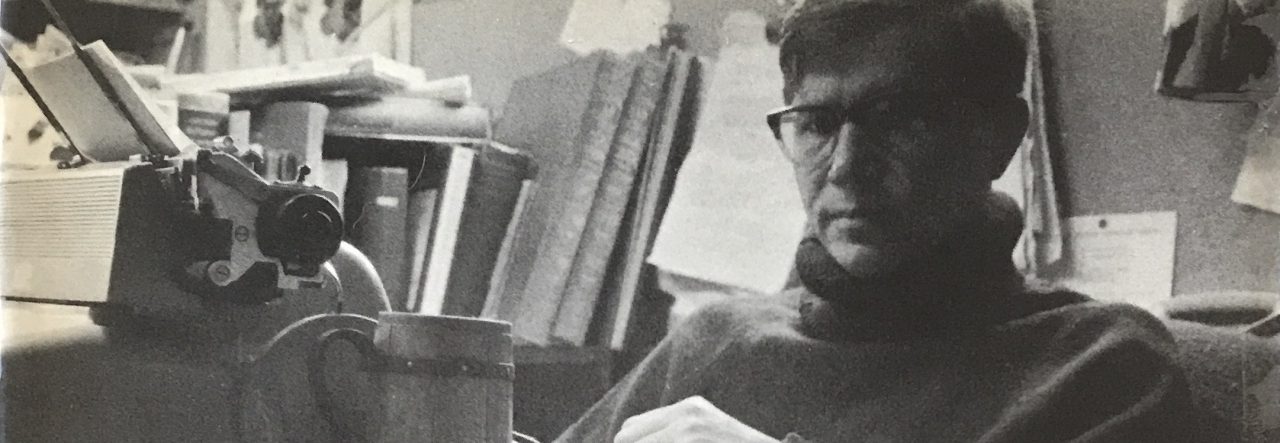


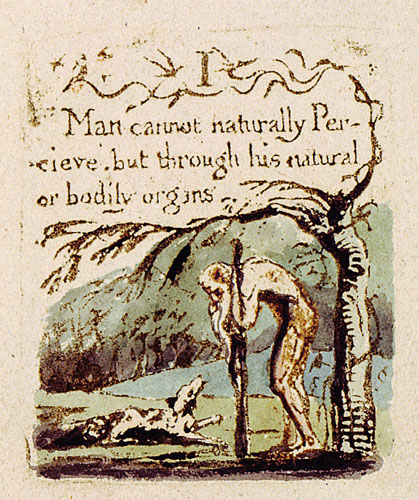 Wilson has dealt with the historical schisms of the original phenomenological movement in some of his writings but what really concerned him was making his readers understand and practice the discipline of becoming aware of and controlling our selective acts in perception, to grasp our freedom to choose whichever angle we see the world from. Nietzsche called this choice of viewing angles ‘perspectivism’ but was unaware of the beginnings of what one historian has called the “phenomenological current” which started with Franz Brentano. [2] Nietzsche’s swooping “guerrilla raids” on presuppositions (our ‘colouring’ attitudes) make enthralling and inspiring reading, but he lacked Husserl’s basic technique to truly explode them. A guerrilla, Wilson commented, “is at a psychological disadvantage, being a man without with a home, without an established position”.
 We have forgotten that most of our mechanical actions were originally intentional and live robotically as a consequence – what Husserl called our “well known forgetfulness”, a concept later appropriated by his pupil Heidegger. Husserl’s phenomenology has much in common with the anti-robotism of Gurdjieff and Ouspensky who also concerned themselves with remembering the self via constant and vigilant meditation on the mechanicalness (sic.) of the body, it’s actions, the emotions and perception. To get around this mechanical illusion we must not forget that our intentions are willed. For Husserl, the body is an “organ of the will”, what Nietzsche meant by the will to power and Blake saw as a dynamic extension of the Poetic Genius. This keen awareness that our ‘mechanicalness’ is layer upon layer of willed intentions is the choice between the naive and phenomenological attitudes or worlds. [6] It is the choice between ‘meaninglessness’ and meaning – the former can appear valid in the naively nihilistic attitude but like ‘mechanicalness’ it is merely the product of a narrow, partial perception, a “feeling isolated in a world of objects” as Wilson puts it. In the early pages of Nausea Sartre accurately describes this state when observing a cafe proprietor – “when his establishment empties, his head empties too […] the waiters turn out the lights, and he slips into unconsciousness: when this man is alone, he falls asleep” – a statement that Gurdjieff would have perhaps appreciated (Wilson noted in his debut that ‘Outsiders’ have no problem being alone). Our consciousness is selective but as Wilson points out an “enormous area of [our] own being is inaccessible to the beam of consciousness” (the ‘beam’ is intentionality or selectivity; Husserl used the term ‘ray’).
  As Wilson has noted, consciousness without crisis tends to become negative. We appear to be mostly unable to appreciate things until they’re threatened or have disappeared completely. When they’re in front of us we regard them with indifference, boredom or they’re simply not noticed at all. His concept of the threshold illustrates the “curious inadequacy of human consciousness”, our very limited capacity for freedom – Nietzsche understood it as freedom ‘from’ (passive) rather than freedom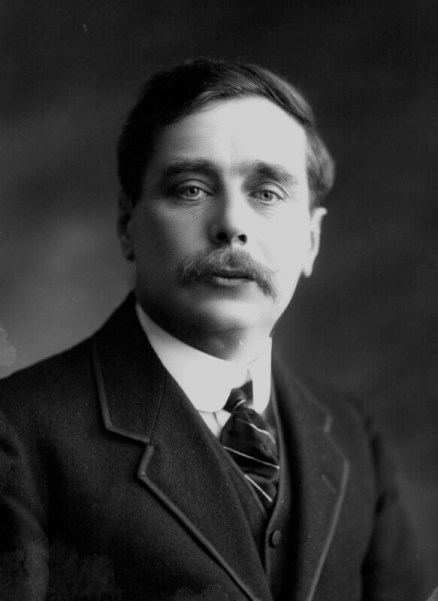
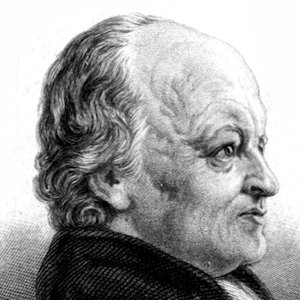


 This is what Husserl meant by intentionality (active choice, not a passive reflection). Perhaps a horticulturist would be prone to see the four leaved clover first and a soldier the Maltese Cross. Husserl was determined to demonstrate that Descartes’ flat, polished mirror was subject to distortions, and if we “wish to philosophise in a new way” (as Husserl put it) then we must study these distortions or prejudices first. Wilson’s ‘new’ existentialism is new in that it also wishes to philosophise in a new way, and so returns to Husserl’s methods. As one commentator on existentialism put it, “Husserl’s exacting science is easier to betray than to follow”, and Wilson demonstrates this point well in the first part of Introduction To The New Existentialism.


 The Phenomenology of Excess