From noise to knowing

In Memoriam, Sandy Robertson. Rock journalist and fervent Wilson supporter who died this month. 

Back in the early Eighties my teenage self was an avid reader of Sounds, one of the UK’s weekly music papers. More than anything I liked it because it aligned with the eclecticism of my own developing music tastes – they were as happy reviewing Motörhead as they were Zoviet France – but another fascination buried in its pages was the occasional nod to something rather more profound. 

A few years before, the NME had infamously lost a portion of it’s circulation by applying semiotics and deconstruction to its analysis of that week’s indie trend [1]. Sounds was rather more honest about it’s literary interests: Lovecraftian horror and cryptic but knowledgeable allusions to those literary precursors of pre-rock excess, William Burroughs and Aleister Crowley. Both had of course appeared in the Sgt. Pepper crowd collage in 1967, but a decade later they were begining to find a new set of devotees in the burgeoning punk and industrial music scenes. 

Glaswegians Alex Fergusson and Sandy Robertson came to London right at this moment. Apparently one of the first things they did was to go to a Colin Wilson lecture; afterwards the man himself showed them how to dowse with a pendulum while Nic Roeg skulked around in the background! Alex became the guitarist of experimental punks Alternative TV – look closely at the pic sleeve of their first 7″, there’s a Colin Wilson book placed under the telly – and Sandy brought identical obsessions (Wilson, Crowley, Burroughs, Kim Fowley!) from his fanzine White Stuff to Sounds. Stylistically somewhere between his role model Nick Kent and ‘hip young gunslingers’ like Jon Savage, Sandy offered rock info with added intellect and literary references, designed to illuminate or possibly corrupt adolescent minds. 

I was far too young to be taking all this detail in yet, but Sandy was still writing for Sounds until the mid-Eighties. Alas, I just missed his three page interview with Wilson in early 1983 (this was later included in my book The Lurker at the Indifference Threshold, with his permission). But he referenced Wilson often: in a review of the reissued masterpiece Forever Changes, in a chart of ‘misunderstood geniuses’, in a piece on Lovecraft and Mythos spin-offs, in an essay about the Manson/rock connection, in an aside using Shaw’s description of music as the ‘brandy of the damned’…it was all there in the ink stained pages of Sounds, amongst the cheap looking ads for the latest noisy platter from Discharge or GBH. 

Soon enough I began to read some of these writers – I found Burroughs and Crowley impenetrable at first, but I got Wilson immediately. Later in the decade I bought Sandy’s amusing Crowley Scrapbook (with an introduction by Wilson) and would see his name alongside Wilson and Burroughs in the likes of Rapid Eye, Simon Dwyer’s ’90’s ‘occulture’ periodical. I’d spot him in the audience of Throbbing Gristle’s grainy Heathen Earth VHS. I’d hear his voice talking to Genesis P-Orridge on a grotty sounding Alternative TV audience recording (“I managed to mention Colin Wilson”!). I’d see him recommending Wilson books in the zeroxed back pages of the punk fanzine Sniffin’ Glue when it was collected in book form in 2000 (punk was ‘cultural history’ by then).  Occasionally I’d see a letter from him in Mojo magazine and I’d wonder what he was doing these days…

Turns out, he was a dog walker for Michael Gambon! 

The internet made people easier to contact. Sandy was delighted that his writing had led to my interest in such things. In person, he was as friendly as he was knowledgeable – and he was very knowledgeable indeed. The messages and chats we had over the past decade and a half were what friendship is all about. 

Inevitably, he had some fantastic stories to tell. From Jagger to Zappa to Malcolm McLaren, Throbbing Gristle and Wild Man Fischer, from Hubert Selby Jnr. to Ken Russell, he interviewed or hung out with many a legend (true to form, Lou Reed was a miserable sod). He discussed Colin Wilson with Blue Öyster Cult svengali Sandy Pearlman and with Mark E. Smith of The Fall (the latter mentioning Ritual In The Dark on the song Deer Park around this time). On one hand he took the piss out of Venom for their non-existent occult credentials (“Chronos changes the subject by trying to look up the waitress’ skirt; after all, it’s what he does best”) yet spoke of the kabbalstic correspondences with renaissance muso Bill Nelson and discussed Kenneth Grant’s Nightside of Eden with David Tibet of Current 93. It was all great fun. 

As a kind of homage – truth be told I just wanted something with the word ‘phenomenology’ in it – I stole the title of Sandy’s 1981 book on Meat Loaf for this site (again, he was delighted). A Meat Loaf obsessed schoolfriend had shown me Meat Loaf, Jim Steinman and the Phenomenology of Excess back then but the references in it to Wilson’s The New Existentialism – there’s quite a few – went several miles over my head. Truth be told, if they registered at all they must have been totally subliminal. 

Flash forward some years to the end of the Eighties and I borrowed The New Existentialism from the library. I loved it. Now it’s my favourite Wilson book of them all – it changed my perception in a very profound way, just as the originator of the phenomenological method, Edmund Husserl – the driving force of Wilson’s book – would have wanted. 

None of this would have happened if Sandy Robertson hadn’t told me where to look in the first place. Like Wilson himself, I was so pleased to have told him this in person. I’ll miss him. I miss them both. 

Note: 

[1] Notably, Paul Morley and Ian Penman were the main post structuralist culprits at the NME. The latter has become a genuinely readable sage; the former, a nice chap, obviously (he’s great on telly). But his writing continues to stretch my credulity. It was over for me when he described someone – I can’t remember who, exactly – “as miserable as Colin Wilson” (!) 

Fourth International CW Conference July 7th!

The Fourth Colin Wilson Conference will be held this year at Wilson’s old London haunt, Soho, on July 7th, between 9:30am and 17:00pm. For the few remaining places please contact Colin Stanley at stan2727uk@aol.com. Papers include Gary Lachman on Colin Wilson’s ‘Double Brain’, Matthew Conlam on Wilson, his nemesis A. J. Ayer and “the Soul of British Philosophy”, David Moore on The Mind Parasites and other ‘mind viruses’, Lindsay Siviter on the notorious Dr. Crippen, David Power on how Existential Literary Criticism saved CW from Pierre Boulez (!), Anthony Peake on Wilson, J. B. Priestley and the enigmas of time-consciousness, Cathi Unsworth on Bella in the Wych Elm, and Darren Coffield on the legendary Soho drinking den The Colony Room. Finally Chris Nelson asks – as Wilson himself did – are we all multiple personalities?

To whet your appetite, here are some hand-picked Wilson quotes about the chosen subjects…

”The implications are clearly staggering. The person you call ‘you’ lives in the left side of your brain. And a few centimetres away there is another person, a completely independent identity” (from Frankenstein’s Castle, 1980, subtitled The Double Brain: Door to Wisdom).

”To my own slightly prejudiced eye, it often seems that he is at his best as a critic of other people’s ideas rather than as an originator” (Wilson on A. J. Ayer, 1968, reprinted in Collected Essays on Philosophers, 2016).

”I have occasionally been asked by the uninitiated whether I actually ‘saw’ them, or felt that they had a definite shape. The answer is no. My sensations can best be envisaged if you imagine how it feels when you are hot and tired, and everything seems to be going wrong” (from “that important document known as The Mind Parasites by Professor Gilbert Austin”).

”Crippen was certainly one of the most dangerous criminals of his century” (criminologist William Le Queux, quoted in Wilson and Pitman’s pioneering Encyclopaedia of Murder, 1961).

”The ‘modernists’ argue that all important artworks are ahead of their time, and that Schoenberg, Webern, and Boulez will be one day as acceptable in the concert hall as Bach is today” (from Brandy of the Damned, 1964).

”To me, these considerations suggest that these two paradoxical concepts – time and the mind – are closely connected. Our bodies exist in the realm of one-way time, but our minds do not” (from ‘Time in Disarray’ in The Book of Time, 1980).

”In small, lonely communities, superstition itself can create a kind of ‘magical ether’ that may increase the effectiveness of the spells” (on the Lower Quinton ‘witchcraft murders’ from The Occult, 1971).

”Huysmans is right: alcohol has its own important role in the life of the mind, like poetry and music” (from A Book of Booze, 1974).

”It seems like this body of mine is not really ‘mine’ at all; it can be taken over by squatters. This is a flat contradiction of the materialist view – expounded in our time by Wittgenstein and Ryle – that ‘I’ am the sum of my bodily and mental states” (on multiple personalities, from Mysteries, 1978).

The percentual share, or: quality over quantity

“We who live today have a deep sense that there is nothing left for us to do” wrote Robert Musil in his masterpiece The Man Without Qualities, a novel which Colin Wilson regarded – correctly – as superior to Proust and Joyce. “It has a tough, intellectual, unemotional quality that I find profoundly satisfying” he once commented. “Regrettably, such qualities are not in wide demand”. 

These ‘qualities’ (and their lack) are the theme of this very large book. Wilson notes that even in its unfinished state, it is longer than War and Peace. Aside from this little-read ‘standard edition’ of over eleven hundred pages, a deluxe version was issued for English readers in 1995 offering a total of 1774 pages. Wilson’s review of the latter version in the fanzine Abraxas helped me make my choice. It’s possibly the most rewarding £40 I ever spent on a piece of fiction. 

Musil trained as a mathematician, engineer and behavioural psychologist, and it is likely that the latter knowledge gives the novel its bitingly satirical, contemporary edge (“reason and progress in the Western world would be displaced by racial theories and street slogans”: a century on, change “would be” to “have been”). Cheerfully referred to as ‘nudging’ by today’s governments, behaviourism is a robotic fallacy, and the lacklustre state of 21st century culture proves it. Musil’s novel is a relevant warning in this sense as the plot largely revolves around the bureaucratic red tape tying up a planned celebration of the Austro-Hungarian Empire – just before the Great War exploded such pretensions. Time and time again, striking parallels to our present problems fly off almost every page. “Regrettably, a great many people nowadays feel antagonistic toward a great many other people”. “We let others talk themselves into the most one-sided exaggerations: that’s idealism”. “There’s no longer a whole man confronting a whole world, only a human something moving about in a general culture-medium”. 

“It can’t go on like this” he writes on the next page. 

An abundance of such insights make the book remarkably contemporary almost a century on, rather like Dostoyevsky’s equally relevant The Devils. Yet re-read that quote about “a human something” again, and it’s obvious that it was Musil’s analysis of the ‘partial mind’ (“no longer a whole man confronting a whole world”) which made Wilson so appreciative (“his attitude towards politics is ironical”, Wilson comments). Musil’s line that “happiness can do wonders for a man’s latent possibilities” is a wonderful motto for Wilson’s own philosophy, and he recalls examples of these latencies manifesting in perception. He lists the striking perceptions of the bright colours of an outdoor market, the asphalt on the road, “the noise that broke apart for a few seconds to let out one specific sound”, Viennese architecture, restaurant tables that look alike but are all “so incredibly individual”… “It was the sort of feeling of which one is hardly ever fully aware, though it permeates everything”. Later (Chap. 122) Musil offers a more technical description of these latent possibilities: “it is with the invisible connections which our minds and feelings unconsciously arrange for us in such a way that we are left to feel we are fully in change of our affairs”. Bridging the gap between near and far (“a kind of foreshortening of the mind’s perspective”) is the trick, he writes. “Happiness, after all, depends for the most part not on one’s ability to resolve contradictions but on making them disappear, the way the gaps between trees disappear when we look down a long avenue of them”. 

According to a Sartre biography [1] Musil was influenced by Franz Brentano, a theologican-turned-philosopher who handed down his insights into the intentionality of consciousness to his pupil Edmund Husserl, the ‘inventor’ of phenomenology (like Musil, he began as a mathematician). Readers of Wilson will be familiar with this useful philosophical method thanks to the later volumes of his Outsider series, most notably Introduction to The New Existentialism from 1966. Despite the occasional comment I’ve read that Wilson didn’t understand or distorted Husserl’s method, a close reading of Husserl’s main texts disproves this notion. [2] If anything, Wilson got the gist of Husserl better than either Sartre or Derrida, who both started as budding phenomenologists. Sartre was too glum to take on the loaded responsibilities that phenomenology demands and Derrida could have saved everybody a headache if he’d simply said that something negating its opposite is just a product of intentionality (selectivity). Wilson stated that phenomenology was essentially a common-sense attitude; after all, Husserl insisted that we put all of our self-indulgent prejudices ‘away’ before we even think of using his method. His pupil Heidegger bluntly defined phenomenology thus: “it is opposed to those pseudo-questions which parade themselves as ‘problems’, often for generations at a time”. Wilson’s exciting argument for an ‘evolutionary phenomenology’, Beyond The Outsider, documents some of these ‘problems’ in a chapter recounting the frustratingly uneven history of modern philosophy; Musil’s novel overflows with witty barbs against these pseudo-questions. 

Following Brentano’s observation of an intentional or active consciousnesses, Husserl insisted that the greater the energy (intentionality), the greater the perception, sometimes alluding to the image of an an arrow hitting a target (later appropriated by Wilson – “perception is intentional”). Musil was onto the same thing when a character in his novel insists we try to notice “the part our personality plays in directing our perceptions”. Feeling, desire and intellect, he writes, “strikes and sticks like an arrow”. 

At the end of the first section of The New Existentialism, Wilson states that the phenomenological method offers a radical break from the cycle of our actions determining our assumptions and vice-versa, a bind he later called ‘the paradox of freedom’ (after Sartre, perhaps). Brilliantly concise, Wilson’s book remains one of the best introductions to Husserl’s concepts, transforming the forbiddingly complex into the practical and workable. Development and use of the phenomenological faculty (‘Faculty X‘) he insists, can begin to solve the paradox which tormented Outsiders like T. E. Lawrence who craved a world “not filtered through or made typical by thought”. This practical discipline is “simply a matter of ceasing to accept one’s impulses at their surface value”, realising that consciousness is active, a “distorting medium” rather like the generalised culture field which Musil’s ‘human somethings’ swim around in. 

Wilson comments that the change in consciousness produced by phenomenological analysis is less drastic than “useless” drugs, but it is permanent and susceptible to analysis. This is true: anyone practicing the disciplines from the book will be aware that the change is subtle but permanent. Wilson often reminded us that he was not offering an instantaneous cure. “You can’t become a new human being overnight” as Musil remarks. 

“We wildly overestimate the present” exclaims the titular ‘man without qualities’ Ulrich. An archetypal ‘Outsider’ who has found little satisfaction in his idealistic projects, Wilson describes him as a character adrift in a society that has no use for his talents (asked what he would do if he ruled the world for a day, he languidly replies “I suppose I would have no choice but to abolish reality”). Walking with his cousin through a narrow snowy valley, they muse over this problem of the present, the here and now (“as if we’d been put in a basket and the lid of the present had fallen on it”). We make too much of this rather stifling ‘present’, he says. Wilson would doubtless agree: he reminds us that Sartre is always appealing to the present as his standard of reality. Attempting to free himself from this claustrophobic ‘now’ Musil imagines the valley as it must have been thousands of years ago. Unfortunately his mental time travel “is displaced by so much here and now, so much Present”. He cautiously explains that he does not wish to find an explanation or name for this strangely exhilarating state of freedom. This is a mistake. 

As Wilson explains in The New Existentialism, we shall never understand these subtle changes in consciousness “until we create the heavy machinery of language and concepts to map these new areas”. The accurate description of inner mental states is but one technique of phenomenology. “What all this makes clear is that a ‘new existentialism’ must begin with the rather pedestrian task of pushing it’s a scaffolding of language into these new realms”. Nietzsche defined originality as noticing something that has no name “even if it is right in front of everyone’s eyes”; original thinkers are “are mostly also the name-givers”, he says. Wilson’s use of Husserl (the ‘phenomenological faculty’) was the origin of his provisional term ‘Faculty X’, the ability to remind ourselves of the reality of other times and other places, the very experience than Musil is trying to describe. There is nothing mystical about this Faculty (“an ordinary potentiality of consciousness”) although the two are often mistaken. In The Occult Wilson remarks that Faculty X is as much a creative (i.e. poetic) faculty as an ‘occult’ one [3] and is also connected with evolution. “In every epoch of history mankind develops some definite faculty and this faculty plays an important role in evolution” remarked Rudolf Steiner, another unorthodox thinker influenced by Brentano. Philosophically connected with Husserl’s and Heidegger’s examinations into the enigmas of time-consciousness, Wilson recalled that the idea came to him on a snowy day in 1966. 

Husserl thought of the phenomenologist as an explorer “carefully describing what is presented along his unbeaten paths”. He cannily points out that all that is seen and noted in this state never loses its value – as Wilson remarks, these insights are permanent – and that all this is part of a long but rewarding journey toward freedom (Wilson interpreted Husserl’s concept of the transcendental ego as an evolutionary “drive to complexification”). Again, this confirms Wilson’s statement that the phenomenological method is certain, even if it is slow moving. When Musil pondered how to bridge the gap between near and far, he could perhaps have paid some attention to Husserl’s researches. The novel features a chapter in which Ulrich “chats […] in the jargon of the frontier between the superrational and the subrational” and sarcastically lampoons “the transcendent ego” and “the realm of being rather than the realm of phenomena or appearances”. Discussions of this near-far problem occur often in Husserl’s work, in Heidegger’s Being and Time and in Merleau-Ponty’s Phenomenology of Perception (which Wilson recommends as a handbook for his new existentialism). “Translated into the ghastly jargon of our times” writes Musil later in the novel, “we could call this faculty we all lack to such a frightening degree nowadays ‘the percentual share’ of an individual’s experiences and actions”. In dream, myth, poetry and childhood “it’s apparently a hundred percent, in our waking life not even half as much”. Wilson also spoke of consciousness in similar fiscal terms (“a tax on consciousness”; “five percent ‘you’ and ninety-five percent robot”). In an essay on ‘Husserl and Evolution’ he names this hidden poetic state ‘Childhood Realism’ – a richer intuitive content of ‘primal perception’ which lies under our everyday prejudices – while reminding us that Husserl’s “ponderous” first book of philosophy arrived the same year as Chesterton’s in 1900. Chesterton observed that we say the earth is round and even though it’s true, we don’t mean it. Wilson was adamant that we could say things and mean them when the Faculty is operative. “Husserl’s phenomenology” he says, “is an investigation of meaning”. Husserl ponders the fluctuations of meaning and the precise naming of such states in the first Investigation of the Logical Investigations, 1900. 

During their walk through the valley Ulrich informs his cousin that even the earth isn’t what it is pretending to be at the moment; this pleasant little snow dappled valley was once a glacier. “Today it is acting the good middle-class mother feeding her children. Back then the world was frigid and icy, like a spiteful girl. Several thousand years before that it luxuriated in hot fern forests, sultry swamps, and demonic beasts”. In Human, All Too Human Nietzsche imagined Lovecraftian ‘cyclopean’ energies savagely beating a path through such glacial wastelands, eventually forming the “gentler civilsation” which we humans live in. “Such levels of thought are of course not to be taken literally, as if superimposed on each other like layers of soil” writes Musil, helpfully (he also speaks here of levels of consciousness, a concept later elaborated by Wilson). But these geological images are apt because Husserl described the descending and ever-ascending structure of intentional consciousness as ‘sedimented’. Similarly Wilson referred to ‘a ladder of selves’ and to compacted ‘layers of willed intentions’, those carefully – perhaps clumsily – learned processes which become habitual then automatic or ‘mechanical’ (sic). Husserl was just as concerned with breaking this automated apathy as Wilson’s favourite mystic Gurdjieff. As of course was Wilson himself. 

Wilson’s alter-ego Gerard Sorme notes in his diary – published as Wilson’s novel Man Without a Shadow – that there are forces lying below the surface of consciousness that are “fully cognisant of everything that goes on” and that these forces “inject meaning into the world”. Without these, We are mostly completely unaware of such hidden ‘forces’ (layers of intentions). Sorme writes that the world is meaningless without them, “like the scenery stored in an empty theatre”. In his essay on Husserl and evolution Wilson remarks that the aim of phenomenology is to poke holes in this stage scenery of everyday consciousness (Wilson’s alter-ego reminds himself that he needs to develop a “new faculty” to do just that, later in his diary). The non-fiction twin to Sorme’s diary, Origins of the Sexual Impluse, also analyses this problem (“the strange arithmetic of these illusions”) and it’s solution through awareness of the ‘form imposing faculty’ of intentionality. In Origins Wilson points to the criminal character of Moosbrugger from Musil’s novel as an illustration of these strong forces breaking through into society without the necessary safety measures demanded by phenomenological analysis, or put more bluntly, without any intelligence. This theme is also exhaustively documented in Wilson’s true crime books. “The barred window and the bolted door were himself” realises Moosbrugger, sitting in his cramped cell. In his psychological study of murder, Order of Assassins, Wilson describes our ‘normal’ state of habitually narrow consciousness as “a kind of self created prison”, an image also used in The Outsider (Chap. 6). In purely practical terms this is a vicious circle which phenomenological disciplines can help break. As noted, at the end of the first section of The New Existentialism, Wilson points out that we grasp our lives according to what Husserl called the ‘natural standpoint’, a kind of lazy taking for granted. Therefore the human condition is determined by how we live and act. “But our actions are determined by our assumptions about their possibly of success” writes Wilson. “And our assumptions about their possibility of success are determined by our idea of the ‘human condition’ (as we grasp it according to the natural standpoint)”. [4] Historically speaking, this impasse has been broken by works of art, science and philosophy. 

The sense of ‘nothing for us to do’, as Musil put it, was the life-question with which Wilson concerned himself, helped along by the practicalities of existentialism and the rigours of phenomenology. “What does a phenomenologist actually do?” he asks in The New Existentialism. “He applies the phenomenological method to whatever may be his own field”. Merleau-Ponty applied it to embodiment, after Husserl’s later work; Roman Ingarden applied it to art. Wilson applied it to something we all know: the everyday problem of ‘life-failure’. “A convinced reader might lay down [volumes by Bergson and Shaw] and sigh: ‘But what am I supposed to do?’ An existentialism based on Whitehead and Husserl is able to answer this question”. Husserl asked: ‘how does consciousness select some things and not others?’ and Wilson stressed that this ‘how’ “can be observed by anyone who goes to enough trouble”. [5] No more difficult that learning a language and just as permanent, these psychic changes are tied in with his notion of ‘layers of willed intentions’, a sedimented process of slow and difficult learning becoming habitual and then silently ‘automatic’ or robotic (learning to drive is a particular good example). Like the ‘work’ of Gurdjieff, Husserl’s phenomenology aims to uncover these so-called automatic functions as buried intentions, active forces which we mistakenly believe are passive, inert. 

More radically, Wilson suggested that those who become particularly skilled in phenomenological analysis will be able to dredge up these deep ‘occult’ layers and reactivate them. “The law of man’s evolutionary being must be uncovered and brought to consciousness by the same methods that uncovered the laws of the planets”. [6] However, Wilson maintained that such deep motive powers – described cryptically by Husserl as ‘the hidden achievements of the transcendental ego’ and ‘the keepers of the key to the ultimate sources of being’ – should only concern us once we posses a fully functioning consciousness, thanks to the practicalities of phenomenological technique. Foundation work, as he had it. Husserl himself was of the same opinion; phenomenology was for him a “beginning philosophy”. Similarly, Gurdjieff stressed that we have a clear, non-robotic consciousness before attempting to connect to the ‘higher centres’ (essentially, what Husserl meant by the transcendental ego). 

Whether one chooses to do these things is of course up to the individual – “anyone who goes to enough trouble”. That sentence, more than anything, sums up this whole philosophy. I can only speak from my own use of the methods of the new existentialism: they work, and their effects are indeed remarkably self-transforming. 

[1] Hayman, Ronald, Writing Against: A Biography of Sartre, Weidenfeld and Nicolson, 1986, p. 95. 

[2] For instance, in the Logical Investigations (RKP, 1970), p. 582, Husserl discusses how greater perceptual energy generates deeper comprehension; on pp. 253, 344 and 385 he mentions the “hit”, or “the target of our intention”, the “aim” of perception – an analogy used many times therein and elsewhere (a “dart” in Ideas ll, Kluwer, 1989, p. 252). Likewise the notion of perception seizing hold of objectivity as a ‘grip’ or enveloping it as a ‘ray’ is examined extensively (eg Ideas [Nijhoff, 1982], p. 293; this idea was already present in the Investigations, ibid. p. 542). Husserl often digs into the “structure of consciousness” (Ideas ll, p. 238) and examines the “sediments” or layers of consciousness (ibid. p. 234). Levels of consciousness are investigated in Ideas (ibid. p. 247). All of these concepts are put to full use in Wilson’s new existentialism: the terminology may vary but the debt is obvious. 

[3] Wilson, Colin, The Occult, Granada, 1978, p. 123. Also: telepathy is likely a primitive ‘meaning perception’ and what we refer to as mystical experience is a temporary reversal of Prof. Whitehead’s two modes of perception (of which meaning perception is one). Wilson, Colin, Beyond The Outsider, Arthur Barker, 1965, pp. 89, 148. Wilson’s later thoughts on split-brain theory are relevant here. 

[4] Wilson, Colin, Introduction to The New Existentialism, Hutchinson, 1966, p. 92. See also p. 66 – “‘perception’ is at least fifty per cent assumption”; p. 91, “But the question of how far life itself is a success or a defeat depends on these assumptions”; p. 173, ‘We are all insane; the difference between Napoleon and a madman who believes he is Napoleon is difference in degree, not in kind; both are acting on a limited set of assumptions”. An investigation into phenomenological neutrality and ‘assumption’ appears in Husserl’s Ideas, ibid. p. 257 (he stresses the universality of the phenomenological method). On p. 259 he defines assuming as ‘supposing’, those kind of presuppositions (a “merely-thinking-of”, the lazy perception of the natural standpoint) which his method aims to rigorously question. 

[5] Wilson. Beyond The Outsider, ibid. pp. 160/1 and p. 82. 

[6] ibid. p. 165. I am reminded not only of occultist Austin Osman Spare’s ‘formulae of atavistic resurgence’ which allegedly involves reactivating ancient ‘karmas’ via aesthetics, but also of Rudolf Steiner’s theosophical descriptions of germinal human states via planetary metaphors such as ‘Old Saturn’ (apparently the origin of human sensuousness) etc. Also Gurdjieff’s cosmology/psychology. See Ouspensky’s In Search of the Miraculous (RKP, 1950), Kenneth Grant’s ‘Typhonian Trilogies’ and his Images and Oracles of Austin Osman Spare (various publishers), and Steiner’s lectures, available online

Third CW Conference 1st – 3rd Sept.

The third International Colin Wilson Conference will be held in Nottingham, UK, from the 1st to the 3rd of this September. 70 places available at £70 for all three days, £30 for one day and £20 for the Sunday. Email stan2727uk@aol.com for more details. There’s more detailed information on the previous two events here.

Beyond the confusions of the intellect

NOTE: The Third Colin Wilson Conference will be happening this September (1st – 3rd) in Nottingham, UK. More details here.

“It is the fallacy of all intellectuals to believe that the intellect can grasp life” wrote Colin Wilson in 1966. A century before, the young Nietzsche had realised that happiness and freedom lie beyond “the confusions of the intellect” when he took shelter in a shepherd’s hut. “The storm broke with a tremendous crash, discharging thunder and hail, and I had an indescribable feeling of well-being and zest”. Similarly, Proust’s epiphany in Swann’s Way happens on a dreary winters day. “The past” he broods as he comes indoors from the cold, is “beyond the reach of the intellect”. A few sips of warm tea and some morsels of cake later he recalls a childhood episode with piercing clarity; he has suddenly ceased to feel mediocre, accidental (“contingent” depending on the translation) or mortal. This feeling of “all-powerful joy”, he ruminates, brought with it “no logical proof, but the indisputable evidence, of it’s felicity, it’s reality”. Proust called these moments of well-being moments bienheureux – “quite simply, a surge of strength and power” comments Wilson. He goes on to say that Proust would have demurred at this interpretation as he thought of himself as an invalid and hypochondriac. Conversely, Nietzsche sought this powerful feeling despite his own worse ill-health (Wilson’s 1972 essay Dual Value Response examines the latter dichotomy in some detail). In 1986 Wilson defined existentialism – as it is commonly understood – as “the notion that reality extends beyond our power to grasp it”. Against this he offered a ‘new’ existentialism, based on the phenomenological methods of the philosopher Husserl. The key text, Introduction to The New Existentialism (1966) explains how Husserl’s ideas deny the contingency that existentialism stressed, despite predating and influencing that philosophical school. Both Heidegger and Sartre began as keen ‘phenomenologists’, the former studying it first hand from Husserl. Wilson correctly points out that both soon moved away from Husserl’s most practical insight, that of intentionality, or the study of active perception, in order to compromise with professional philosophy (and with dogmatic political ideology, Heidegger veering far right and Sartre far left). 

The intellect finds it hard to grasp the moments which Nietzsche and Proust experienced as it relies on the shorthand of symbols and language, puzzles which Wilson examines in the last few volumes of the Outsider series. But these – indeed, most of his books – also analyse a much more serious and immediate problem: the seemingly random fluctuations of consciousness. “If the flame of consciousness is low” he writes in The New Existentialism, “a symbol has no power to evoke reality, and intellect is helpless”. That the intellect is a “false guide” is no cause for pessimism, he comments, as pessimism itself arises from from the delusions of passive, limited consciousness. “Human beings need a centre of security from which to make forays into the outer-chaos”, he continues. But these protective walls can quickly feel like a padded cell or prison; too much security becomes boredom which leads to a loss of vitality, a feeling of being trapped in the present. This atmosphere is described in the first part of Goethe’s Faust, in Goncharov’s Oblomov and in Sartre’s fiction. “Man uses his intellect to prevent his experience from escaping him” comments Wilson. “But the essence of the experience escapes, all the same”. Existence philosophy (‘old’ existentialism, as Wilson labels it) failed because it stuck to examining everything through this narrow lens of limited consciousness. Adding insult to injury, it declaimed these limitations in the formal jargon of the academy (“the difficulties encountered in a text by Jaspers, Heidegger or Sartre are the difficulties that the author feels to be necessary to an academically respectable philosophy”). But the point of Existenzphilosophie was that it dealt with direct living problems over generalised abstractions, a realistic attitude which Wilson attempted to revive with his vigorous ‘new’ or phenomenological existentialism, aimed at the general rather than specialist reader. “It deals with the most immediate problem we can experience, with our actual living response to everyday existence”. It could be argued that Wilson’s background as a self-taught working man gives his writings a directness and liveliness which is generally missing in the theorists he is examining. It also offers accessibility to a non-academic audience, a point he addresses early in his book. I can vouch for that, as The New Existentialism is the most useful text I’ve read for dealing with the seemingly random fluctuations of meaning which come and go on a daily basis. Simply put, the phenomenological idea of intentionality suggests that we subliminally select our meanings according to our temperament. Nietzsche intuitively grasped this process when he said that there are no facts, only interpretations, but Husserl went further, demonstrating that our interpretations cloud these ‘facts’ or truths. Understand these distortions and we will begin to think with more clarity. 

If this principle of intentionality is understood, life gradually becomes subtly different. “Once we see this clearly, it becomes astonishing that anybody bothers to argue about it” reads one of the most penetrating lines in Wilson’s book. About what? About the observable principle that intentionally limited consciousness – what we glibly call ‘ordinary consciousness’ – is a scaled down version of the real thing, a truncated view of life. This is not wooly mysticism – Wilson had already offloaded mystical literature to the status of a “primitive phenomenology” in the previous Outsider volume. As he says, it has more to do with our direct response to everyday existence. If consciousness selects it’s facts and objects of perception, why would anyone choose a selection which ‘proves’ that they are merely at the mercy of outward things, without any inner freedom? The obvious answer is: laziness. But as Husserl stated in 1900, an energetic perception grasps more ‘reality’ than a merely token recognition, an observation previously made by the poet Blake with his devilish aphorism ‘energy is eternal delight’. This optimistic sense of lived possibility runs through all Wilson’s writing. “Can one live a philosophy without negating either the life or the philosophy?” he asked in the opening pages of The Outsider. Yes: as he later explained in Beyond the Outsider, the workings of intentionality “can be observed by anyone who goes to enough trouble”. Effort is the starting point; this could merely be the effort to understand what Husserl meant. The New Existentialism even has a section of practical disciplines. “The first practical disciple for the existential philosopher is to learn to become constantly aware of the intentionality of all his conscious acts”. Recognition is another key factor. 

Husserl himself insisted that phenomenology is not merely “vocational” or academic but involves creating a new attitude [Einstellung] towards lived experience. Wilson put it succinctly in a later essay on his ‘new’ existentialism in 1986: “Husserl’s recognition of the intentionality of consciousness is a recognition that our attitudes govern our perceptions”. Wilson’s writings are packed with illustrations of this in action. Examples are drawn from from literature or philosophy – Proust and Nietzsche, above – or from religion and mysticism, psychology, personal anecdote, even criminal cases. He would often quote the philosopher Whitehead, who had insisted we examine ‘experience drunk and experience sober’ – Wilson wrote a book on alcohol – ‘experience normal and experience abnormal’ and so on. This is the existentialist position (Wilson also wrote an essay about Whitehead as an existentialist). It is what Husserl meant when he said that the study of intentionality is not vocational but is completely involved in life as a whole. “We can even go on calmly speaking in the way we must as natural human beings” writes Husserl in the sixty-fourth section of Ideas, “for as phenomenologists we are not supposed to stop being natural human beings”. 

Wilson thought Husserl’s method “brilliant and original” but felt that he never really got beyond it (“he spent his life on the threshold of philosophy, laying the ‘foundations’”). What was required of his own use of this method was to align it with the everyday experience of the average reader, and to tackle the serious problem of fluctuating meaning. Wilson was adamant that intentionality was much more exciting and dynamic than ‘reference to an object’ or an ‘intelligent effort of interpretation’ as phenomenologists soberly put it. 

Husserl speaks of intention as a “ray” or “grip” while pondering how to regenerate the confusions of “intellectual content” into something distinctive and understandable [Ideas § 123]. Wilson points out in Dual Value Response that if Nietzsche had lived to his sixty-eighth year and read Husserl’s text he would have found a direct method for grasping his pure experience, without intellectual confusions. Not only that, says Wilson; had Nietzsche known about separating his intention from the object – which Husserl explains in great detail between sections 87 and 127 of Ideas – we would have been spared his unnecessary obsessions with the likes of “that egotistic roughneck” Cesare Borgia. With this concept in mind Wilson spoke of a faculty which can firmly hold a “grip on reality” in The Strength to Dream and of intentionality as an “inner meaning” or “grip on life” in Origins of the Sexual Impulse. “Husserl’s phenomenology, then, is an investigation into meaning” he says in Beyond the Outsider. These last few volumes of the Outsider series are where Wilson delves deepest into phenomenology, all of it summarised in the 181 pages of The New Existentialism. Here, the ideas of the Outsider series are presented in “a simple and non-technical language for the ordinary intelligent reader” and Wilson presupposes no previous knowledge of the series, nor the existentialism or phenomenology it deals with. One delightful aspect of the book is it’s tone: it manages to explain ‘continental’ philosophy with the breeziness of an Anglo empiricist. “A phenomenologist might be an existentialist or a logical positivist or a neo-Hegelian” he writes, ending the first part of the book (“little more than a clearing of the ground”). But it is already much more than that. The first part remains one of the most cogent explanations of the phenomenological method ever written, and one of the main reasons for such dynamic clarity is that Wilson was a self-motivated thinker, a product of factory floors and belching chimneys rather than dreaming spires and ivory towers. Nietzsche himself said that good writers attempt to make their ideas clearly understood rather than cypher them to “knowing and over-acute readers” of the over analytical, dryly intellectual kind. “The legitimate is simple, as all greatness is simple, open to anyone’s understanding” wrote the novelist Robert Musil in his masterpiece, The Man Without Qualities. “Homer was simple, Christ was simple. The truly great minds always come down to simple basics”. If Nietzsche had written a novel, it would doubtless read like Musil’s (despite one character describing him as a “mental case”!)

The intellect can only take us so far in these matters as it is still only a part of lived experience, entwined with our values and our response to life. The phenomenological methods on which the new existentialism is based do not promise instantaneous results or a quick fix solution. “You can’t become a new human being overnight” as Musil observed. Rather, it is closer to the religious idea that a) what we observe is not the totality of reality and b) more subtle aspects of this reality can be slowly comprehended over the span of adult life via careful observation. However, the method is free of the kind of sectarian prejudices (“the weaknesses of every individual” as Blake had it in All Religions Are One) that inevitably sink religions and their cultish offshoots.

In a social sense it is important to remember that Wilson equates early lack of struggle with the attitudes toward meaning that Husserl describes. For instance, Sartre and Beckett were brought up comfortably middle class whereas Shaw and Wells – and Wilson himself – were working class. The tone or atmosphere of the new existentialism is therefore closer to the latter writers than the former, based as it is on the ordinary lived experience of difficulty, the hard won knowledge that effort brings reward.

But perhaps the reason I personally find Wilson to be a trustworthy guide in many intellectual matters is due to a shared attitude – what the psychologist Maslow called ‘the need to know’, the opposite of intellectual timidity or logical dogmatism – rather than the specific fact that we both emerged from the same rung of society (correctly, Wilson never liked being bricked in as just a ‘working class writer’ with his fellow Angry Young Men). Most likely, it was this open attitude rather the bare facts of Wilson’s background which created his uneasy relationship with the intelligentsia of the time. 

Maslow remarks that “examination of psychologically healthy people shows pretty clearly that they are positively attracted to the mysterious, the unknown, to the puzzling and the unexplained”, the kind of amusing or disturbing oddities collected by Madame Blavatsky or Charles Fort or indeed in Wilson’s own, rather more literate and philosophical occult studies. Maslow observed that psychologically unhealthy subjects tend to feel threatened by the ambiguous and unfamiliar, preferring the “unenriched familiarity” of normal or naive perception as Husserl described it (Wilson had it as “forced familiarity” in his Wilhelm Reich biography). Sartre’s writings contain many examples of this easily upset perception, notably the descriptions in Nausea of trees which frightened him and lamp-posts which embarrass him (“I would have liked them to exist less strongly, in a drier, more abstract way”). As Nietzsche said, we begin to distrust clever people when they embarrass too easily. Sartre’s request is admirably ‘phenomenological’, but one which misunderstands Husserl’s assertion of an active perception. True to form, he felt more comfortable with dialectical materialism. 

One of the practical phenomenological disciples given in The New Existentialism involves patiently listening to political opinion from the party you vote against without reacting – a challenge indeed to the hardened dogmatists of both left and right today. Wilson’s A Criminal History of Mankind (1985) overflows with illustrations of this “spiritual arthritis” at work in societies and individuals throughout history. Such rigid dogma can easily become a catastrophic, anti-creative force, reactive rather than intentional. Wilson’s favourite mystic Gurdjieff was obsessed with overcoming this ‘mechanical’ fault, stressing that genuine knowledge is only allotted to those who actively seek it via struggle or effort. This information, he says, can be best collected during the fall of cultures, “when the masses lose their reason and begin to destroy everything” – periods of philistinism often accompanied by “geological cataclysms, climatic changes”. An enormous surplus of this ‘knowledge’ lies unclaimed as the majority never even collect their rationed share (Gurdjieff insisted that knowledge was ‘material’, like food). It’s certainly a good parable for Wilson’s analysis of meaning, which can be grabbed or grasped in larger quantities by those who have attempted to develop their ‘organ’ of intentionality (“a kind of hand” as Wilson describes it). This can only be done on an individual level; no one else can do it for you. Gurdjieff also insisted that the only possible mystical initiation is self-initiation. As Wilson suggested, the mystical doctrines of ancient sects are but a precursor to Husserl’s revolution in thought. 

Wilson sometimes said that this question of intentionality was a matter of life and death, a seemingly large and dramatic claim for an abstract philosophy born of logic (Husserl began as a mathematician). But in a certain sense it is true: those capable of developing a hold or grip on reality will be far less susceptible to debilitating conditions such as depression. Drawn from a passage near the end of The New Existentialism, the plot of Wilson’s 1967 satire The Mind Parasites outlines a global plague of anhedonia circa – ahem – now. The narrator describes the book (essentially an assemblage of fictional documents) as “a work of history, not of philosophy” but is still of the opinion that the word phenomenology is “perhaps the most important single word in the vocabulary of the human race”. Satire or no, it is likely that Wilson wrote that line with his tongue only partly in his cheek. 

In the long run Wilson’s one man war against life-failure and the ‘age of defeat’ will become more and more relevant to hardened individualists bored by living in a rather suffocating world modeled on he philosophical fallacies of behaviourism, a system which maintains the lifeless state of the “man-machine” that Gurdjieff regarded with horror. “Husserl suggested” writes Wilson in The New Existentialism “that as man loses all the false ideas about himself and the world through scientific [i.e. phenomenological] analysis, and as he comes to recognise that he himself is responsible for so much that he assumed to be ‘objective’, he will come to recognise his true self, presiding over perception and all other acts of living. This idea seems common-sensible enough, and our intuitions about ourselves seem to support it”. A few examples of this shift happening are given later in the book via the experiences of William James, Arthur Koestler and René Daumal. “The ‘self’ that has been experiencing various fears and humiliations has been evoked by a narrow range of experience”, but the self that has overcome this “is contemptuous of this triviality”. This the change of attitude (suspension of prejudices) which Husserl stressed. By true self or ‘transcendental ego’ he meant a state shorn of fallacies from which genuine thought could begin. But Sartre, and later Derrida (“Sartre redivivus” – Wilson) misunderstood it as a survival of religious idealism, thanks to too much dogmatic intellectualism and not enough common-sense intuition. 

The key, as Husserl said, is to become aware of the workings of intentionality as a living method, rather than just another theory in the annals of philosophical history. “In recent times the longing for a fully alive philosophy has led to many a renaissance” he states in the lecture Cartesian Meditations [§ 2]. This living philosophy is based on the “radicalness of self-responsibility”, and on a necessity to “make that radicalness true for the first time by enhancing it to the last degree”. This “new beginning”, he says, is “each for himself and in himself” [§ 3]. In Beyond The Outsider Wilson remarks that Kierkegaard’s ‘truth is subjectivity’ can really only be illuminated by Husserl’s method. Rather than interpret this as ‘beauty being in the eye of the beholder’ it should be understood as a paradoxical instruction meaning that truth is within (“in himself”) but is not relative. Wilson later comments that Kierkegaard’s statement “seems to justify the view that there are as many ‘truths’ as there are individuals, and all are equally valid”, which is the default position of the present era. [1] Musil sardonically wrote of “the general obsession with turning every viewpoint into a standpoint and regarding every standpoint as a viewpoint”, a barb as relevant as it was a century ago. Wilson goes on to say that it would be more accurate to say that ‘truth is evolutionary intentionality’ (a concept explained at length in Beyond The Outsider). In effect this means that the further we move away from local or subjective prejudices – Blake’s ‘weaknesses’ – the closer we get to a truly unique individuality (the transcendental ego, a self shorn of such relativist baggage). As previously noted, our deeper intuitions about ourselves certainly support this view. 

The evolutionary paradox which Wilson analyses in titles such as Beyond The OutsiderThe Occult and A Criminal History is of a lopsided human creature dominant in intellect and it’s ever refined details but surprisingly weak in grasping larger, overall meanings. As his philosophy aimed to correct this disability, it is unsurprising that he came into conflict with professional intellectuals as much as he was welcomed by ordinary readers. After all, as The New Existentialism explains, that was his intention all along. 

[1] “If we instinctively acknowledge human greatness as a value – that is, if we agree that Jesus is in some way preferable to Judas Iscariot, that Beethoven is a more valuable human being than Al Capone – then we are subscribing to he basic human vision of freedom”. Wilson, Colin, Introduction to The New Existentialism, Hutchinson, 1966, pp. 162/3. This is analogous to Wilson’s comment on Nietzsche’s unnecessary celebration of the Borgias (“a great deal of misleading stuff”). Wilson, Colin, ‘Dual Value Response’, 1972. Collected in The Bicameral Critic, Salem House, 1985, p. 108.

Pseudoreality doesn’t need to prevail 

Savage faculties?

“There was a personality who lived in the later period of Mexican civilisation and was connected with the utterly decadent, pseudo-magical Mystery cults of Mexico; with an intense thirst for knowledge he studied everything with close and meticulous exactitude”. With typical sobriety Rudolf Steiner described this dark scene to a hushed lecture hall in 1924, all the while rejecting the fashionable interest in such ancient lore by remarking that although this mysterious individual “knew that Quetzalcoatl was a Divine Being who could take hold of man in his circulating blood, in the working of his breath”, the ‘knowledge’ he possessed was automatic and unconscious, the opposite of the intentional wisdom that we develop by individual effort. Continuing his fantastic narrative, Steiner remarks that this perverse soul later incarnated into the body of the occultist known as ‘Eliphas Levi’ and offers the penetrating comment that if you read Levi’s books “you will find evidence of great wisdom spread out as it were over something extremely primitive”.

Of the nineteenth century occult revival which Levi was a figurehead, Steiner commented that it’s practitioners attempted to “convince themselves, one might say, artificially […] to accept the existence of a super-sensible world”. The word ‘artificial’ was pejoratively used by Steiner’s esoteric contemporaries Gurdjieff and Ouspensky to describe a fake world of automated or robotic perceptions, similar to the contingent state of humanity outlined by Heidegger and the existentialists that followed. One occult practitioner at this time believed himself to be Levi’s reincarnation, and seemingly possessed the same instinctive abilities as Steiner’s Mexican adept. Describing Aleister Crowley’s lumbering psychic constitution, Colin Wilson notes that “instinctive, animal faculties” were his compass, an insight given extra weight in Crowley’s memoir where he speaks of a “subconscious physical memory” connected to his motor functions (“my limbs poses a consciousness of their own that is infallible” he writes of his mountaineering skills). This faculty, he says, has led him over all manner of territories and is only thrown off balance by the interference of his conscious mind (“I have several other savage faculties” he writes in his Confessions; “in particular, I can smell snow and water”). Regarding his magical and mystical abilities, he cheerfully boasts that he “picked up the technical tricks of the trade almost by instinct”. 

It’s likely that Steiner differentiated between ‘involuntary’ and intentional perception due to his interest in the ideas of Franz Brentano, a philosopher who had stated that perception is always about something (“reference to an object”). In his Steiner biography (1985) Wilson comments that this idea of active perception is exactly what the young Steiner wanted to hear (Steiner was still enthusing about Brentano later in his career). By the time Brentano’s pupil Edmund Husserl wrote the Logical Investigations in 1900 this aboutness had developed into the vigorous “directed aiming” of intentionality, the core concept of Husserl’s phenomenology and later, of Wilson’s new existentialism. Our attentive thought, writes Husserl [VI § 38] “aims at a thing, and it hits it’s mark, or does not hit it” according to the strength of the intention. “In our metaphor an act of hitting the mark corresponds to that of aiming” [ibid. V § 13]. Husserl states that without such intentionality, the ‘shot’ is simply missed; the greater the energy, the more total the perception. In this energetically intentional act, says Husserl, “we live, as it were, principally”; in the subordinate and partial acts, we live only partially [ibid. § 19]. With reference to this variable of perception Wilson would quote Yeats’ line about completing the partial mind and note Blake’s “remarkable anticipation of phenomenology” as a possible corrective. For Blake’s fiery aphorism that energy is eternal delight is in essence the argument that Husserl makes here for the “greatest energy […] displayed by the act-character which comprehends and subsumes all partial acts”. Elsewhere [ibid. § 15 b] Husserl carefully separates intentions from sensations (“tactual, gustatory, olfactory”) so when Crowley tells us that he can smell snow and water despite his “olfactory sense [being] far below the average”, the “savage faculty” he is describing is an instinct, not an intention. 

Life in the culture-medium 

Husserl tells us that intention aims at its object as if it were “desirous” of it [ibid. VI § 20], something Blake clearly understood. In Blake’s mythology, the core human value is the ‘Poetic Genius’, the origin of inspiration and “the first principle” with “all the others merely derivative” – the ‘others’ being the naturalistic pantheism of antiquity. Husserl’s ironic name for partial perception is the natural attitude, a state where “we take [things] for granted […] without even thinking about it” [Ideas § 77]; the fallacy of passive consciousness, as Wilson has it in The New Existentialism. Blake thought of the Poetic Genius as a faculty – “the true faculty of knowing” and “the faculty that experiences”, in other words a phenomenological and existential faculty (“scientific common sense” which would hardly be “out of place in a Secular Society pamphlet” comments Wilson in The Outsider). True to his anticipation of this philosophical stance, Blake notes that this pure inspiration is too often distorted when transmitted through individual “weaknesses“ – Husserl would have said ‘prejudices’ – via philosophical sects and closed religions. Husserl states [Ideas II § 59] that a faculty is “not an empty ability but a positive potentiality” in the “stream of lived experience”. Similarly, Husserl’s pupil Heidegger asserts that the “question of existence never gets straightened out except through existing itself” [Being and Time § 12]. “The understanding of oneself which leads along this way we call ‘existentiell’”. Wilson made the distinction between pantheistic ‘occult faculties’ and this existential/intentional or phenomenological faculty in his book The Occult, where the latter is known as ‘Faculty X’. Proust’s famous moment of ‘time regained’ in Swann’s Way is often used as an example of this Faculty in action, and Proust later explains that it happens rarely because our faculties lie dormant due to habit. “A slight burst of energy, for a single day, would be sufficient to change these habits for good” he writes. Like Blake, Wilson thinks this Faculty is common to poets. “What is poetry?” he asks in Poetry and Mysticism. “It is a contradiction of the everyday life-world”, Heidegger’s trivial ‘everydayness’. Another lumbering modernist novel – Robert Musil’s The Man Without Qualities, which Wilson rated higher than Proust’s – examined this existential dilemma of a diminished life. “There’s no longer a whole man confronting a whole world, only a human something moving about in a general culture-medium”. 

The Personality Surgeon

Compared to those who “work in the medium of life itself” says Musil, “mere literature” is only an illustration of living, a point also made by Wilson in the fourth chapter of The Outsider; certain existential problems cannot be solved by writing about them, as they must be lived. The ‘culture-medium’, then, can be understood as Husserl’s ‘life-world’, the surrounding ‘given’ world which he thoroughly analysed in his final book The Crisis of European Sciences. “Culture creates personality and is at the same time the product and the result of personality” said Gurdjieff, making a distinction between ‘personality’ (social self-awareness of and in response to other people) and ‘essence’ (what is ‘yours’, your unique individuality). Personality is false, he tells us, because it is created by “involuntary imitation” of the “intentional influences of other people”. Husserl likened intentionality to a “universal medium” in Ideas [§ 85], “disregarding its enigmatic forms and levels”, that is. Wilson later had it as a “distorting medium” or “distorting power”. The great gift of phenomenology and existentialism, he says, is to show that the distorting medium is the human personality – “which knows itself as an active participant in the world, in relations with other people” – not the senses. This “fine network of relations” warps our interpretations of reality. The active mind is “continuously selecting, filtering, interpreting, colouring – and sometimes distorting and misinforming” our experience, he writes. Musil understood this when he pointed out that we do not notice “the part our personality plays in directing our perceptions” just as we don’t notice the silent revolutions of the earth.

In the ‘visionary’ chapter of The Outsider Wilson comments that the poet Rimbaud knew that our inner being (Blake’s Poetic Genius) orders what we see. Later he transformed Rimbaud’s ‘systematic derangement of the senses’ into a kind of motto for phenomenology – ‘the systematic derangement of human prejudice’. Through this ‘derangement’ we can reach the inner being, which Husserl named the Transcendental Ego. Husserl describes intentionality as an attentional “Ego-ray” striking an object (“it is the target”) as the Ego “does and undergoes, is free”. This “ray of attention presents itself as emanating from the pure Ego and terminating in that which is objective”. The pure Ego or “free being” is consciousness shorn of presuppositions and prejudices which lives in these free acts, actions which he calls spontaneous doing [Ideas § 92]. Gurdjieff told Ouspensky that individual evolution is ‘doing’ and doing cannot just ‘happen’ – it is dependent upon powers and possibilities which never develop by themselves (i.e. non-mechanically). In other words, intentions, Husserl’s faculty that is a positive potentiality. Wilson grapples with this “evolutionary intentionality” in Beyond The Outsider (1965).

We are made of habits, prejudices and earth 

“Everything gained by a struggle becomes just something to be manipulated” writes Heidegger in Being and Time [§ 27]. Wilson’s mechanical metaphor for this passing of willed intentions to habits which just ‘happen’ is called ‘the robot’, who is “actually composed of compacted layer upon layer of willed intentions”. Seemingly mechanical actions like driving or typing are learned slowly and perhaps with difficultly, but eventually they become automatic or rather automated and we no longer need to concentrate on the mechanical drudge, which is passed to the robot or sedimented into a metaphorical geology of older, former willed intentions. We are made of “habits, prejudices and earth” says Walter in The Man Without Qualities. Husserl considered this problem of sedimentation (“traditionalization”) in the Crisis. He asks if this process is not tied up with presupposition and “the problem of the instincts”, and likens it to a reliable, useful machine, “a machine everyone can learn to operate correctly without in the least understanding the inner possibility and necessity” of it’s accomplishments [§ 9 h]. Musil sardonically deals with this theme in his novel, blaming Galileo for “a veritable orgy and conflagration of matter-of-factness”. Wilson noted Musil’s debt to Nietzsche, who had gone even further in this argument by declaring the philosophers Hobbes, Locke and Hume proponents of “English-mechanistic world-stupidification”. Their ‘associationism’ was succinctly explained by Wilson: that ‘you’ are just what happens to you; as in Gurdjieff’s idea of ‘personality’, we are just a bundle of sensations with no core. Although Wilson was aware of Hume’s anticipatory influence on Husserl, he agreed with Husserl’s opinion that this philosophy was guilty of taking “immediate insights […] as given truths”. This was merely “naive, uncritical, everyday experience […] a mere assumption, no more than a common prejudice” (ProlegomenaLogical Investigations). A thought experiment later in the book [V § 9] imagines a “being” as this “mere complex of sensations” who can only speak of ‘bodies’ or ‘inanimate things’ and is incapable of emotion. This he says, would be due to a hypothetical flaw in the interpretive ability of this being, it’s intentionality.

In the beginning is the Deed – Husserl, quoting Faust  

Wilson thought that Husserl began as something of a poet or mystic – his enthusiastic referencing of Goethe’s Faust would seem to suggest so, and his statement that ‘normal’ consciousness “leaves our deepest cognitive cravings unsatisfied” [ibid. § 44] would have delighted a poet and mystic like Blake. The symbol for robotic consciousness in Blake’s mythos is the ‘Spectre’, likened to “a machine which has lost its controls and is running wild” by the Blake scholar S. Foster Damon (‘Damon Reade’ In Wilson’s novel The Glass Cage). According to the final chapter of Wilson’s The New Existentialism it is the “limited everyday self” – limited because it is lazy and materialistic (it desires little beyond “security and material rewards”). At its worst, this limitation is illustrated by the cases in Wilson’s true crime books; a softer focus variant can be found in the embarrassments catalogued in his compilation of scandals from 1986 (“the ‘scandal personality’ is basically a confidence trickster who tricks himself”). In The Outsider the Spectre is “static consciousness […] the personality, the habits, the identity” which “mistakes [it’s] own stagnation for the world’s” – everything appears “solid, unchangeable, stagnant, unreal”. As Blake says, expect poison from the standing water. Gurdjieff’s notion of false personality, Husserl’s “naive man” or Wilson’s bourgeois ‘Insiders’ who think they are their own prisons; these are all the ‘Spectre’. This prison is our immediate, limited field of vision through which we consequently devalue the world, like, comments Wilson in The New Existentialism, the condemned character in Sartre’s tale The Wall. “If we could grasp this with genuine insight, we would instantly become aware of the extent to which consciousness is intentional; it would be the first and most important step in the direction of a creative phenomenological attitude to our own existence”. Blake would have agreed with the word creative when speaking of perception. He used the mythological symbol of the ‘mundane egg’ for the distorting medium of intentionality which ‘surrounds’ us (“Enlarg’d into dimension & deform’d into indefinite space”) and depicted it’s sedimentation with images of the hardening crust of matter. “Like all Nature, it is a projection of man” comments Foster Damon. Similarly, Steiner imagined the evolution from instinctive to self-aware consciousness as akin to the cooling and hardening of the crust of the earth over flowing molten magma. “When the human being develops faculties that stand in a relationship to nature, he is not free” he comments. Husserl similarly remarks that such ‘robotic’ traits are “dependent on nature” and equally unfree. The instincts, he says, are the “lowest psychic layer”, “a lower layer of all spiritual existence” and “the world of the mechanical, the world of lifeless conformity to laws” [Ideas II § 61]. Likewise, Gurdjieff thought living through instincts and sensations as the lowest form of human awareness, a state which can only produce imitative art, literal-minded religious ritual and rote knowledge. 

One must be so careful these days – T.S. Eliot, The Waste Land 

Perhaps this is the “primitive” effect which Steiner sensed in the works of Levi, a kind of aesthetic handicap or creative limitation, what Blake sarcastically meant by derivative pantheism and Husserl by natural or naive man. Wilson states that the direct method of phenomenology makes old mystical practices unnecessary and that this faculty has more in common with the freshly creative insights of poets – this is why Faculty X is not an ‘occult’ faculty. Crowley was not a good poet. His first biographer accurately pointed out that his verse lacks the numinous quality of genuine inspiration (“the dominating effect is one of insincerity”). Wilson thought his poems antiquated, “soft”, stuffed full of “overcoloured adjectives” and found more interest In the philosophical implications of the creed Thelema (one root meaning of the word is intention) and magick (defined by Crowley in the book of that name as any “intentional act”). Even so, Crowley’s school-boyish personality still looms uncomfortably over his magical writings. He had an “ego like a raging tooth” says Wilson, quoting Shaw. Had he started with a sombre tome like Steiner’s The Philosophy of Freedom (1894), he may have been taken more seriously from the beginning, writes Wilson. Ironically enough, a passage from Steiner’s book explains why he wasn’t. “Immature youths without any moral imagination like to look upon the instincts of their half developed natures as the full substance of humanity, and reject all moral ideas which they have not themselves originated, in order that they may “live themselves out” without restriction. But it goes without saying that a theory which holds for a fully developed man does not hold for half-developed boys”. 

It was only a few years later when the young Crowley began self-publishing tracts on the joys of rejecting morality and living without restriction, often presented as artificial ‘found manuscripts’ beginning with the lewd prank White Stains and grandiosely culminating in a series of alleged ‘holy books’, supposedly dictated from an alien source (despite one carefully spelling out the name of a mistress in acrostic). Acolytes believe that these codexes can be properly comprehended by cabalistic exegesis but Crowley himself said that this process works equally well on nursery rhymes, advertisements, or anything. It is fitting then that the Crowley revival was strongest during the postmodern era with all of it’s deconstructive leveling and simulated artificiality. In his memoir Crowley describes a mentality where black is white and vice-versa: this “faculty” uses “criticism of the most destructive kind”. His ultimate goal was a state of cosmic indifference, and one passage of scripture tells us to make no difference between anything as this generates “hurt”. He comments that once difference is obliterated, we will develop a post-rational faculty which does not depend on the “hieroglyphic representations” of letters and numbers. But he also takes this instruction as a “charge to destroy the faculty of discriminating between illusions” which unfortunately sounds exactly like the intentionality which magick is supposed to be. He etymologically traces that word in the book of that name [Ch. 8] and comes to remarkably similar conclusions about magic and writing to those of Jacques Derrida in the second part of Of Grammatology – a text which informs us that Husserl’s suspension of prejudices “is perhaps not possible” due to ‘différance’, the inbuilt ambiguity of language.

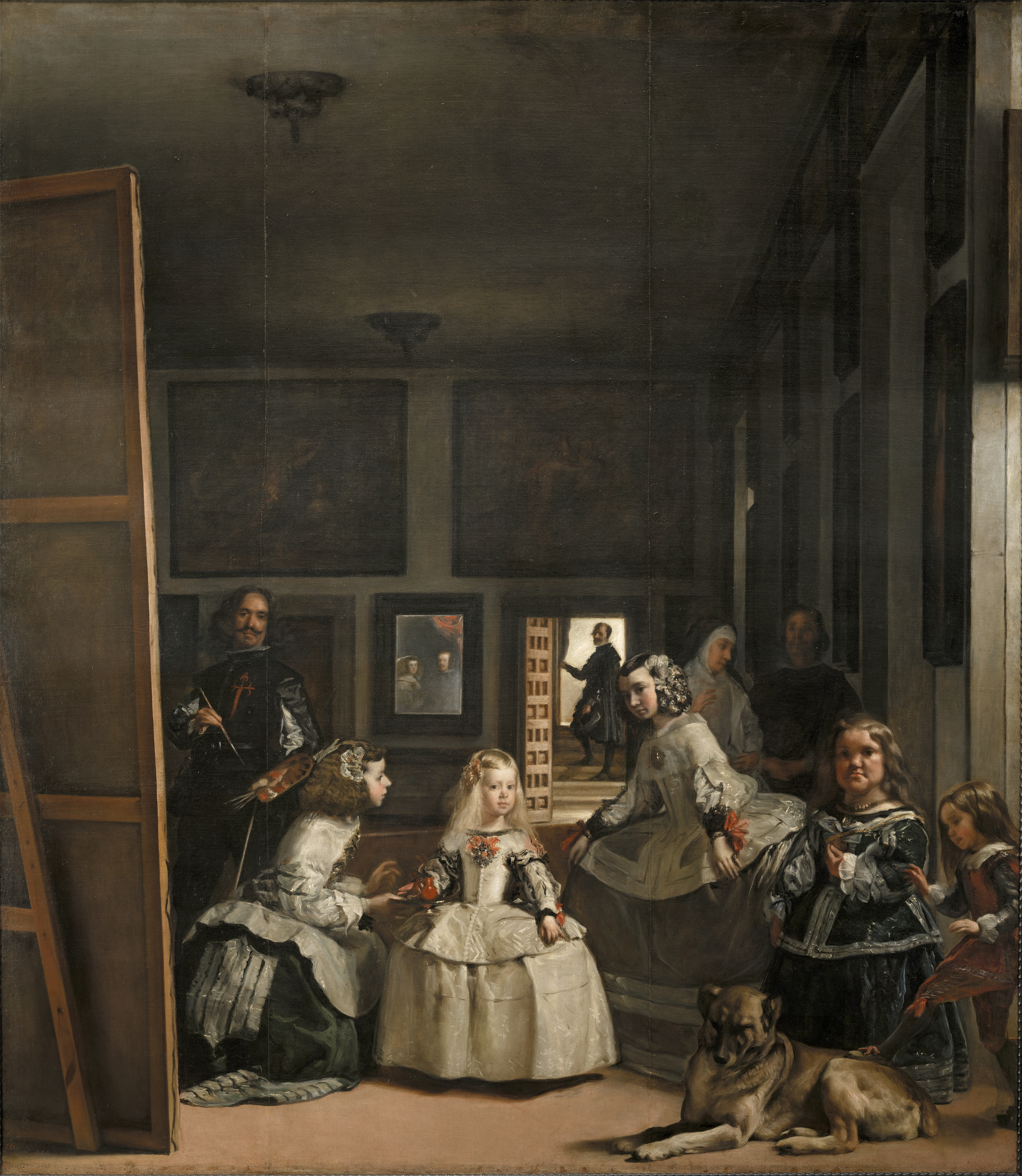
Unsurprisingly, Wilson wrote off Derrida’s philosophy as a “kind of defeatism” and bracketed him and his poststructural comrades – Foucault, Barthes, Althusser – alongside fake messiahs like Crowley and David Koresh. Crowley preemptively denied the inevitable charge of antinomianism in the seventeenth chapter of his memoir, but it drove his thought as much as it drives Foucault’s anti-authoritarianism. “There is no such thing as history. The facts, even if they were available, are too numerous to grasp. A selection must be made, and this can only be one-sided, because the selector is enclosed in the same network of time and space as his subject”. Not Foucault on the épistémèbut a footnote from Crowley’s memoir, complaining about his school exams. Foucault’s The Order of Things begins it’s anti-phenomenological argument with a reproduction of Las Menias by Velasquez; viewing this painting in Madrid Crowley comments on “the absurdity of trying to ascribe an order to things”, despite his previous analysis of the ordering ‘selector’ (intentional Ego) in the same book. Crowley was as serious as Blake regarding the individual search for the ‘Genius’ but he himself appeared to be in the grip of something else.

The Sun’s Light, when he unfolds it / Depends on the Organ which beholds it – William Blake, ‘What is Man’ from The Gates of Paradise 

“What man first listened to as the voice of God, to that he now listens as an independent power in his own mind which he calls conscience” writes Steiner in The Philosophy of Freedom, anticipating Julian Jaynes’ theories of the bicameral mind and the evolution of consciousness. Crowley was notably deaf to this voice, preferring to heed the advice of his garrulous subconscious. Of his childhood fixation, the Biblical number 666, Steiner said that this represents not a solar force of liberation, but a baleful possibility of “human disintegration, a universal cult of the I and of egoism” – that is to say, a cult of Gurdjieff’s ever-distracted ‘pseudo-I’, the opposite of the intentional Ego. In his cabalistic dictionary Crowley indexes his own nom de plume under this number alongside סורת [Sorath] which Steiner describes as “the adversary of the sun”, a materialistic current which places “spiritual power […] in the service of the lower “I”-principle”, i.e. the instincts and sensations. “This state in which the personality becomes one with the all-embracing spirit of life, must not be confused with an absorption in the “All-Spirit” that annihilates the personality” (Steiner uses ‘personality’ for individuality here). “No such annihilation takes place”. The only ‘annihilation’ worth seeking then is the one which Derrida thought impossible, Husserl’s suspension of the natural attitude in Ideas [§ 49: Absolute Consciousness as the Residuum After the Annihilation of the World]. Crowley’s genuine search for a “new faculty […] by the use of which I could appreciate truth directly” led him to the rather nihilistic conclusion that future humanity “will possess no consciousness of the purpose of it’s own existence”, rather like Steiner’s own gloomy picture of ‘involuntary’ ancient perception. The difference between the intentional ‘I’ and the reactive, blank self is why Blake thought pantheism derivative, why Gurdjieff warned against sinking back to instinct, why Husserl thought the natural attitude passive and why Wilson made a discrepancy between occult faculties and Faculty X. Near the end of The Occult Wilson argues that we can climb to new levels through “a gentle, cumulative effort; no frenzied leap is required”. Steiner said that our ordinary perception can lead us further into the ‘super-sensible world’ with more accuracy than any artificial occult pretensions – ‘rejected knowledge’ – so long as we elaborate these intuitions “with the aid of the intellect” (intuition aided by intellect was Wilson’s definition of philosophy). New influences will develop “in the sphere of the present-day conscious mind” even though such impulses are currently in their infancy.

In times like these, giving in to your instincts is just one more disaster – Nietzsche, Twilight of the Idols 

The trouble with instinct, writes Wilson in Frankenstein’s Castle, is that it is powerful but short sighted. The logical faculties which Jaynes believed were shunted to the left hemisphere of the brain were an evolutionary necessity, not a blunder. “That simple combination of instinct and robot can be a disaster” as they are both too easily prone to defeat. “This is why we need the left-brain ego: to overrule the instinct and the robot”. Libertines like De Sade preach total freedom and the rejection of civilisation but this is laughably naive. “For better or worse, man has developed this obsessive, left brain ego with it’s passion for order. There is no going back”. In his book on the strange wonders of the pyramids and the Sphinx (1996) Wilson argues that it was necessary to pull ourselves out of this pleasant but passive state of communal awareness and into something more dynamic and individual. The controlling ego is the left brain ego, but it is “trapped in its narrow conceptual consciousness, overawed by the enormous mechanisms of the brain and body […] it sits in the corner, studying the feelings and sensations of the body, and waiting to be told what to do” (Frankenstein’s Castle). So the ego is a ‘confused Transcendental Ego’, passively sitting in the cinema seat like a spectator, not knowing that it is the projectionist. Wilson admits that this realisation left him a little shaken – surely the answer lies in an omnipotent Self, presiding over consciousness, as mysticism suggests? 

It does, but Husserl himself thought that we could only reach that ‘Self’ or Transcendental Ego through the ‘normal’ ego [cf: Ideas § 33]. Steiner’s descriptions of the evolution of consciousness tell of involuntary impulses becoming instincts and slowly transforming into individual choices. Wisdom was once given to tribes or clans – which Musil names a “pseudoself, a loose fitting group soul” – but now new faculties can only be generated by committed individuals. Wilson points out that the existential dilemma of his Outsiders – alienation, neurosis, and lack of direction – are a misunderstanding of the potentialities and possibilities that are to be found in everyday life. “What I had grasped intuitively, and what slowly formed into an intellectual conviction, was that misery and alienation are not laid upon us by fate” he writes, contradicting ancient wisdom. “They are due to the failure of the ego to accept its role as the controller of consciousness”. The ironic alternative would be that we will not be able to dispense with outside stimuli like crises and disasters, for as Wilson notes, consciousness without crisis tends to become negative. This is especially true if our “mental life is a series of sensations and ideas aroused by [our] immediate experience” – the philosophical position of Hobbes, Locke and Hume which Nietzsche and Husserl rejected. Steiner warned against the possibility of a cult of diminished human ego in thrall to nothing but sensations and instincts, and even posited a future global collapse brought about by this narcissistic ego. Fittingly, he chose the associationist Hobbes’ nihilistic phrase ‘war of all against all’ to describe it. 

Nasty, brutish and online 

“It may seem harmless to think only automatic thoughts” remarks Steiner. But true to his intuitive understanding of the distorting power of intentionality he offers a glimpse of a future where humanity becomes what they behold, to paraphrase Blake. “These materialistic thoughts will then bring forth a terrible race of automatic beings […] endowed with great power of intellect and understanding and will enclose the earth in a kind of net or spiders web”, which thinks Steiner, will resemble the caduceus of Mercury. “All modern unreal thoughts will become endowed with being” he says. Husserl’s thought experiment about a ‘being’ devoid of intentionality, a “mere complex of sensations”, could be a clue. The plot of Wilson’s horror parody The Mind Parasites revolves around Lovecraft’s Mythos, phenomenology and a plague of anhedonia beginning in the 1800’s, although it is set in the present day. This satire was drawn from a passage in The New Existentialism discussing Blake’s Spectre and the intentional limiting of consciousness. Steiner’s lectures typically hint at dark forces entering into the human subconscious during the nineteenth century, when “materialistic impulses [were] instilled into humanity”. Steiner calls these impulses “spirits of hindrance” – phenomenologically speaking, they are our sense of contingency, itself due to our self-limiting of consciousness. Expressing this in science-fiction terms, Wilson describes this limitation as “some mysterious agency, that wishes to hold men back”, a mind parasite; “active in the feeling, will and mind impulses of human beings” since the middle of the nineteenth century, according to Steiner. These impulses “spin a web of illusion over human beings and into human brains” [and] “throw people’s views into confusion, turning their concepts and ideas inside out”. Thanks to these illusions, the atmosphere of the present is “impregnated with the will to misunderstand to such an extent that one’s words are immediately interpreted as something different from what they actually mean to convey”. A massive upsurge in materialistic “subtlety of conception, acumen and critical faculties” during the nineteenth century, then, was an anticipatory cause of today’s very confused ego. 

It is amusing to read that in this 1917 lecture, Steiner was complaining how pointless is was to still be thinking as it were still 1913, with the hindsight of the war, for this is the topic of Musil’s novel. Written in the thirties but set in 1913 – the year that Husserl published his phenomenological handbook, Ideas – it’s philosophical digressions unfold within the management of a political campaign celebrating the doomed Austro-Hungarian Empire. Musil’s satire on the culture world with it’s gestures and poses is timely (“reason and progress in the Western world would be displaced by racial theories and street slogans”) but even this “playacting” is an attempt to escape the past, however naive. What would you do if you could rule the world for a day? goes one conversation. “I suppose I would have no choice but to abolish reality” comes the answer. This is explained as a rejection of the here and now (“so much Present”), a craving for “a new concept of life” which grasps it directly, what Wilson meant by Faculty X, the awareness of the reality of other times and places. This Faculty cannot be activated without understanding the intentional ordering of consciousness. “The mind stands for order” says the man without qualities himself, Ulrich. He is speaking to his old General, and he asks if him you attempt to escape from “drab repetitiveness into the darkest recesses of your being, where the uncontrolled impulses live”, what do you find? “Stimuli and strings of reflexes, entrenched habits and skills, reiteration, fixation, imprints, series, monotony! That’s the same as uniforms, barracks, and regulations” he argues. Wilson compared intentionality to a barking sergeant-major, smartening up the recruits (impressions and sensations) for inspection by the conscious mind. This ordering function should protect our energy and vitality, but too much security of this kind soon curdles into the boredom and resentment which produces relativism. “It is a sign of Goethe’s astonishing genius that he managed to express this disillusionment in Faust before the scientific century was really under way” comments Wilson in The New Existentialism (Steiner also thought Goethe had preempted modern thought with Faust).

From the superficial, however, one is led into the depths – Husserl, The Origin of Geometry

“We can now see why Faust’s solution to this problem was the wrong one” he continues. “He tried to go backwards, to sink to a more instinctive level. Clearly, this is no solution. The solution is to repair the sense of purpose through a deepening of consciousness – which can be achieved by phenomenological analysis” (the practical discipline he champions at the beginning of the second part of the book). An essay he wrote on Husserl and evolution likens this process to poking a hole in stage scenery, the kind of artificial construct which Blake imagined as a mundane egg or shell. It is the ‘direct solution’ he later celebrated (cf: ‘In Search of Faculty X’ in Mysteries) and the reason why he held Proust in higher regard than Crowley and magic. His ‘evolutionary phenomenology’ challenges our presumptions about ourselves as passive beings and the conceptions we hold about the interior forces we have at our disposal, the layered strata of intentions. The aim is to become the ultimately free individual “who lives an inner reality, independent of the present, sustained from within”. Outsiders like Blake or Nietzsche are perfect examples; penniless or invalided, but indomitable. This is implicit in Husserl’s transforming of the ego to the Ego via his phenomenological method. New faculties can only be generated by a vigorous optimism and in the clear light of ‘normal’ consciousness – this is the theme of Wilson’s philosophy. Steiner understood this intuitively, even if, as Wilson thought, his imagination often got the better of him. 

But perhaps Musil put it most succinctly in The Man Without Qualities: “happiness can do wonders for a man’s latent possibilities”. 

Note: Rudolf Steiner’s lectures are archived here.
Also: numbers [§ -] refer to relevant passages in the phenomenological texts.

Howard F. Dossor – an appreciation

Howard F. Dossor, who died last month, was the author of the pioneering book Colin Wilson: the Man and his Mind, published in 1990. I bought it that year after having only read a handful of Wilson titles previously. I was unaware of both the author and this study, but plonked down ten quid on the Waterstones counter as soon as I saw it. Before reading this book my overall knowledge of Wilson was limited to what I’d seen on the blurbs of a few of his paperbacks. Mr. Dossor’s book changed all that, giving me for the first time a bird’s eye view of Wilson’s overall intentions. This was utterly invaluable; without it, I’d have struggled to see the full picture of Wilson’s ‘existential jigsaw puzzle’. To give one negative example, I was then still unaware of the critical stand off between Colin and the literary mainstream, presuming rather naively that he was as respected by them as he was by me. Not so! Chapter 9 of The Man and his Mind deals with the critical response which took me by surprise at first. Why don’t they like these books which I find so exciting and informative? Am I wrong in feeling so strongly about Wilson’s ideas when the broadsheets dismiss him with comic offhandedness, I wondered. In the long term – of course not! But with Dossor’s map the journey could begin properly. It’s certainly amusing to look at the Wilson bibliography in Howard’s book in 2022. Back in 1990 I was determined to find all those other titles – all eighty-odd of them, up to Existentially Speaking (1989). My copy of the Paupers Press Wilson bibliography lists another hundred titles, and it only covers up to 2015… 

Dossor modestly described his book as a “stop-gap” but it was so much more than that. The gathering together of much obscure information between two covers made it an indispensable guide for many years. I’m as glad that I thanked him for it (via email; his response was as courteous as I’d expected) as much as I’m grateful to have made a few ‘pilgrimages’ to Wilson’s house in Cornwall. “It seems most likely that critics analysing [Wilson’s] work in the middle of the twenty-first century, will be puzzled that his contemporaries paid such inadequate attention to him” writes Dossor at the end of his book. “But it is not merely for their sake that he should be examined”. And it isn’t. In our twenty-first century environment of divisive technological distraction and blandly orthodox ‘life failure’, of spiritual laziness and boring dogmatism, Wilson’s vigorous phenomenological existentialism remains a gift for individuals strong enough to swim against the current, to live out this lived philosophy. It certainly worked wonders for me. 

And it still does. 

So thanks again, Howard. 

Farewell also to Laura del-Rivo, Wilson’s beatnik muse, and to Thomas F. Bertonneau – a delightfully open mind from a world of closed academia. RIP both. 

With thanks to George C. Poulos for the email notification yesterday. 

The Strength to Dream, reissued

Out of print for decades, The Strength to Dream (1962) was the fourth volume of Wilson’s ‘Outsider Cycle’ which is now reissued by Aristeia Press. They have previously reprinted Religion and the RebelThe Age of Defeat and Introduction to the New Existentialism in matching softcovers. The remaining installments, Origins of the Sexual Impulse and Beyond the Outsider, will follow (The Outsider itself has remained in print since 1956 of course). 

The Strength to Dream is described by its author as “an attempt at a classification of unrealities, with a view to defining the concept of reality”. Essentially a study of the imagination as presented by various writers of fiction, Wilson’s book was rather ahead of its time, anticipating the intellectual interest in fantasy, horror and sci-fi that exploded later in the decade. Wilson’s book marks the first time that H. P. Lovecraft shared a space with the ideas of the phenomenologist Edmund Husserl and Wilson would soon exploit this unlikely juxtaposition with some Mythos novels of his own, paving the way for scholarly investigations of pulp fiction. While the latter is common enough now, it comes as quite a surprise to remind ourselves that Wilson was doing this shortly after the founding of the satirical magazine Private Eye and in the same year that ‘Love Me Do’ entered the charts (fittingly, Wilson here remarks that the Sartre of Nausea should have “given closer attention […] to the blues in general” to counter his defeatist attitude; a dozen pages later Stockhausen is aptly described as ‘far out’). 

Wilson had of course already anticipated the forthcoming sixties obsession with consciousness expansion by writing about the largely unknown Hermann Hesse and the obscure thaumaturge G. I. Gurdjieff in his first book, The Outsider. Further along the ‘Cycle’, The Strength to Dream investigates many cult names who would later become iconic in their respective genres: Lovecraft, M. R. James, Philip K. Dick, Robert A. Heinlein, Brian Aldiss. By the seventies, horror and science fiction would be a booming business for paperback publishers such as Panther (who also brought out many Wilson titles). This century, Lovecraft and Dick are finally published by the prestigious Library of America. 

The “classification of unrealities” in Wilson’s study also includes a thorough analysis of the writings of Lawrence (D.H. and T. E.) Beckett, Sartre, Strindberg, Wells, Huxley, Faulkner, Andreyev, Robbe-Grillet, Saurraute, Wilde, Yeats and Tolkien, amongst many others. As per usual with Wilson, it’s a brilliantly accessible guide to cult literature if nothing else. But also – as per usual for Wilson – it is a philosophical treatise, made explicit by his shoehorning of Husserl’s ‘phenomenological’ method into the text. The ‘intentional’ nature of consciousness which Husserl had attempted to pin down with rigorous logic in the first few decades of the twentieth century was described by Wilson as the ‘form imposing element’ in 1961 but it becomes the ‘form imposing faculty’ in The Strength to Dream and as the Outsider series progresses, the ‘phenomenological faculty’. Wilson thought this “a rather clumsy phrase” and by 1967 he was speaking of ‘Faculty X’ – a state of extreme clarity which is represented by one of the most famous moments in Modernist literature; Proust’s memory of lost time in Swann’s Way (significantly, Proust himself connects this experience of mental freshness to a “dormant faculty” in the second volume of his novel). The faculty had already appeared in nascent form in Wilson’s debut (“a sort of pictorial memory of other times and other places” he writes in the Nijinsky section) and in the sequel (similar words in the chapter on Jakob Böhme), but it could be argued that it is in this particular book on the literary imagination where it first crystalises as a solid concept. Therefore it is notable that Husserl himself discussed a “parallelism” between perception and imagination in his first major work on phenomenology (1900), a correspondence which obviously attracted Wilson. “The whole point of phenomenology is that there is no sharp dividing line between perception and imagination” he wrote in 1966 when he was summing up his ‘Cycle’. “The dividing line only applies when we think of perception as passive and imagination as active. As soon as we realise that perception is active [i.e. intentional], the old dichotomy vanishes”. A good indicator of how far Husserl was misunderstood and what an existentialist thinker like Wilson was working against at this time is a comment from Sartre in his huge ‘essay on phenomenological ontology’ (1943). Sartre states near the conclusion that perception “has nothing in common with imagination”. For Sartre, however, imagination is only the ability to “assemble images by means of sensations” which (he claims) originated with the “association theory of psychology” – that is to say, the ‘psychologism’ that Husserl had already demolished forty-three years before in his Logical Investigations. Sartre’s analysis becomes even more risible with the knowledge that Husserl had painstakingly demonstrated that sensations are not intentions in the fifth investigation of the same work. In a verbose letter from March 1930 Lovecraft matches value with association and freedom with sensation – while claiming that he is unprejudiced with regards to these “consciousness-impacts”. It comes as no surprise then that the famous opening statement from The Call of Cthulhu is anti-phenomenological in nature, stating as it does that the most most merciful thing in the world is inability of the human mind to correlate all its contents. Wilson writes off this attempt at philosophising as “the usual romantic pessimism” at the start of The Strength to Dream

Sartre mentions in his essay that Heidegger’s philosophy uses “positive terms which hide the implicit negations” and it could be said that Wilson turns this on its head, using negative examples to illuminate an optimistic truth. His previous book had been an A-Z of criminal cases and Wilson admitted that this was complied partly as a dig at Sartre’s rather reductionist attitude. Sartre also writes in his essay that we can “catch a glimpse of the paradox of freedom” but only via objects, obstacles and other exterior ‘situations’. Wilson would later define Faculty X as ‘the paradox of freedom’ and he insisted that we can glimpse it with enough effort, without the need for such props and situations. Therefore the analysis of negative examples of freedom, like the sociological and existential study of murder, or the rigorous questioning of imaginative creativity should be encouraged in order to throw these problems into relief. 

A philosophical sounding quote – “people are no more than things to me. Inanimate. Cyphers. I am a pragmatist” – could have easily been said by a Beckett character, but it was actually written in a confessional letter by Klaus Gossmann, ‘the Midday Murderer’. [1] Like the index of self defeating social tragedies catalogued in his crime book, The Strength to Dream analyses another angle of this rather unhealthy attitude towards life. Ploughing through the bleak imaginative landscapes of Sartre’s fiction, and those of Beckett and Andreyev (a favourite of Lovecraft – both held the same philosophy) is a sure way of determining the strength or weakness of individual imaginations. For Wilson the imagination is not daydreaming but a way of grasping reality, analogous to Husserl’s intentional consciousness. “The faculty for ‘grasping’ a picture or a page of prose might be called the attention” writes Wilson. “But attention is a simple matter, depending on an act of will (as when a schoolteacher calls ‘Pay attention, please). This ordinary attention is often inadequate to grasp the meaning of a picture or a piece of music; it is not ‘open’ enough to allow a full and wide impact of strangeness. The instantaneous act of grasping that transcends the pedestrian ‘attention’ is the imagination. It is more active than attention; it is a kind of exploring of the object, as well as a withdrawal from it to see better”. Husserl had covered this ground in the fifth Logical Investigation, when he said that we ‘live’ inside the perceptive act when we ‘take in’ a work of fiction. Later he questions the usual meaning of the word ‘imagination’, remarking that ordinary awareness (i.e. that we are ‘merely reading’) is “inoperative” in the novel reading or aesthetic experience. It is worth noting that this latter section, like Sartre’s thoughts on imagination from Being and Nothingness, are both analyses of the quality of perceptive acts. 

Wilson begins The Strength to Dream by dismissing the realist interpretation of imagination. Both the socialist and the capitalist, he says, see it as a useful gadget, an accessory to the aims of either the state or to business, but this ‘one size fits all’ description of the imagination is hardly applicable to Poe or Dostoyevsky. About to be executed, Dostoyevsky saw life “without disguise” as Wilson phrases it here. From then on he was determined to imaginatively capture this reality in his fiction, even if it meant forever contrasting it against squalor. Nineteenth century romantics used imagination as a “kind of psychological balancing pole” to navigate a world that horrified them (Lovecraft is one of the last and best examples of this compensative mindset). Yet it was his discovery of Lovecraft in the late fifties that altered Wilson to another interpretation of imagination, one that is closely bound to values. Lovecraft states his “basic life value” in the above letter: “nothing has any intrinsic value”. So it is hardly surprising then that Lovecraft died aged only forty-six. Dostoyevsky’s purpose, writes Wilson, is an attempt to “communicate to his readers the inexpressible value of life” by contrasting this undisguised “invisible strength of the powerhouse” against misery and futility. 

“It is my contention” writes Wilson “that these value judgements are the mainspring of the imagination; they are, in fact, so closely connected with it as to be almost synonymous with imagination”. For instance, we can ask ourselves: ‘what life would be like inside Lovecraft’s Mythos?’ A state of miserable slavery underneath some tentacled cyclopean entities? This is hardly the imaginative power found in Dostoyevsky or in Blake’s prophetic books. It is significant then, that Wilson’s own satirical barb at Lovecraft, The Mind Parasites, was drawn from a phenomenological insight [2] into what Blake called ‘the Spectre’ – the rational power that negates, like Mephistopheles in Goethe’s Faust (the sober mystic Rudolf Steiner thought Mephistopheles the perfect symbol for the current age of materialism, neurosis and life-failure, although Steiner named this anti-zeitgeist ‘Ahriman’). The Blake scholar S. Foster Damon, a friend of Wilson’s, described the Spectre as “a machine which has lost its controls and is running wild” – a representation of the human condition that would have satisfied Gurdjieff as well as Steiner. In the second book of Ideas Husserl describes the “lower level” world of sensations and associations – that is, the philosophy of Sartre, Greene, Beckett and Lovecraft – as “the world of the mechanical, the world of lifeless conformity to laws”. This is the mental world of the cafe proprietor which was brilliantly satirised – ironically enough – in Sartre’s Nausea, a portrait of someone who is wholly dependent on outer objects and situations for meaning. This lifeless attitude flows through the literary and cultural criticism of Roland Barthes, a contemporary of Sartre: “…just as I is nothing other than the instance saying I: language knows a ‘subject’, not a ‘person’, and this subject, empty outside of the very enunciation which defines it…” [3] Despite being written in 1967, Barthes’ value-judgement on the self sounds exactly like the Sartre of Being and Nothingness circa 1943. 

The problem with this anti-intentional attitude – which was unfortunately given a huge boost in the mid-Sixties via the philosophical lit-crit of Barthes’ semiology and Derrida’s deconstruction – is discussed by Wilson in The Strength to Dream, another reason for the book to be branded ‘ahead of its time’. He remarks that philosophers declaim their “temperamental reactions to life as if they were the result of a most careful weighing up of the whole universe”. Likewise, the novelist “sits in his armchair and writes about his vision of the world as if he is delivering the gospel”. This is the result of the fallacy of passive perception which was built into modern philosophy by Descartes, a flaw that Husserl exploded with his notion of the intentionality of consciousness, Wilson’s ‘faculty’. Wilson quotes the speech of a self indulgent nobleman in the Marquis de Sade’s The 120 Days of Sodom: Sade’s Durcet says that it is “the weakness of our faculties [that] leads us to these abominations”. Wilson once dubbed de Sade ‘the patron saint of serial killers’, and a few years on from The Strength to Dream he wrote that real purpose of the study of murder is “to teach the human imagination to create crisis situations without the physical need to act them out” [4]. In his book on the psychologist Maslow (1972) Wilson points out that consciousness without crisis tends to become negative. This does not mean that we need to seek out physical crisis situations – although thinkers as diverse as Ernest Hemingway, Aleister Crowley, Karl Jaspers, Martin Heidegger, Sartre and Gurdjieff all thought that we should – rather, we need to carefully analyse what actually happens in these situations. Wilson’s first book The Outsider collects many examples of these situations and amongst the most illuminating are two experiences reported by Nietzsche. These episodes, familiar to any Wilson reader, are examined again at the beginning of the sixth chapter of The Strength to Dream, the chapter which starts with the de Sade quote about the weakness of his libertines’ faculties. 

Wilson insists that while the two passages “express only an aspect of Nietzsche’s philosophy” it cannot be understood without this central drive – what Nietzsche himself described in a letter as “pure will, without the confusion of intellect”. Like Blake’s maxim that energy is eternal delight, this is a confirmation that intentional consciousness must be driven by a willed momentum. Husserl says as much in (again) the fifth Logical Investigation that “the greatest energy will be displayed by the act-character which comprehends and subsumes all partial acts in its unity”. In his notebooks Nietzsche rejected mechanical Darwinism in favour of a “tremendous shaping, form creating force working from within” – what Husserl later meant by intentionality, or Wilson’s ‘form imposing faculty’. The study of imagination in action can ascertain how strong or weak an intentional grip any given author (or character) has on reality or within a situation. Sartre’s cafe proprietor Monsieur Fasquelle and Beckett’s Molloy have feeble intentional processes, as they are mostly manipulated by external objects or events. The third part of Beckett’s Molloy trilogy shares its title with an early Lovecraft tale, The Unnamable (1925). In Lovecraft’s story a rationalist character remarks that “even the most morbid perversion of nature need not be unnameable or scientifically indescribable”, a statement that a phenomenologist like Wilson would certainly agree with. Lovecraft’s narrator admires his friend’s “clearness and persistence”, a trait of his typically “analytical mood” but this tranquillity is obliterated by the typical horrors that follow. Later they dimly recall being attacked by a mass of slime (“the ultimate abomination”), a property which Sartre analyses near the end of his long ‘refutation’ of Husserl. Sartre writes that the slimy is “the best image of our own destructive power […] a retorted annihilation […] It is flaccid […] the slimy is docile”. This is hardly Nietzsche’s form creating force or Husserl’s sinewy intentionality. Writing of our “tendency to confuse sense-contents with perceived or imagined objects” Husserl describes the background of perception (i.e. Wilson’s ‘far’ behind the ‘near’) as “surrounded only by an obscure, wholly chaotic mass, a fringe, a penumbra, or however one may wish to name the unnameable”. But this ‘far’, he continues, is not actually separated from the ‘near’ but is “inwrought” with it – an observation that clearly anticipates Wilson’s Faculty X or phenomenological faculty. In literature Wilson found examples of this faculty at work in Proust and in L. H. Myers’ aptly named but rather forgotten The Near and the Far (1929). He also points to a scene from Huysmans’ À rebours (chapter XI) describing a “clumsy change in locality” as a good example of this near-far dichotomy which is often a concern of phenomenological philosophy. [5]

Further in his Investigation Husserl uses the word ‘genetic’ which would become an important factor in his later, time based phenomenology. Past experiences, he writes, “render selective notice [i.e. intentionality] possible […] the emphasis of attention involves […] generally a change in content (an ‘elaboration in fancy’)”. As Wilson wrote in his new existentialist study of Husserl in 1966, if anything is an illusion, it is the content of our present mode of consciousness, our contingent feeling that we are trapped in a world of the near and trivial. If anything demonstrates this to be an untruth, it was the historical rise of the novel and the imaginative revolution that followed, Husserl’s ‘elaboration in fancy’. 

This is implicit in Proust’s ‘dormant faculty’ and his investigations into memory and his past, or negatively in de Sade’s weak faculty which like Lovecraft’s, breeds abominations. As Wilson insists throughout The Strength to Dream, the imagination is more powerful than we think. “Can we doubt” he writes “that one of Zola’s greatest moments was the hour that he conceived his Rougon-Macquart cycle?” This activity of planning a large work – Balzac’s La Comédie humaine, Proust’s Temps Perdu or Newtons Principia – is “a preparation for a long journey away from the physical activity of the present, and therefore a kind of practice for inhabiting a new field of consciousness”. So simply remarking that ‘all perception is intentional’ misses the active nature of Husserl’s insight (which itself moved from static to genetic phenomenology). In his study of Maslow Wilson describes this active consciousness as ‘preparedness’; earlier he had described it as “anticipatory labour” – rather like an insurance policy which covers events which may never occur, or a farmer building barns for harvests that may or may not happen. [6] 

We have achieved civilisation by replacing real experience with symbols (words) and “then by learning to replace whole groups of symbols and the relations between them by formulae” writes Wilson in The Strength to Dream. “The ‘modern neurosis’ would seem to be due to a tendency to lose contact with the reality underneath the formula” (this intentional ‘formularising’ is indispensable, however). Therefore the intuitive faculty of imagination could also be called “a grip on reality”, but much of the imaginative fiction that is analysed in Wilson’s book fails this intentional test. Lovecraft’s adolescent idea that life is a hideous thing, Andreyev’s description of an embrace as “monstrous and formless, turbid and clinging”, Sartre’s “flabby, many-tentacled evasions” in reference to the novels of Nathalie Sarraute, and her own description of how “the nearest nothing makes her tremble, this Hypersensitive, lined with quivering little silken tentacles” – all are stuck the fallacy of passive perception, a legacy of Descartes’ idea that we merely look outward and receive ‘facts’, minus any selectivity or intention (note Andreyev’s use of “formless” rather than form-producing). Wilson’s book deals with “the eccentricities and imprecisions” of various imaginations and he notes that the word imprecision “implies a goal that has been missed” – in fact the book begins with a half-remembered parody of Sartre’s Nausea but set on a football pitch (“Why does that man keep blowing on a whistle?”). According to its ‘normal’ definition, each imaginative act has a different goal because it is merely a subjective fantasy, but this is countered by the phenomenological definition, which understands it as an act of intention. 

These phenomenological ideas begin to become fully formed in The Strength to Dream. “It is impossible to exercise the imagination and not be involved in this [evolutionary] current” writes Wilson. It would be fair to say that Wilson took the function of imagination as seriously as William Blake did – notably, Blake alluded to the same ‘faculty’ circa 1788 with reference to the imagination of poets (Wilson said that Faculty X is strong in good poets). A century later Rudolf Steiner began his career with a brilliant little book on the ‘philosophy of freedom’, brimming with acute phenomenological insights into consciousness (Steiner attended lectures by Husserl’s teacher Franz Brentano). Fifteen years later he made an intriguing assertion to an audience, cryptically speaking of a ‘cosmic law’ that dictates that “every capacity humanity acquires must have its beginning in one individuality. Faculties that are to become common to a large number of people must first appear in one person”. Summing up the argument for the creative use of the imagination yet again in The Misfits (1988), Wilson came to the same conclusion as Steiner (“if one single human being could learn to achieve Faculty X at will, this ability would soon spread to every member of the species”). Like Nietzsche and Gurdjieff, Wilson rejected crude behaviourism and mechanical evolution, favouring a phenomenological process – a careful reading of the ‘Analysis of Man’ chapter in Beyond the Outsider will make this ‘evolutionary intentionality’ clear. These ideas begin to form in The Strength to Dream

After the first modern novel appeared in 1740, imaginative literature exploded in Europe, transforming scores of its inhabitants from readers of village sermons into would-be revolutionary romantics. But by the end of the nineteenth century this powerful imaginative current had soured into a resigned pessimism – Wilson remarks in The Strength to Dream that if Schopenhauer or Andreyev had been honest about their philosophy of life, they would have committed suicide (both enjoyed comfortable living, of course). Wilson remarks that professionally pessimistic thinking is a cover for ineptitude; like the pile of dead bodies at the end of an Elizabethan drama, “it produces an impression of conclusiveness”. 

With characteristic wit, Nietzsche called Romanticism “that malicious fairy”. But Wilson maintained that the early Romantics like Blake had glimpsed an evolutionary purpose, a kind of proto-phenomenology. Steiner, a devotee of Goethe and a biographer of Nietzsche, made another useful comment concerning ‘universal laws’ in the above lecture. “If you merely consider the world as it presents itself to the senses, which is the modern [i.e. 1909] scientific approach, you observe past laws which are still continuing. You are really only observing the corpse of a past world”. As Husserl said, sensations are not intentions, and the sensationalistic fiction of Lovecraft, for instance, is a front for his anti-intentional philosophy. Steiner goes on to say that we need to “find the things that are outside those laws […] a second world with different laws” (my italics). This ‘world’, he says, is already present inside reality “but it points to the future” – rather like the evolutionary intentionality hinted at in The Strength to Dream and developed in further Outsider volumes. Wilson’s philosophical treatment of literature – ‘existential literary criticism’ – examines what the author was trying to say via analysis of their attitudes towards the dynamism of life, and therefore it is in opposition to Barthes’ sterile ‘semiological’ dissection of corpses. From The Outsider on, Wilson analysed the lives of writers and thinkers to see how they reacted to life, to find out what values they held as part of an active rather than entropic process. (Outside the main body of the text, The Strength to Dream also contains three essays of existential literary criticism as appendices, one each on Aldous Huxley, Nikos Kanantzakis and Friedrich Dürrenmatt).  

The core values of Wilson’s new existentialist philosophy were developed through the ‘Outsider Cycle’ and The Strength to Dream essentially marks the beginning of his mature thought, a turning away from the occasional youthful idealisms of the very earliest volumes and into a more precise analysis, thanks to his discovery of Husserl. The problem of our time, says Wilson, is to “destroy the idea of man as a ‘static observer’ both in philosophy and art”. This static observer is not Husserl’s “disinterested spectator” or Gurdjieff’s “man-without-quotation-marks” – i.e. a transcendental, self-aware subject – but a passive recording mechanism stuck in Husserl’s natural or naive attitude. The narrative voices of Lovecraft, Beckett and Sartre, for instance, all bring in this emotional distortion without questioning it. [7] Near the end of The Strength to Dream Wilson remarks that he has spoken of ‘reality’ in inverted commas throughout the book to indicate ‘everyday reality’, what Robert Musil saw as the prevailing ‘pseudoreality’ in The Man Without Qualities (1930). Everyday consciousness, said Wilson in Introduction to the New Existentialism, is a liar, what Gurdjieff called the ‘pseudo-I’, a fake self (or selves). Far from being false, the imaginative revolution has helped clear away perceptually distortions about our self-image and has been an invaluable aid to human evolution, despite the side effects (as seen in the annals of modern criminology). The imaginative rebellion against ‘reality’ generated a new faculty of perception, what Wilson here labels “an evolutionary drive”. This is an unseen or hidden drive (“of which the writers may be completely unaware”) which Wilson calls the faculty of affirmation – later Faculty X. Dostoyevsky saw it without disguise as he was about to be executed, and he could recreate the reality of this crisis situation using his powerful imaginative faculty, his strong dreaming. Through imaginative power he has ‘bracketed’ the world and become aware of himself as a ‘transcendental ego’, to use Husserl’s terminology. 

“Existentialism has been defined as the attempt to apply the mathematical intellect to the raw stuff of living experience” writes Wilson in The Strength to Dream. “It might also be an attempt to create a new science – a science of living”. Existential criticism therefore judges imaginative works as successes or failures according to this science of life; “to judge them by standards of meaning as well as impact”. So literature that is crudely sensationalistic, like Lovecraft’s, should be carefully scrutinised against Husserl’s stern philosophical reasoning that sensations are not intentions. Husserl and Lovecraft are often analysed together nowadays, but only in the opposite direction to which Wilson was pointing in 1962. The mentality of Sartre’s cafe proprietor whose head empties with his establishment is emblematic of twenty-first century thought, but Wilson’s new existentialism remains a strong and workable refutation of this passive ideology, for anybody who wants it. 

With its pioneering mixture of pulp and phenomenology The Strength to Dream remains a timely examination of the imagination and it’s strange powers. It is a crucial part of Wilson’s ‘existential jigsaw puzzle’. 

[1] Wilson, Colin, A Casebook of Murder, Leslie Frewin, 1969, p. 247. Lovecraft is mentioned in this book (p. 193). He is also discussed more thoroughly in the sequel, Order of Assassins: the Psychology of Murder (1972).

[2] ‘The Power Of the Spectre’ in Introduction to the New Existentialism, Hutchinson, p. 161. In Blake’s Vala, or the Four Zoas (1791) the Spectre describes himself: “I am thus a ravening devouring lust continuously craving and devouring”.

[3] Barthes, Roland, ‘The Death of the Author’ republished in Image, Music, Text, Fontana, 1977, p. 145.

[4] Wilson, A Casebook of Murder, ibid, p. 226

[5] For instance, in the relevant sections on parts and wholes in Husserl’s Logical Investigations discussed here – first vol., RKP, 1970, pp. 416 – 417, and in the first book of Ideas (Kluwer, 1982, p. 55). Also analysed as per the “existential spatiality” in Heidegger’s Being and Time, (Blackwell, 2004, p. 171), and the “far and the near, the great and the small” in Merleau-Ponty’s Phenomenology of Perception (RKP, 1967, p. 266). In the Logical Investigations Vol. II (ibid. p. 756), Husserl dismisses “empty” signitive intentions – the life-blood of Barthes’ literary criticism and Derrida’s deconstruction – against filled imaginative intentions. Fulfillment depends on “greater or lesser completeness, liveliness and reality” – Blake’s “energy” or pulling the bowstring of perception fully taut, as Wilson would have it. 

[6] Wilson, Colin, Beyond the Outsider, Carroll and Graf, 1991, p. 177. In this primer on ‘evolutionary phenomenology’ Wilson compares the phenomenologist’s descriptive abilities to a farmer who can precisely explain how he would cultivate a tract of rough land. On page 148 he looks back at The Strength to Dream and maintains that “the phenomenological analysis of imagination” proves that it is not merely compensatory but a form of intentionality that involves the use of A. N. Whitehead’s three modes of experience – immediacy (the near), meaning (the far) and conceptual analysis (the ability to grasp ‘wholes’ through intellect “which, through the use of symbols, has a greater storage capacity”).

[7] Husserl on the disinterested spectator: cf The Crisis of European Sciences, Northwestern Uni. Press, 1970, p. 157; p. 239. Gurdjieff’s ‘man-without-quotation-marks’ in Beelzebub’s Tales to his Grandson, RKP, 1950, p. 1191

Head Revolution

Despite his numerous writings on mysticism and visionary experience Colin Wilson remarked in 1966 that his philosophy was not for readers who want “immediate and startling results […] sudden conversion, blinding visions”. Instead, his ideas are concerned with a careful inquiry into consciousness and with our attitudes towards life. 

By the time he wrote this his controversial writing career was a decade old and he would sum up his basic philosophical credo – the ‘new existentialism’ – in an introductory book of that title. Dissatisfied with the bleak outlook of post war existentialism as represented by Heidegger and Sartre, he returned instead to the phenomenological method of Edmund Husserl, whose philosophy was a primary motivating force on existentialism (and later, Derrida’s deconstruction). Despite now being over half a century old, Wilson’s Beyond the Outsider and The New Existentialism remain the most exciting and accessible introductions to this obscure method of consciousness control outside of the incestuous bubble of academia. 

Wilson did not begin to discuss Husserl until the start of the 1960’s. He is first mentioned (to my knowledge) in Wilson’s opening essay in a pioneering true crime book, The Encyclopedia of Murder. Wilson would write a lot about phenomenology for the first half of the decade and it’s methodology can be felt lurking throughout most of the rest of his work – even a potboiler such as Unsolved Mysteries: Past and Present (“From Arthur and Merlin to vampires and zombies” reads the garish cover) manages to briefly discuss Husserl’s last work The Crisis of European Sciences and Transcendental Phenomenology. Wilson thought of Husserl as originally something of a poet and mystic rather than the stern logician he appears to be (originally a mathematician, Husserl’s first book was on arithmetic). 

“From the superficial, however, one is led into the depths” says Husserl, paraphrasing a line from the the second part of Goethe’s Faust. Wilson remarks that Husserl believed that the study of phenomenology would lead to the Goethe’s ‘Mothers’, the ‘keepers of the key to the ultimate sources of being’ (“goddesses unknown to mortal mind … named indeed with dread among our kind” says Mephistopheles). [1] In a somewhat underappreciated satirical move, Wilson would invoke Husserl alongside the mythos of H.P. Lovecraft in a series of ‘Brechtian’ piss-takes: The Mind ParasitesThe Return of the Lloigor and The Philosophers’ Stone, the first two of which were originally published by the Lovecraft concern Arkham House. “A round square, a regular icosahedron and similar a priori impossibila are in this sense ‘unpresentable’. The same holds of a completely demarcated piece of a Euclidean manifold of more than three dimensions…” writes Husserl in the Logical Investigations [V: §44], sounding rather like a classically educated Randolph Carter attempting to describe something equally ‘unpresentable’ from Lovecraft’s pantheon. At the end of his gripping history of occultism (1971) Wilson gives credence to the will-driven experiments of the various mages discussed but ends by announcing that the greatest step forward was made when Husserl began investigating the intentional structure of consciousness circa 1900. Despite its roots in the scientific method, phenomenology was intuited as a mystical discipline – “a doctrine of the will” – by Wilson. Understood properly, Wilson was quite brilliant at leading from the seemingly superficial – those airbrushed Panther paperback covers with their sensationalistic blurbs  – into the phenomenological depths of consciousness discussed inside. Alas, his critics scoff at the surface but almost never discuss the depths, the phenomenology. 

In his major work, the first book of Ideas, Husserl insists that there is “no ‘royal road’ into phenomenology” [§96]. “Our procedure is that of an explorer journeying through an unknown part of the world, and carefully describing what is presented along his unbeaten paths, which will not always be the shortest”. So, no immediate and startling results, sudden conversions or blinding visions. However, the first practical discipline of the phenomenological method – to become constantly aware of the intentionality of all of our conscious acts – is no more difficult that learning a language. “What is happening” writes Wilson in Beyond the Outsider “is that the problem expressed by the mystics – and by Blake in particular – has been first of all expressed in terms that would have been acceptable to Descartes”, i.e. scientifically. Phenomenology is a science of consciousness. 

The above quote appeared in an appendix detailing Wilson’s experiment with mescalin – he was disappointed. He later admitted that ‘the sixties’ essentially passed him by; he had after all already been writing about Hermann Hesse and consciousness expansion since The Outsider had appeared in 1956. Ten years on he summed up his new existentialist credo to some enthusiasm but little academic interest. 1966 was the year that the ‘counterculture’ began to assert itself and it was when Derrida introduced deconstruction to Americans via a critique of Husserl; meanwhile, Foucault was on the bestseller list in France. In his remarkable study of the soundtrack to the era, Ian Macdonald lays out a powerful description of a subliminal change of awareness which happened during this decade. He calls it the ‘revolution in the head’. Akin to the psychological effects that Marshall McLuhan had noted during the switch from print based linearity to multifocal multimedia, this revolution was “an inner one of feeling and assumption” amongst the general public. Currently living in a state of “greedy simultaneity” society is “now functioning mostly below the level of the rational mind in an emotional/physical dimension of personal appetite and private insecurity” with individuals forever guarding their own “jealously levelled standards”. [2] This can be seen, he says, in the “cynical egalitarianism” of deconstruction: “a levelling crusade on behalf of the aesthetically deprived” which ideally suits the philistinism of both left and right. “A malignant rot has spend through the Western mind since the mid Seventies: the virus of meaninglessness”. [3] Of course, Wilson had been fighting an almost single-handed battle against this virus for several decades. The third installment of his Outsider series was The Age of Defeat, a book about “unconscious assumptions” in an inner-directed/other-directed society. Husserl would have perhaps called this assumptive state the natural attitude of the ‘normal’ man, as opposed to the phenomenological attitude of his explorers (Wilson would call them Outsiders). 

The state of instantaneous/simultaneous perception that MacDonald labels the revolution in the head can be clearly heard in the music of the era. Jim Morrison sang that he wanted the world and he wanted it NOW, sounding like one of the Romantics dissected in Wilson’s debut. In light of his opening comments about instant visions, it is significant that Wilson wrote a book about the quick cures of ‘charlatan messiahs’ which – in its original edit – examined the thinkers Derrida and Foucault alongside more obvious examples such as Charles Manson and the Rev. Jim Jones. “If the definition of a messiah is one who is more concerned with collecting disciples than the truth of what he is saying, then most of France’s post-war intellectuals qualify as messiahs rather than philosophers [with their audience] expected to nod in agreement as they are subjected to a barrage of increasingly absurd propositions”. [4] 

Relevant to Wilson’s thesis would be these two sudden conversions and blinding visions, both shaped by LSD in Death Valley, California. Manson’s 1968 ‘helter-skelter’ and Foucault’s 1975 ‘limit-experience’ were mostly soundtracked by aleatory electronic noise (The Beatles’ Revolution 9 and Stockhausen’s Kontakte). Foucault’s biographer James Miller writes that the above experience, like most of the pivotal events of his life, “happened largely by chance” – hence Foucault’s rejection of what Husserl meant by ‘intentionality’, which according to MacDonald is a very dangerous attitude. “[To] treat chance-determined productions as identical with material intentionality vested with meaning is to meddle in a relativism that can only escalate towards chaos – and chaos draws psychopaths”. Use of random experiment and the free-floating meanings they generate were intended as “harmless fun for Lennon” but when interpreted by psychopaths like Manson and later, by Lennon’s assassin Mark David Chapman – “in the end they returned to kill him.” [5] Wilson’s studies on the psychology of crime have always challenged the selfishly ‘interpretive’ criminal mind and its ability to deceive itself. Divorced from intentionality, randomness can lead to meaninglessness which can eventually be fatal. Manson’s tedious race war and Foucault’s ludicrous ‘suicide festivals’ were brutal demands for immediate satisfaction, all too common in the ongoing age of “post-religious egotism” and the instantaneous/simultaneous state of awareness which accompanies it. Derrida’s interpretation of Husserl replaced the careful analysis of intentionality with the kind of “harmless fun” mentioned above (‘play’ was an often used term in deconstructive salvos) and the embittered, relativistic sectarianism which now underpins dialogue from both left and right is it’s legacy. Wilson rejected Derrida’s use of Husserl because he believed that Derrida did not grasp what was meant by intentionality. It is not, he said “merely the arbitrary imposition of our fantasies on a featureless ‘reality’” – a statement that unfortunately describes the mentality of the 21st century with uncanny accuracy. 

Introducing his bestselling ‘archeology of thought’ to English readers Foucault singled out “the phenomenological approach” as the one which he completely rejected. His conclusion – than man is a recent invention nearing its end – is for Wilson merely a restatement of Sartre’s ‘man is a useless passion’ which rounded off Sartre’s own epic dismissal of Husserl. In Beyond the Outsider Wilson offers the rather more optimistic statement that “man does not yet exist” – human beings are so dependent on external pressures and forces that we hardly experience what could be called reality, except in moments of intensity (like Sartre remarking he had never felt so free as when he was living in occupied France). In fact, Wilson compares our ‘normal’ state of perception to martial law. Our “capacity for distinguishing” (i.e. intentionality) filters off the information overload that surrounds us. “But our perception is still a second best, many degrees better than the original chaos, but a long way from the possibilities of seeing order and meaning in the universe”. [6] Thanks to this emergency state, we have forgotten existence, as Heidegger says at the beginning of Being and Time. We cannot begin to proclaim final judgements on universal meaninglessness or the end of man while our perceptions are so feeble. 

The illusion of ‘passive perception’, that we can only be stimulated by outward forces – like Sartre’s waiter whose head empties alongside his cafe – can be seen at work in Foucault and Derrida’s twin obsessions of history and language, immense blind forces that control us like puppets. Wilson’s own explorations into the intentional structure of consciousness clearly demonstrate the fallacy of this view. Husserl’s phenomenology “could be likened to a kind of archeology. When I speak of ‘myself’” writes Wilson, “I am speaking about the uppermost layer of willed intentions”. Underneath this “lies the realm of my acquired habits” like typing or driving. Several layers below are our sexual intentions which Wilson insists can be studied as willed intentions; his Origins of the Sexual Impulse, 1963, is an attempt to do this very thing. In archeological terms this layer would be Troy or Babylon; below this “lie the mental equivalents of the Miocene, the Jurassic, the Carboniferous”: these primal layers are examined by Wilson in his series of occult books. [7] Wilson’s term for this archeological structure (“compacted layer upon layer of willed intentions”) is ‘the robot’, a metaphorical piece of tech that transforms slowly learned willed intentions onto the layer of acquired habits, the things we do habitually or ‘instantaneously’. Unfortunately the “obsessive tidiness” of this device also transforms too much of life’s texture into a homogeneous mass, a state where everything seems static and meaningless and we feel that we are merely reflections of our environment. 

1966 was the year that Wilson fully developed one of his most intriguing concepts: the phenomenological faculty – “to coin a rather clumsy phrase” – which was shortened to Faculty X and thoroughly examined in his book The Occult. This ‘latent sense’ is the possibility, mentioned above, “of seeing order and meaning in the universe” against the “second best” of our normal (or natural, as Husserl would have it) perception. Proust devoted over three thousand pages to examining this “dormant faculty” (as he called it). This fact is itself an indication that the carefully disciplined phenomenological method cannot be an immediate quick cure or instant satisfaction; as Wilson says, it’s development requires the patience of a skilled watchmaker. “If I want to combat my boredom and life-devaluation it is necessary for me deliberately to exercise my phenomenological faculty, to train it as I would train my body for some sporting event”. Poetry and literature are by-products of this activity, he writes. [8] 

Addressing an audience in 1967 Wilson repeated the “absurd possibility” that man does not yet exist. [9] Using an image from H. G. Wells, he compares those who attempt to develop the phenomenological faculty to evolving amphibians, struggling to live on dry land. Sartre’s cafe proprietor is firmly a sea-dweller, contained by his reflective environment and dependent on external forces and objects for meaning. This ‘evolutionary phenomenology’ is fully examined in Beyond the Outsider, particularly in the final chapters. Wilson compares the habitual mentality of Sartre’s  ‘sea-creature’, totally dependent on the reflection of outward circumstances, to a vestigial tail or appendix, an evolutionary dead end. Instead we should be looking inward, towards the interior forces we have at our disposal, those layers of willed intentions that can be examined by phenomenological analysis. Through this, says Wilson, we can change our conception of ourselves. 

[1] Husserl, Edmund, The Crisis of European Sciences and Transcendental Phenomenology, Northwestern Uni. Press, 1970, p. 355. Goethe, Faust/ Part Two, Act 1: A Gloomy Gallery, Penguin 1967, p. 76 infra. (Mephistopheles’ cry ‘Then to the deep!’ – a favourite of Husserl’s – is on p. 78). 

See also: Wilson, Colin, The New Existentialism, Wildwood House, 1980, p. 62. Speigelberg, Herbert, The Phenomenological Movement vol. one, Martinus Nijhoff, The Hague, 1976, p. 160. 

[2] MacDonald, Ian, Revolution in the Head: The Beatles’ Records and the Sixties, Fourth Estate, 1997, pp. 24-25. MacDonald dismisses the fashionable idea that the various countercultural strands – the new left, etc – were responsible for this switch; it was rather the case that they were warning against it, however ineptly. “As such, the events of 1968 were a kind of street theatre acted out by middle-class radicals too addled by theory to see that the real Sixties revolution was taking place, not in the realms of institutional power, but in the minds of ordinary people.” [ibid] 

[3] ibid. pp. 29-30 

[4] Wilson, Colin, Below the Iceberg: Anti-Sartre and other essays, Borgo Press, 1998, p. 106 (the relevant essay was cut from the book that became The Devil’s Party

[5] MacDonald, ibid p. 274. He remarks that such procedures are mostly harmless when confined to small gallery or literary audiences. However, he also points out that Revolution 9 is “the world’s most widely distributed avant-garde artifact”. 

[6] Foucault, Michel, The Order of Things: an archeology of the human sciences, Tavistock Pub. Ltd., 1970, p. xiv, p. 387. Sartre, J. P., Being and Nothingness, Routledge Classics, 2003, p. 636. Wilson, Colin, Beyond the Outsider, Carroll & Graf, 1991, p. 167. Wilson, The New Existentialism, ibid p, 70. 

[7] Wilson, Colin, ‘Existential Psychology: A Novelist’s Approach’ in The Bicameral Critic, Salem House, 1985, p. 52.

[8] Wilson Colin, ‘Phenomenology and Literature’ in  Eagle and Earwig, John Baker, 1965, p. 97

[9] Wilson, The Bicameral Critic, ibid p. 54

Are we the castle?

“Because we are in the world, we are condemned to meaning” wrote the philosopher Maurice Merleau-Ponty [1]. Commenting on this famous line in the introduction to the 1965 collection Eagle and Earwig, Colin Wilson remarks that even suicide is a meaningful act. He mentions an “interesting book” entitled Suicide and Scandinavia by Herbert Hendin, who “says that if a man could be interviewed in mid air between the top of a skyscraper and the pavement, his feelings might be very different from those he had a moment before as he prepared to jump”. As Merleau-Ponty says there are no gestures which do not carry meaning – even the embarrassed silence at some political platitude is meaningful in that it expresses an intentional lack of interest, a rejection of what he calls ready-made formulas. Gurdjieff dismissed such artificial things as “the glamour of new slogans” – the shallow imitation of old racial, religious, academic and commercial ideas which would later be known at the end of last century as postmodernism. Like the existentialism that preceded it, the grandly titled ‘postmodern’ trend was based largely on the misunderstanding of an obscure philosophical method known as phenomenology. Colin Wilson soon fitted this useful method to his ‘Outsider’ credo as the sixties dawned but it would be fair to say that very few have really noticed; his summing up of an evolutionary phenomenology (‘new existentialism’) in 1966 still remains little known. In the mid sixties the academy gleefully swallowed discourse, épistémè and deconstruction and now appears to be suffering complications as if from an act of slow self-harm. 

As committed to the phenomenological method as Merleau-Ponty, Wilson knew that this recognition of meaning was obscured by what its founder Edmund Husserl called the natural standpoint or ‘natural’ (sic) or naive attitude. With under appreciated sarcasm Husserl stated that this attitude was the native environment of the ‘naive man’ or ‘normal individual’. Although Wilson did not discover Merleau-Ponty’s influence Husserl until after The Outsider, he admitted that it merely strengthened principles that he had been carrying out for most of his life. In 1957 he had defined an ‘insider’ as someone who “fills his consciousness with a selected ‘order’”, that is to say, a natural-attitude dweller [2]. A year earlier Wilson had imagined this state as a heavily fortified and technologically advanced castle on a remote island – and if this image wasn’t severe enough, the jailer had hypnotised the prisoners so that they believe they are the prison. Perhaps influenced by parables that Gurdjieff told Ouspensky and owing an obvious debt to Plato’s cave, this ‘situation’ (as Wilson calls it) is currently too close to reality to be described as purely metaphorical. 

By 1965 Wilson was describing the natural attitude as a perceptual prison, a “narrow, personal little world that is soon exhausted by the act of living” and he had likewise begun to define his term ‘outsider’ more strictly or rather, more phenomenologically. An outsider is someone who craves to live outside the natural attitude, a metaphorical sea creature who wishes to evolve and live on dry land, the terra firma of the mind and ideas. Sartre’s waiter whose head empties as his cafe clears of customers is totally at home in this “sea of static personality” as it is described in the sixth chapter of The Outsider, a chapter concerned with identity. Against this personal stasis Wilson seeks to find a way back to the “true ‘I’” – a phenomenological statement worthy of the Husserl that Merleau-Ponty admired so much, the later Husserl. In his final book Husserl spoke of a “universal life of self-responsibility” and an ability to “shape oneself into the true ‘I’, the free autonomous ‘I’” [3]. These tasks involve agency and autonomy, but unfortunately such self-motivations are absent from today’s dominant theories about identity which have their roots in ‘old’ (sic) existentialism, post-structuralism and postmodernism. 

Wilson was keen to point out that Husserl’s natural attitude is merely a temporary convenience rather than the eternal truth of the human condition. We naively or naturally think that we interpret reality as neutrally as a camera lens but even a little reflection on this process will show this to be untrue. Perception depends on paying attention, and as soon as we do that we begin to select, filter and distort – Husserl labelled this subliminal process ‘intentionality’. “The natural standpoint is as filtered and distorted with prejudices as the vision of a madman” comments Wilson (the prisoners in the castle think they are the castle). But this is not to say that everything is relative and that reality remains elusive. Husserl proscribed a method to filter out the filtering which is known as bracketing or epoché (suspension or ‘stopping’ – Gurdjieff might have approved). Descartes naively imagined the ‘I think’ as a flat polished mirror which simply reflected reality back to us, but Husserl showed that this ‘mirror’ of consciousness is a variable; sometimes concave, convex, broken into shards, distorted through powerful microscopic and telescopic lenses, covered in layers of dirt – and until we understand and clear away these distortions we will continuously mistake parts off ourselves (our prejudices) for reality itself. All attempts to eradicate individual and social prejudice will fail unless this very deep enigma is thoroughly examined. “If I carry out the [transcendental] reduction for myself” wrote Husserl, “I am not a human ego”. In the chapter on identity Wilson asks the existential question ‘who am I?’ and rejects the usual bourgeois ‘social’ answers, instead accepting that the true ‘I’ is our genuine identity [4]. Like Husserl had said, until we exist in the phenomenological attitude rather than the murky naive attitude, the clarity of genuine (‘first’) thought and philosophy is impossible. 

Wilson calls the natural standpoint ‘Zola’s fallacy’ after the novelist who was part of the literary movement known as realism or more significantly, naturalism. Émile Zola thought of himself as a neutral reporter but his selection of brutal ‘facts’ show a bias toward humanity at its worst. Based on a real criminal case, one novel was an expression of his theory that “love and death, possessing and killing, are the dark foundations of the human soul” [5]. Zola’s naturalism is a good example of the natural standpoint at work. “It is true that he believes in social justice, and it is this concern with human suffering that makes Germinal his masterpiece” writes Wilson. “But his overall view of human existence is still that it is tragic and futile”. Zola thought that to truly see things they must be seen in “as sordid and pessimistic light as possible” he comments. “The phenomenologist’s objection is that the meaninglessness is as imposed as any other meaning. Art therefore cannot be regarded as an escape from reality unless it it is a total rejection of the natural standpoint” – i.e. a rejection of the fallacy of insignificance, the given cultural attitude of ‘meaninglessness’, which according to Merleau-Ponty cannot be taken seriously. 

Husserl himself was a logician and mentioned artists such as Dürer and Böcklin only in passing. Wilson sometimes remarked that Husserl and Merleau-Ponty are rather unsatisfying as philosophers. For instance, neither are as stylistically enthralling as Nietzsche; although Husserl sometimes sounds strangely similar (“calling to us like a mystic voice from a better world … as though such a voice would have something to say to free spirits like us” he writes in the first book of Ideas, § 145). Husserl essentially jotted as he thought – very, very rapidly – and so his philosophy is not a ‘system’ and his terminology is often modified without any warning. Therefore the ‘phenomenology’ (descriptive psychology) of the Logical Investigations is nascent compared to the phenomenology presented in Ideas twelve years later. Wilson thinks that this unsatisfactoriness “is inherent in the nature of the task” and suspects that Husserl was a poet by temperament as he would eventually speak of uncovering the secrets of the transcendental ego (the true ‘I’) with reference to the ‘Mothers’ in the second part of Goethe’s lengthy poem Faust. Goethe was inspired by a passage in Plutarch who described a realm of cosmic truth “wherein lie motionless the causes, forms, and original images of all things, which have been and which shall be” – the Mothers. In the first act (‘A Gloomy Gallery’) Mephistopheles gives Faust a key and tells him that it’s “hidden power” will guide him to these Goddesses. “Then to the deep!” says Mephistopheles. Wilson remarks that the ‘hidden achievements’ of the true ‘I’ and the search for the ‘keepers of the key’ of being are part of Husserl’s feeling that the phenomenological quest would give us the possibility of occult (hidden) experience without recourse to standard yogic or ritual disciplines, two ways that Gurdjieff rejected as partial methods to enlightenment [6]. 

Despite these frustrations – Husserl was working during a chaotic period of European history – Wilson is adamant that Husserl’s method was startlingly brilliant and original and he is correct in saying that Nietzsche would have benefited from it, had he not died in 1900 when the first volume of the Logical Investigations appeared. Husserl’s method quickly sharpened Wilson’s creative ideas into a tool – an adjustable spanner that could both dismantle and assemble or simply knock someone unconscious. Despite his slight criticism Wilson placed Husserl’s method in a central position in his own philosophy of ‘new existentialism’. His real scorn was aimed at overtly academic post-Husserlian thinkers who quickly backed out of the phenomenological journey – Heidegger, Sartre, Derrida, and avowed anti-phenomenologists like Foucault who “explained how important it was to break off from the phenomenological tradition, I remember his phrase, he ‘emancipated himself from the grips of the transcendental subject’”. Familiarly with his life makes it clear that his statement was little more than a narcissistic pose [7]. The frustrating thing about the existentialism and postmodernism that grew out of or reacted to Husserl’s method is not so much that most of it was such a lifeless, tedious academic bore, it is the fact that virtually all of it fails to grasp what Husserl actually said about this ‘transcendental subject’. The mystifying sight of philosophers-cum-messiahs continuing to frantically pace around the exit that Husserl had already pointed towards is something that Wilson found exasperating, bewildering and not a little bemusing. ‘There is a very clearly marked exit” he wrote at the end of The New Existentialism. Anybody with the strength of insight to break the hypnotic spell of the natural attitude and find the exit is free from the castle. 

[1] Maurice Merleau-Ponty, Phenomenology of Perception, RKP, 1967, p. xix 

[2] Colin Wilson, ‘Beyond The Outsider’ in Declaration, MacGibbon and Kee, 1957, p. 36

[3] Colin Wilson ‘The Question of Identity’ in The Outsider, Gollancz, 1956, p. 147. Edmund Husserl, ‘Philosophy as Mankind’s Self Reflection’ in The Crisis of European Sciences and Transcendental Phenomenology, Northwestern University Press, 1970, p. 338 

[4] Husserl quoted in Herbert Spiegelberg’s The Phenomenological Movement, first volume, Marcus Nijhoff, The Hague, 1976, p. 203. “The transcendental ego in us is nothing more than the mundane ego; phenomenological reflection is in no way a literal division of consciousness. It is just a reminder that, in the final moment, I am a being that is not completely absorbed into any objectification, thereby preserving my freedom and responsibility”.  Klaus Held, ‘Husserl’s Phenomenological Method’ in The New Husserl, Indiana University Press, 2003, p. 29. In the same sense Wilson has pointed out that religion tends to speak of two ‘worlds’ rather than weaker and stronger (or nearer and further) perceptions of the same world.

[5] The Beast Inside, originally serialised then published as La Bête humaine in 1890. The Zola quote is from the Penguin edition, 1982, p. 7. One of Zola’s warring railway workers, Jacques Lantier, is based upon the French murderer Eusebius Pieydagnelle; see Colin Wilson, Origins of the Sexual Impulse, Panther, 1966, p. 176. Wilson recalls his reading of Zola’s novel when he was twenty in The Books in My Life, Hampton Roads, 1998, p. 246. Like today’s left-right political zealots, Zola was obsessed with hereditary. 

[6] Colin Wilson, Introduction to the New Existentialism, Hutchinson, 1966, p. 62. Wilson was referring to Spiegelberg, ibid. p. 160. Spiegelberg comments that Merleau-Ponty helped introduce these ideas via access to Husserl’s unpublished manuscripts. For Goethe see Faust Part Two, Penguin, 1967, pp. 15 and 78. 

[7] Jurgen Habermas quoted in James Miller’s The Passion of Michel Foucault, Harper-Collins, 1993, p. 338. Bafflingly, Foucault thought phenomenology “passive rather than active” (ibid. p. 141) and in a footnote Miller comments that in the original French texts Foucault refers to the life-world as le vécu – ‘the lived’ or ‘lived experience’. The latter phrase is now a tiresome glamorous slogan amongst many in the circular anti-arguments of identity politics and has more in common with Zola’s grim obsession with hereditary than with Husserl‘s philosophy of freedom. Wilson correctly described Miller’s book as one of the best philosophical biographies ever written (Wilson, Below The Iceberg, Borgo Press, 1998, p. 85). Like the life of that other pampered bourgeois turned shaven-headed fake messiah Aleister Crowley, it is a sordid story of ever-diminishing returns, though not as fascinating or exciting.