
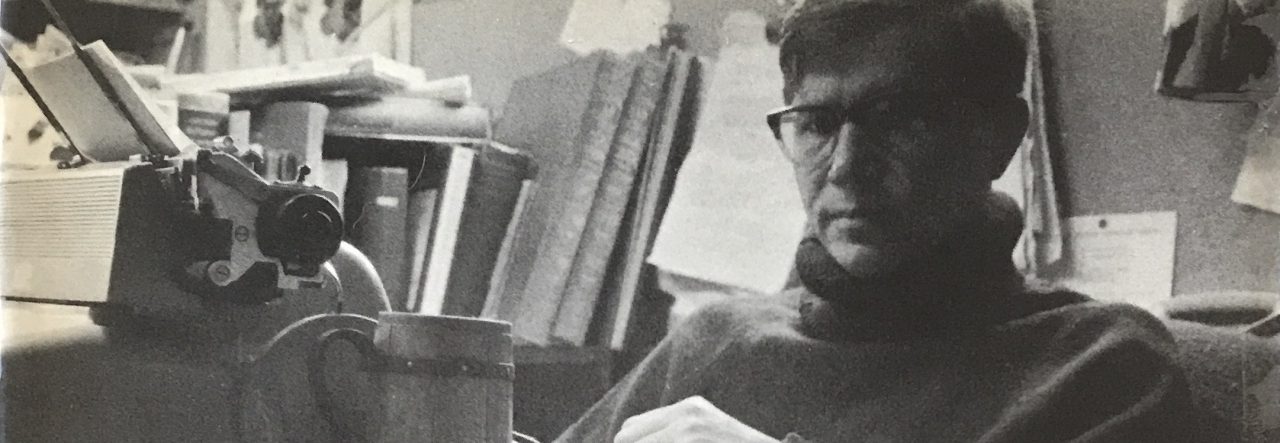
“We who live today have a deep sense that there is nothing left for us to do” wrote Robert Musil in his masterpiece The Man Without Qualities, a novel which Colin Wilson regarded – correctly – as superior to Proust and Joyce. “It has a tough, intellectual, unemotional quality that I find profoundly satisfying” he once commented. “Regrettably, such qualities are not in wide demand”.
These ‘qualities’ (and their lack) are the theme of this very large book. Wilson notes that even in its unfinished state, it is longer than War and Peace. Aside from this little-read ‘standard edition’ of over eleven hundred pages, a deluxe version was issued for English readers in 1995 offering a total of 1774 pages. Wilson’s review of the latter version in the fanzine Abraxas helped me make my choice. It’s possibly the most rewarding £40 I ever spent on a piece of fiction.
Musil trained as a mathematician, engineer and behavioural psychologist, and it is likely that the latter knowledge gives the novel its bitingly satirical, contemporary edge (“reason and progress in the Western world would be displaced by racial theories and street slogans”: a century on, change “would be” to “have been”). Cheerfully referred to as ‘nudging’ by today’s governments, behaviourism is a robotic fallacy, and the lacklustre state of 21st century culture proves it. Musil’s novel is a relevant warning in this sense as the plot largely revolves around the bureaucratic red tape tying up a planned celebration of the Austro-Hungarian Empire – just before the Great War exploded such pretensions. Time and time again, striking parallels to our present problems fly off almost every page. “Regrettably, a great many people nowadays feel antagonistic toward a great many other people”. “We let others talk themselves into the most one-sided exaggerations: that’s idealism”. “There’s no longer a whole man confronting a whole world, only a human something moving about in a general culture-medium”.
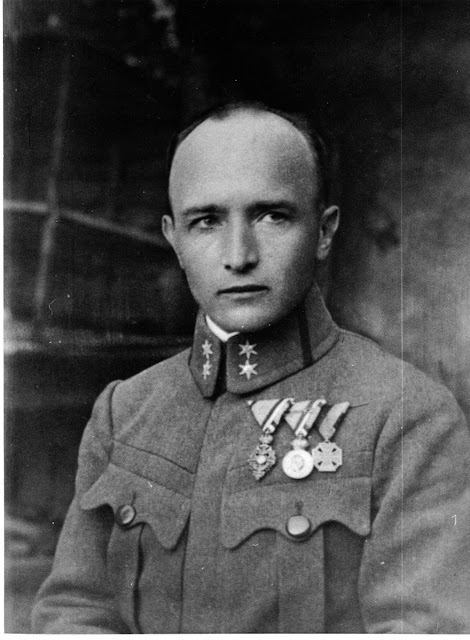
“It can’t go on like this” he writes on the next page.
An abundance of such insights make the book remarkably contemporary almost a century on, rather like Dostoyevsky’s equally relevant The Devils. Yet re-read that quote about “a human something” again, and it’s obvious that it was Musil’s analysis of the ‘partial mind’ (“no longer a whole man confronting a whole world”) which made Wilson so appreciative (“his attitude towards politics is ironical”, Wilson comments). Musil’s line that “happiness can do wonders for a man’s latent possibilities” is a wonderful motto for Wilson’s own philosophy, and he recalls examples of these latencies manifesting in perception. He lists the striking perceptions of the bright colours of an outdoor market, the asphalt on the road, “the noise that broke apart for a few seconds to let out one specific sound”, Viennese architecture, restaurant tables that look alike but are all “so incredibly individual”… “It was the sort of feeling of which one is hardly ever fully aware, though it permeates everything”. Later (Chap. 122) Musil offers a more technical description of these latent possibilities: “it is with the invisible connections which our minds and feelings unconsciously arrange for us in such a way that we are left to feel we are fully in change of our affairs”. Bridging the gap between near and far (“a kind of foreshortening of the mind’s perspective”) is the trick, he writes. “Happiness, after all, depends for the most part not on one’s ability to resolve contradictions but on making them disappear, the way the gaps between trees disappear when we look down a long avenue of them”.
According to a Sartre biography [1] Musil was influenced by Franz Brentano, a theologican-turned-philosopher who handed down his insights into the intentionality of consciousness to his pupil Edmund Husserl, the ‘inventor’ of phenomenology (like Musil, he began as a mathematician). Readers of Wilson will be familiar with this useful philosophical method thanks to the later volumes of his Outsider series, most notably Introduction to The New Existentialism from 1966. Despite the occasional comment I’ve read that Wilson didn’t understand or distorted Husserl’s method, a close reading of Husserl’s main texts disproves this notion. [2] If anything, Wilson got the gist of Husserl better than either Sartre or Derrida, who both started as budding phenomenologists. Sartre was too glum to take on the loaded responsibilities that phenomenology demands and Derrida could have saved everybody a headache if he’d simply said that something negating its opposite is just a product of intentionality (selectivity). Wilson stated that phenomenology was essentially a common-sense attitude; after all, Husserl insisted that we put all of our self-indulgent prejudices ‘away’ before we even think of using his method. His pupil Heidegger bluntly defined phenomenology thus: “it is opposed to those pseudo-questions which parade themselves as ‘problems’, often for generations at a time”. Wilson’s exciting argument for an ‘evolutionary phenomenology’, Beyond The Outsider, documents some of these ‘problems’ in a chapter recounting the frustratingly uneven history of modern philosophy; Musil’s novel overflows with witty barbs against these pseudo-questions.
Following Brentano’s observation of an intentional or active consciousnesses, Husserl insisted that the greater the energy (intentionality), the greater the perception, sometimes alluding to the image of an an arrow hitting a target (later appropriated by Wilson – “perception is intentional”). Musil was onto the same thing when a character in his novel insists we try to notice “the part our personality plays in directing our perceptions”. Feeling, desire and intellect, he writes, “strikes and sticks like an arrow”.
At the end of the first section of The New Existentialism, Wilson states that the phenomenological method offers a radical break from the cycle of our actions determining our assumptions and vice-versa, a bind he later called ‘the paradox of freedom’ (after Sartre, perhaps). Brilliantly concise, Wilson’s book remains one of the best introductions to Husserl’s concepts, transforming the forbiddingly complex into the practical and workable. Development and use of the phenomenological faculty (‘Faculty X‘) he insists, can begin to solve the paradox which tormented Outsiders like T. E. Lawrence who craved a world “not filtered through or made typical by thought”. This practical discipline is “simply a matter of ceasing to accept one’s impulses at their surface value”, realising that consciousness is active, a “distorting medium” rather like the generalised culture field which Musil’s ‘human somethings’ swim around in.
Wilson comments that the change in consciousness produced by phenomenological analysis is less drastic than “useless” drugs, but it is permanent and susceptible to analysis. This is true: anyone practicing the disciplines from the book will be aware that the change is subtle but permanent. Wilson often reminded us that he was not offering an instantaneous cure. “You can’t become a new human being overnight” as Musil remarks.
“We wildly overestimate the present” exclaims the titular ‘man without qualities’ Ulrich. An archetypal ‘Outsider’ who has found little satisfaction in his idealistic projects, Wilson describes him as a character adrift in a society that has no use for his talents (asked what he would do if he ruled the world for a day, he languidly replies “I suppose I would have no choice but to abolish reality”). Walking with his cousin through a narrow snowy valley, they muse over this problem of the present, the here and now (“as if we’d been put in a basket and the lid of the present had fallen on it”). We make too much of this rather stifling ‘present’, he says. Wilson would doubtless agree: he reminds us that Sartre is always appealing to the present as his standard of reality. Attempting to free himself from this claustrophobic ‘now’ Musil imagines the valley as it must have been thousands of years ago. Unfortunately his mental time travel “is displaced by so much here and now, so much Present”. He cautiously explains that he does not wish to find an explanation or name for this strangely exhilarating state of freedom. This is a mistake.
As Wilson explains in The New Existentialism, we shall never understand these subtle changes in consciousness “until we create the heavy machinery of language and concepts to map these new areas”. The accurate description of inner mental states is but one technique of phenomenology. “What all this makes clear is that a ‘new existentialism’ must begin with the rather pedestrian task of pushing it’s a scaffolding of language into these new realms”. Nietzsche defined originality as noticing something that has no name “even if it is right in front of everyone’s eyes”; original thinkers are “are mostly also the name-givers”, he says. Wilson’s use of Husserl (the ‘phenomenological faculty’) was the origin of his provisional term ‘Faculty X’, the ability to remind ourselves of the reality of other times and other places, the very experience than Musil is trying to describe. There is nothing mystical about this Faculty (“an ordinary potentiality of consciousness”) although the two are often mistaken. In The Occult Wilson remarks that Faculty X is as much a creative (i.e. poetic) faculty as an ‘occult’ one [3] and is also connected with evolution. “In every epoch of history mankind develops some definite faculty and this faculty plays an important role in evolution” remarked Rudolf Steiner, another unorthodox thinker influenced by Brentano. Philosophically connected with Husserl’s and Heidegger’s examinations into the enigmas of time-consciousness, Wilson recalled that the idea came to him on a snowy day in 1966.
Husserl thought of the phenomenologist as an explorer “carefully describing what is presented along his unbeaten paths”. He cannily points out that all that is seen and noted in this state never loses its value – as Wilson remarks, these insights are permanent – and that all this is part of a long but rewarding journey toward freedom (Wilson interpreted Husserl’s concept of the transcendental ego as an evolutionary “drive to complexification”). Again, this confirms Wilson’s statement that the phenomenological method is certain, even if it is slow moving. When Musil pondered how to bridge the gap between near and far, he could perhaps have paid some attention to Husserl’s researches. The novel features a chapter in which Ulrich “chats […] in the jargon of the frontier between the superrational and the subrational” and sarcastically lampoons “the transcendent ego” and “the realm of being rather than the realm of phenomena or appearances”. Discussions of this near-far problem occur often in Husserl’s work, in Heidegger’s Being and Time and in Merleau-Ponty’s Phenomenology of Perception (which Wilson recommends as a handbook for his new existentialism). “Translated into the ghastly jargon of our times” writes Musil later in the novel, “we could call this faculty we all lack to such a frightening degree nowadays ‘the percentual share’ of an individual’s experiences and actions”. In dream, myth, poetry and childhood “it’s apparently a hundred percent, in our waking life not even half as much”. Wilson also spoke of consciousness in similar fiscal terms (“a tax on consciousness”; “five percent ‘you’ and ninety-five percent robot”). In an essay on ‘Husserl and Evolution’ he names this hidden poetic state ‘Childhood Realism’ – a richer intuitive content of ‘primal perception’ which lies under our everyday prejudices – while reminding us that Husserl’s “ponderous” first book of philosophy arrived the same year as Chesterton’s in 1900. Chesterton observed that we say the earth is round and even though it’s true, we don’t mean it. Wilson was adamant that we could say things and mean them when the Faculty is operative. “Husserl’s phenomenology” he says, “is an investigation of meaning”. Husserl ponders the fluctuations of meaning and the precise naming of such states in the first Investigation of the Logical Investigations, 1900.
During their walk through the valley Ulrich informs his cousin that even the earth isn’t what it is pretending to be at the moment; this pleasant little snow dappled valley was once a glacier. “Today it is acting the good middle-class mother feeding her children. Back then the world was frigid and icy, like a spiteful girl. Several thousand years before that it luxuriated in hot fern forests, sultry swamps, and demonic beasts”. In Human, All Too Human Nietzsche imagined Lovecraftian ‘cyclopean’ energies savagely beating a path through such glacial wastelands, eventually forming the “gentler civilsation” which we humans live in. “Such levels of thought are of course not to be taken literally, as if superimposed on each other like layers of soil” writes Musil, helpfully (he also speaks here of levels of consciousness, a concept later elaborated by Wilson). But these geological images are apt because Husserl described the descending and ever-ascending structure of intentional consciousness as ‘sedimented’. Similarly Wilson referred to ‘a ladder of selves’ and to compacted ‘layers of willed intentions’, those carefully – perhaps clumsily – learned processes which become habitual then automatic or ‘mechanical’ (sic). Husserl was just as concerned with breaking this automated apathy as Wilson’s favourite mystic Gurdjieff. As of course was Wilson himself.
Wilson’s alter-ego Gerard Sorme notes in his diary – published as Wilson’s novel Man Without a Shadow – that there are forces lying below the surface of consciousness that are “fully cognisant of everything that goes on” and that these forces “inject meaning into the world”. Without these, We are mostly completely unaware of such hidden ‘forces’ (layers of intentions). Sorme writes that the world is meaningless without them, “like the scenery stored in an empty theatre”. In his essay on Husserl and evolution Wilson remarks that the aim of phenomenology is to poke holes in this stage scenery of everyday consciousness (Wilson’s alter-ego reminds himself that he needs to develop a “new faculty” to do just that, later in his diary). The non-fiction twin to Sorme’s diary, Origins of the Sexual Impluse, also analyses this problem (“the strange arithmetic of these illusions”) and it’s solution through awareness of the ‘form imposing faculty’ of intentionality. In Origins Wilson points to the criminal character of Moosbrugger from Musil’s novel as an illustration of these strong forces breaking through into society without the necessary safety measures demanded by phenomenological analysis, or put more bluntly, without any intelligence. This theme is also exhaustively documented in Wilson’s true crime books. “The barred window and the bolted door were himself” realises Moosbrugger, sitting in his cramped cell. In his psychological study of murder, Order of Assassins, Wilson describes our ‘normal’ state of habitually narrow consciousness as “a kind of self created prison”, an image also used in The Outsider (Chap. 6). In purely practical terms this is a vicious circle which phenomenological disciplines can help break. As noted, at the end of the first section of The New Existentialism, Wilson points out that we grasp our lives according to what Husserl called the ‘natural standpoint’, a kind of lazy taking for granted. Therefore the human condition is determined by how we live and act. “But our actions are determined by our assumptions about their possibly of success” writes Wilson. “And our assumptions about their possibility of success are determined by our idea of the ‘human condition’ (as we grasp it according to the natural standpoint)”. [4] Historically speaking, this impasse has been broken by works of art, science and philosophy.
The sense of ‘nothing for us to do’, as Musil put it, was the life-question with which Wilson concerned himself, helped along by the practicalities of existentialism and the rigours of phenomenology. “What does a phenomenologist actually do?” he asks in The New Existentialism. “He applies the phenomenological method to whatever may be his own field”. Merleau-Ponty applied it to embodiment, after Husserl’s later work; Roman Ingarden applied it to art. Wilson applied it to something we all know: the everyday problem of ‘life-failure’. “A convinced reader might lay down [volumes by Bergson and Shaw] and sigh: ‘But what am I supposed to do?’ An existentialism based on Whitehead and Husserl is able to answer this question”. Husserl asked: ‘how does consciousness select some things and not others?’ and Wilson stressed that this ‘how’ “can be observed by anyone who goes to enough trouble”. [5] No more difficult that learning a language and just as permanent, these psychic changes are tied in with his notion of ‘layers of willed intentions’, a sedimented process of slow and difficult learning becoming habitual and then silently ‘automatic’ or robotic (learning to drive is a particular good example). Like the ‘work’ of Gurdjieff, Husserl’s phenomenology aims to uncover these so-called automatic functions as buried intentions, active forces which we mistakenly believe are passive, inert.
More radically, Wilson suggested that those who become particularly skilled in phenomenological analysis will be able to dredge up these deep ‘occult’ layers and reactivate them. “The law of man’s evolutionary being must be uncovered and brought to consciousness by the same methods that uncovered the laws of the planets”. [6] However, Wilson maintained that such deep motive powers – described cryptically by Husserl as ‘the hidden achievements of the transcendental ego’ and ‘the keepers of the key to the ultimate sources of being’ – should only concern us once we posses a fully functioning consciousness, thanks to the practicalities of phenomenological technique. Foundation work, as he had it. Husserl himself was of the same opinion; phenomenology was for him a “beginning philosophy”. Similarly, Gurdjieff stressed that we have a clear, non-robotic consciousness before attempting to connect to the ‘higher centres’ (essentially, what Husserl meant by the transcendental ego).
Whether one chooses to do these things is of course up to the individual – “anyone who goes to enough trouble”. That sentence, more than anything, sums up this whole philosophy. I can only speak from my own use of the methods of the new existentialism: they work, and their effects are indeed remarkably self-transforming.
[1] Hayman, Ronald, Writing Against: A Biography of Sartre, Weidenfeld and Nicolson, 1986, p. 95.
[2] For instance, in the Logical Investigations (RKP, 1970), p. 582, Husserl discusses how greater perceptual energy generates deeper comprehension; on pp. 253, 344 and 385 he mentions the “hit”, or “the target of our intention”, the “aim” of perception – an analogy used many times therein and elsewhere (a “dart” in Ideas ll, Kluwer, 1989, p. 252). Likewise the notion of perception seizing hold of objectivity as a ‘grip’ or enveloping it as a ‘ray’ is examined extensively (eg Ideas [Nijhoff, 1982], p. 293; this idea was already present in the Investigations, ibid. p. 542). Husserl often digs into the “structure of consciousness” (Ideas ll, p. 238) and examines the “sediments” or layers of consciousness (ibid. p. 234). Levels of consciousness are investigated in Ideas (ibid. p. 247). All of these concepts are put to full use in Wilson’s new existentialism: the terminology may vary but the debt is obvious.
[3] Wilson, Colin, The Occult, Granada, 1978, p. 123. Also: telepathy is likely a primitive ‘meaning perception’ and what we refer to as mystical experience is a temporary reversal of Prof. Whitehead’s two modes of perception (of which meaning perception is one). Wilson, Colin, Beyond The Outsider, Arthur Barker, 1965, pp. 89, 148. Wilson’s later thoughts on split-brain theory are relevant here.
[4] Wilson, Colin, Introduction to The New Existentialism, Hutchinson, 1966, p. 92. See also p. 66 – “‘perception’ is at least fifty per cent assumption”; p. 91, “But the question of how far life itself is a success or a defeat depends on these assumptions”; p. 173, ‘We are all insane; the difference between Napoleon and a madman who believes he is Napoleon is difference in degree, not in kind; both are acting on a limited set of assumptions”. An investigation into phenomenological neutrality and ‘assumption’ appears in Husserl’s Ideas, ibid. p. 257 (he stresses the universality of the phenomenological method). On p. 259 he defines assuming as ‘supposing’, those kind of presuppositions (a “merely-thinking-of”, the lazy perception of the natural standpoint) which his method aims to rigorously question.
[5] Wilson. Beyond The Outsider, ibid. pp. 160/1 and p. 82.
[6] ibid. p. 165. I am reminded not only of occultist Austin Osman Spare’s ‘formulae of atavistic resurgence’ which allegedly involves reactivating ancient ‘karmas’ via aesthetics, but also of Rudolf Steiner’s theosophical descriptions of germinal human states via planetary metaphors such as ‘Old Saturn’ (apparently the origin of human sensuousness) etc. Also Gurdjieff’s cosmology/psychology. See Ouspensky’s In Search of the Miraculous (RKP, 1950), Kenneth Grant’s ‘Typhonian Trilogies’ and his Images and Oracles of Austin Osman Spare (various publishers), and Steiner’s lectures, available online.

 The Phenomenology of Excess